A new study shows that scientists have discovered the earliest known chemical traces of life in ancient rocks about 3.3 billion years ago, and believe that oxygen-generating photosynthesis may have appeared at least 800 million years earlier than previously thought. This research uses advanced chemical analysis methods and artificial intelligence models to "read" weak chemical signals left by life activities from rocks that have been severely deteriorated and whose original biological molecules have long been broken.
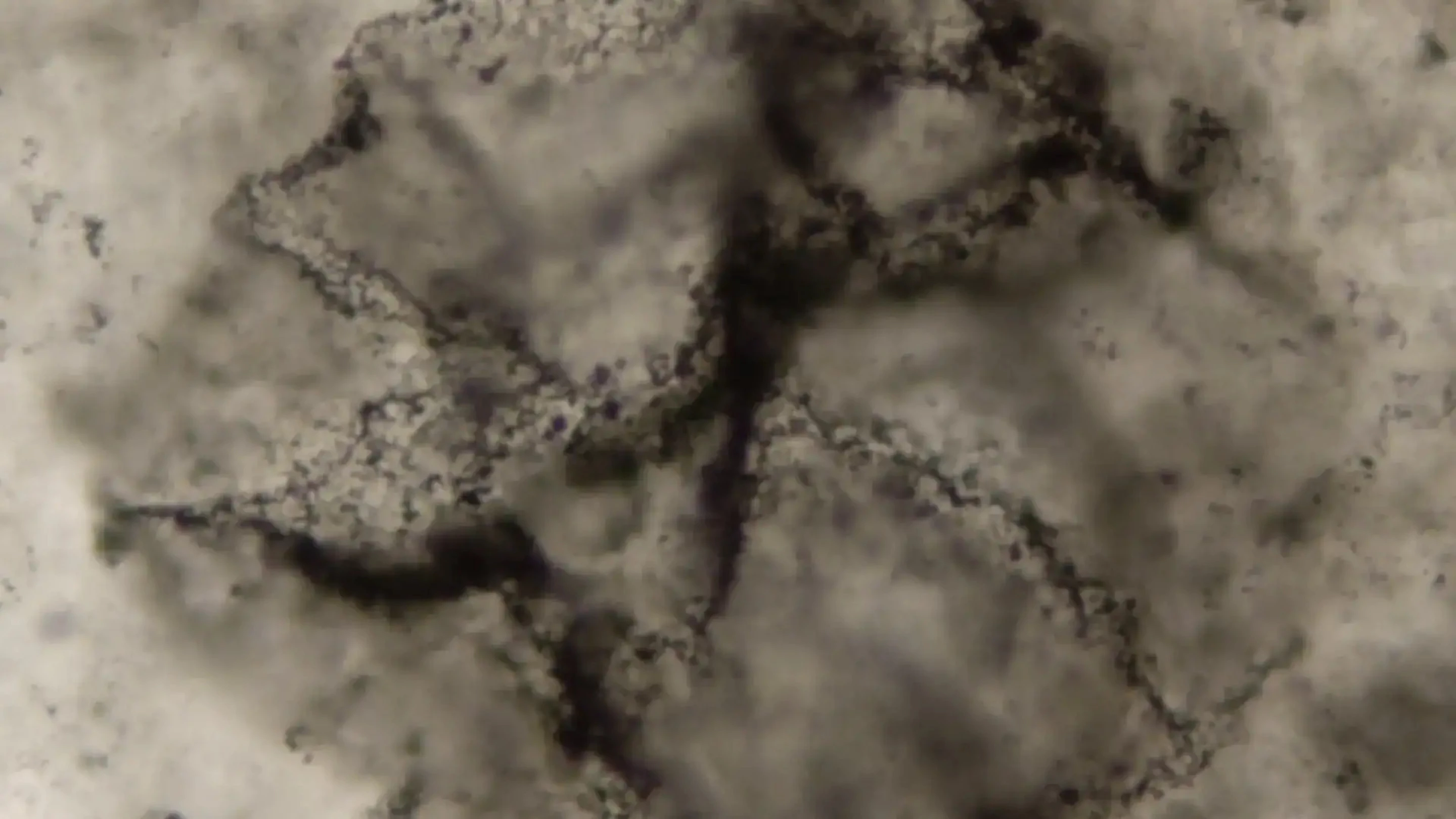
The paper was published in the Proceedings of the National Academy of Sciences (PNAS) and was led by a team from the Carnegie Institution for Science. It was described by researchers as "the first time that chemical echoes of life have been reliably identified in rocks billions of years ago."
Direct evidence of Earth's earliest life is extremely limited: Fossils such as the remains of tiny cells, filamentous structures, microbial mats and stromatolites suggest that life existed as early as about 3.5 billion years ago, but such fossils themselves are scarce and the information is limited. In addition, organic molecules originally present in rocks have been broken into fragments during billions of years of burial, heating and extrusion, making it difficult to reconstruct life information from them using traditional methods.
Previously, the "lifespan" of some of the most durable organic molecules in rocks generally did not exceed about 1.7 billion years. Although isotope signals in older rocks hint at the existence of life, it is difficult to distinguish which processes are actually biological. Therefore, searching for traces of life in rocks more than 3 billion years ago is regarded as one of the most difficult problems in the study of early life on Earth.
The research team collected and sorted 406 samples containing organic matter, covering sedimentary rocks from about 3.8 billion to 10 million years ago, coal and oil shales containing a large number of fossils, modern animal, plant and fungal tissues, as well as meteorites and laboratory-synthesized organic mixtures to distinguish "biological sources" from "abiotic sources." Scientists use pyrolysis-gas chromatography-mass spectrometry technology to further fragment the remaining macromolecules in the sample and obtain spectral data of a large number of chemical fragments.
Subsequently, the team used a supervised machine learning method called "random forest" to train the model to identify the characteristic combinations of organic matter from different sources, so that it can still distinguish between "life participation" and "pure chemical processes" under high degradation conditions. The model was up to 98 percent accurate at distinguishing biotic from abiotic organisms, about 93 percent accurate at identifying photosynthesis-related signals, and about 95 percent accurate at distinguishing between plant and animal sources.
After applying the model to ancient rock samples, the researchers assigned each sample a "biological likelihood probability," with values above 60 percent considered to have a strong signal of life. Through this probabilistic judgment, the team avoids the simple binary division of "living/non-living" and can also identify "intermediate state" samples that have lost most of their biological characteristics due to high-temperature heating.
The study reached three main scientific conclusions:
The discovery of organic molecules characteristic of the origins of photosynthesis in 2.52 billion-year-old rocks in South Africa is the earliest chemical evidence yet of oxygen-generating photosynthesis, predating previous records of its kind by at least 800 million years.
Organic molecules with characteristics of biological origin have been identified in 3.51 billion-year-old rocks in India, strengthening the chain of evidence that "mature biological activities existed on the earth 3.5 billion years ago."
In another batch of South African rocks about 3.5 billion years ago, organic signals related to non-photosynthetic life were found, indicating that many early life forms with different metabolic methods may have coexisted at that time.
The researchers pointed out that compared with the traditional method of only looking at whether there are complete biomolecules or morphological fossils, this work proves that even if the original biological macromolecules have long been shattered during the geological process, the fragment combination pattern left behind still bears the imprint of "life selection" and can be recognized by the machine learning model. In other words, there are not only fossils in ancient rocks, but also "chemical ghosts" and "molecular echoes" that are difficult to detect with the naked eye.
Project members believe that this method of combining advanced chemical analysis with AI can not only be used to rewrite the timeline of early life on Earth, but is also expected to be applied to the search for "signs of life" in samples from other celestial bodies such as Mars, providing more sensitive biomarker identification tools for future planetary exploration missions.