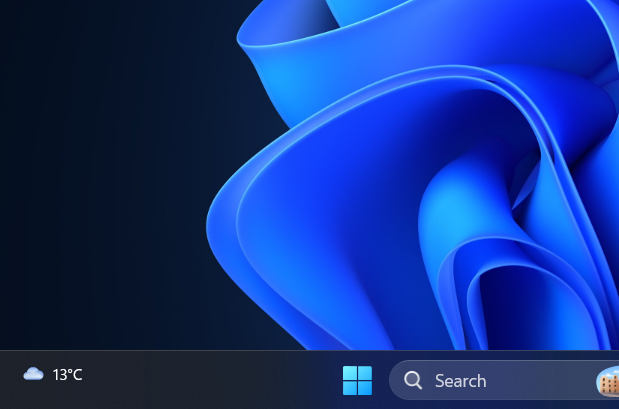
Microsoft has begun testing a small-sized taskbar similar to Windows 10 in the Windows 11 preview version. This feature was previously completely removed when Windows 11 was launched in 2021. At that time, users could no longer adjust the size or position of the taskbar at will through the system settings. Even the classic operation of dragging files to the taskbar icon was absent for a time. It was not until after strong user backlash that Microsoft gradually added some functions.Today, in Windows 11 Build 26300.8346, early prototype signs of the small taskbar have appeared. For example, the Widgets widget button will display a smaller weather icon when the small taskbar is enabled, and the overall visual height is closer to the Windows 10 era.
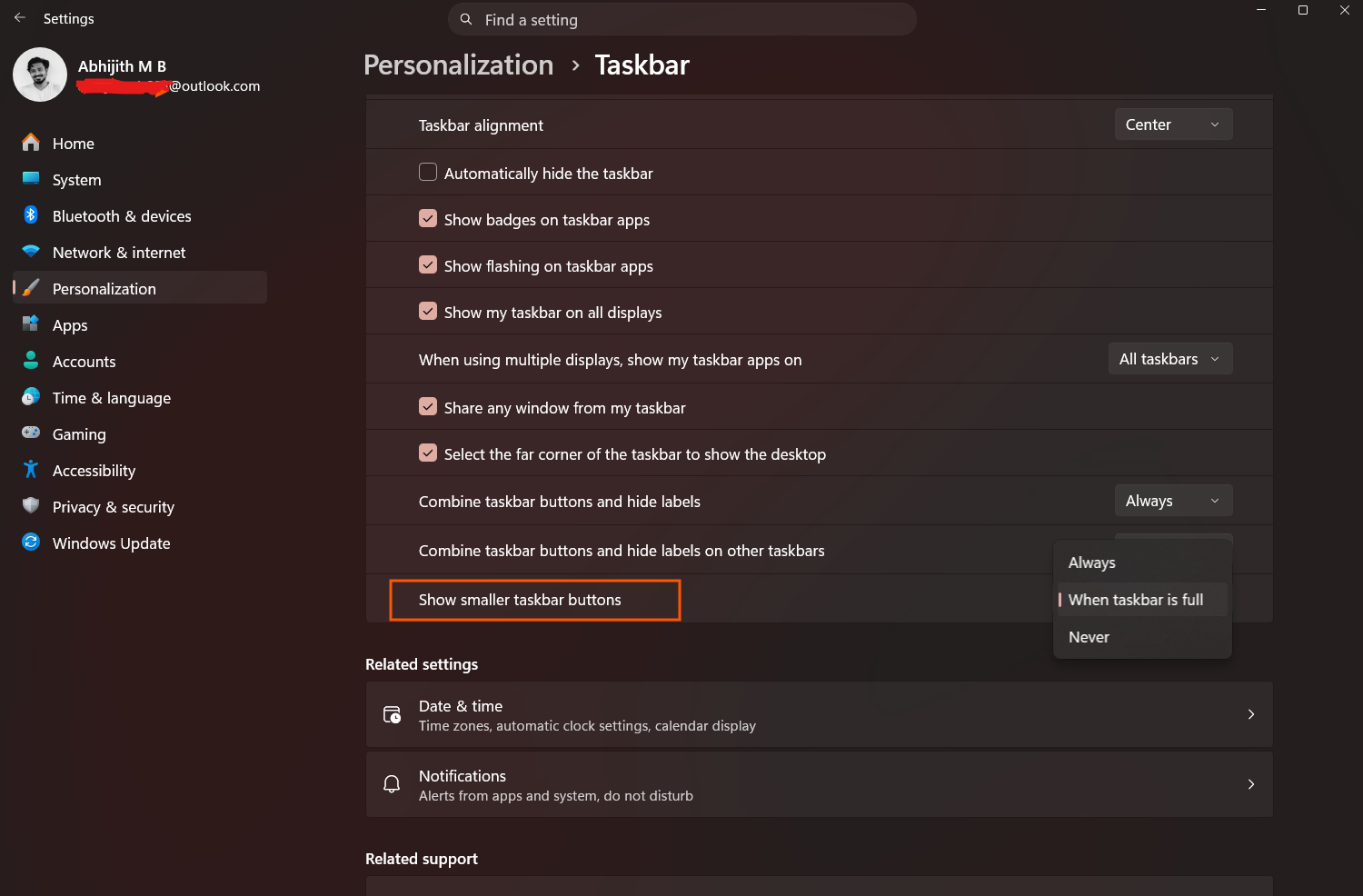
The report pointed out that this small taskbar is still in the internal prototype stage and the interface is not complete, but it is enough to prove that Microsoft is adjusting its strategy in the direction of restoring the Windows 10 experience. It is worth noting that the current official version of Windows 11 actually provides a "make taskbar buttons smaller" switch: the path is "Settings > Personalization > Taskbar > Taskbar Behavior".
However, this option only reduces the size of the taskbar button itself, rather than reducing the entire taskbar height, so it is significantly different from the truly small taskbar experience in Windows 10. The new version of the solution that Microsoft is developing this time is to make the taskbar body shorter and take into account button scaling, making it visually and interactively closer to Windows 10 and earlier versions.
In addition to the small taskbar, Microsoft is also simultaneously promoting a series of classic features that have been cut off, such as the "movable taskbar". Officials have previously admitted that Windows 11 is "somewhat off track" and promised on March 20 that a major update would bring better performance, fewer ads, and a significantly faster File Explorer. Before this strategic adjustment, Microsoft had repeatedly sent out "listening to users" signals, but was questioned for its slow implementation or shelving midway. This also deepened the impression that Windows had been repeatedly marginalized after internal reorganization. But the report said that this time the situation is different. Users have already seen some promised changes implemented in the preview version. For example, although the movable taskbar function is still hidden and not yet completed, it can already be partially enabled in internal builds, showing signs of continued development.
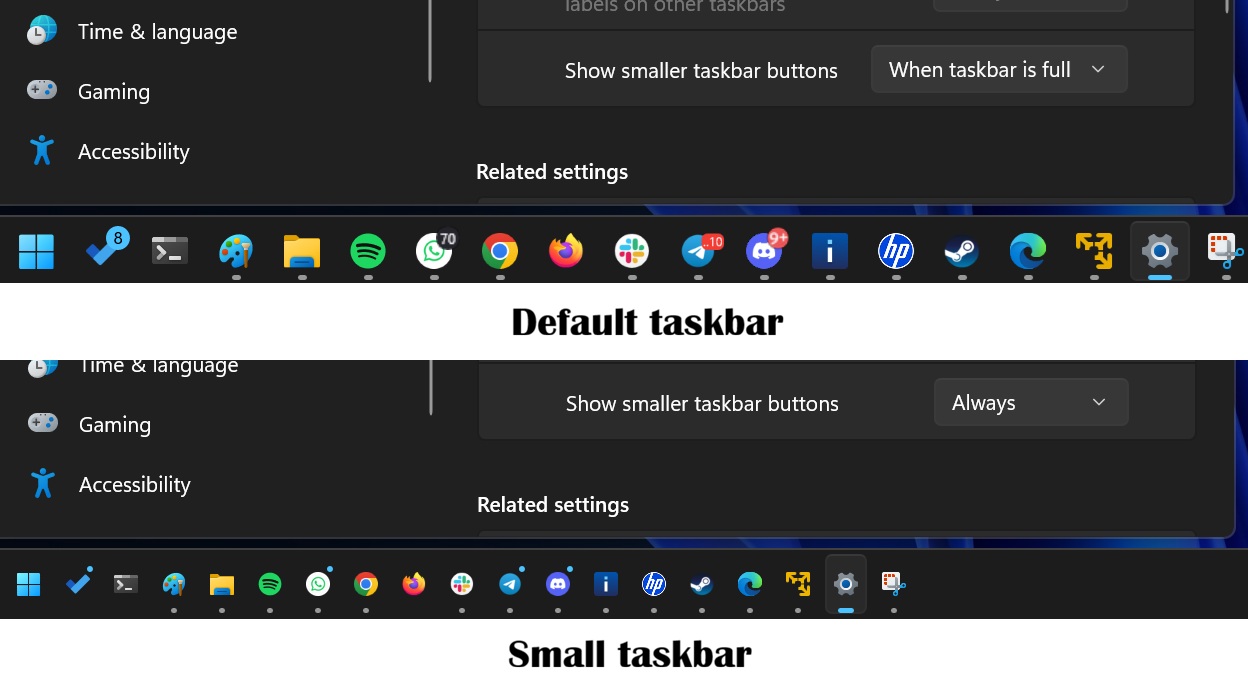
References to the "Resizable Taskbar" and "Small Taskbar" settings have appeared in Microsoft internal documents, which means that in the future, users can move the cursor to the edge of the taskbar and change its height by dragging it like in Windows 10. This is fundamentally different from the current "castrated" solution of Windows 11 that only provides button zoom, and also responds to the expectations of many traditional desktop users for higher information density and more flexible layout.
In addition to taskbar-related changes, Microsoft has planned up to 18 important changes for Windows 11 in 2026, and the final number may exceed this number. Some adjustments have been pushed through Windows 11 Build 26200.8328 (KB5083631) in the April optional update, including optimization of the loading speed of the system tray area, improvement of the reliability of Windows Hello fingerprint recognition, and alleviation of the File Explorer lag problem. Subsequent planned updates include further reducing in-system advertising and promotional content, reducing Copilot's intrusive integration in some scenarios, weakening the annoying out-of-box experience, and migrating the start menu to the native WinUI technology stack to get rid of web-based components in order to improve performance and consistency. At the same time, Microsoft is also preparing to promote a more unified dark mode, a new version of the file properties dialog box, a file explorer preloading mechanism, etc., to make Windows 11 closer to a "quieter" desktop system in terms of detailed experience.
After years of feature selection and interface reshaping, Microsoft has now chosen to make up for traditional features such as the small taskbar and the movable taskbar in Windows 11, which is seen to some extent as a "correction" of the classic Windows desktop experience. For those users who still use Windows 10 as their main system and are waiting to see or even reject Windows 11, whether this round of correction is enough to change their attitude remains to be tested by subsequent official version releases and actual use feedback.