
Abstract:
Is "part-time job selling face" reliable? As long as you upload a few photos and sign a licensing agreement, your face can become a "commodity" with a clearly marked price, appearing in AI skits and digital advertisements.
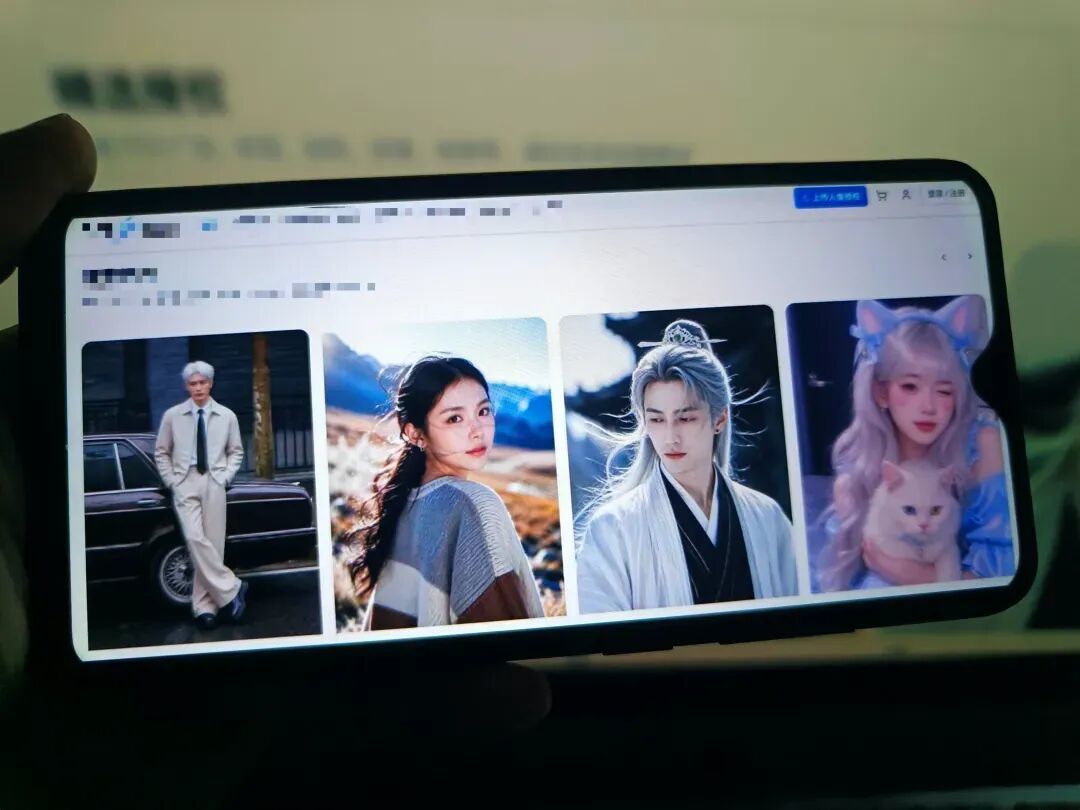
Screenshot of someone's image authorization platform
Recently, similar propaganda has appeared on the face authorization platform one after another. Topics such as "Bank employees earn nearly 2,500 yuan from selling their faces in three days" have made many people excited.
Is “face authorization” packaged as low-threshold and high-yield real? Are there any hidden risks? A reporter from Science and Technology Daily interviewed relevant experts.
First question: Is it reliable to make money by selling your face?
"The so-called 'face selling' part-time job means that an individual uploads a photo of his face, signs a licensing agreement, and allows the platform to use his or her face in AI skits, commercials, and other scenes in order to get paid, and the platform takes a commission from it." Wu Shenkuo, a professor at Beijing Normal University Law School and deputy director of the Internet Society of China Research Center, told reporters that this behavior involves both the licensing of portraits and the processing of sensitive personal information about faces.
According to Li Wenlong, a researcher at Zhejiang University's Digital Rule of Law Research Institute, Vincent Video is changing the way content is produced. Face authorization may gradually become a market segment, and the scope of use, pricing and revenue distribution will also become important issues in the next 1-3 years. However, whether the market can continue depends on real demand.
"AI has been able to synthesize virtual faces. The value of using real portraits mainly lies in the recognition of specific people, public influence and image consistency. Therefore, celebrities, Internet celebrities and professional actors may have more advantages, while ordinary people have greater uncertainty in their opportunities to receive orders and income." Li Wenlong said.
Wu Shenkuo reminded that many platforms collect facial information through contracts, and the content of the agreements is rough, which itself lurks legal and information security risks.
Second question: What new risks will there be?
Li Wenlong said that from a legal point of view, individuals have the right to allow others to use their likeness and obtain profits, and this independent choice should be respected. But at the same time, the premise of the transaction is that the parties truly understand the meaning and consequences of authorization and make a voluntary and clear decision. When there is fraud, coercion, or major misunderstanding, issues such as contract revocation may also be involved.
“Given that the current market is relatively new and the corresponding social norms are still being shaped, such disputes and controversies are inevitable.” He said that the main risk of such transactions is that a single authorization may extend to uses that are difficult to foresee by an individual. For example, does agreeing to star in a short series include other series, commercials, and merchandise endorsements? Can it be sublicensed and how long will it be used? Is the remuneration calculated on a per-time basis or settled in one lump sum? Is it allowed for model training? Therefore, when signing a contract, it is crucial to clarify the scope and effects of authorization.
Wu Shenkuo said that facial images can be split and fused to generate secondary facial features through AI technology. Infringement is very hidden, making it difficult for the person being infringed to identify, and the difficulty of fixing evidence and safeguarding rights and prosecution has increased significantly. At the same time, faces are highly sensitive personal information. Once the platform is insufficiently protected and leaked, this information may be used for illegal activities such as telecommunications fraud. Many platforms confuse portrait authorization with facial information processing consent. Users who subsequently want to withdraw authorization or delete facial data often face obstacles, and their personal and property safety will be threatened.
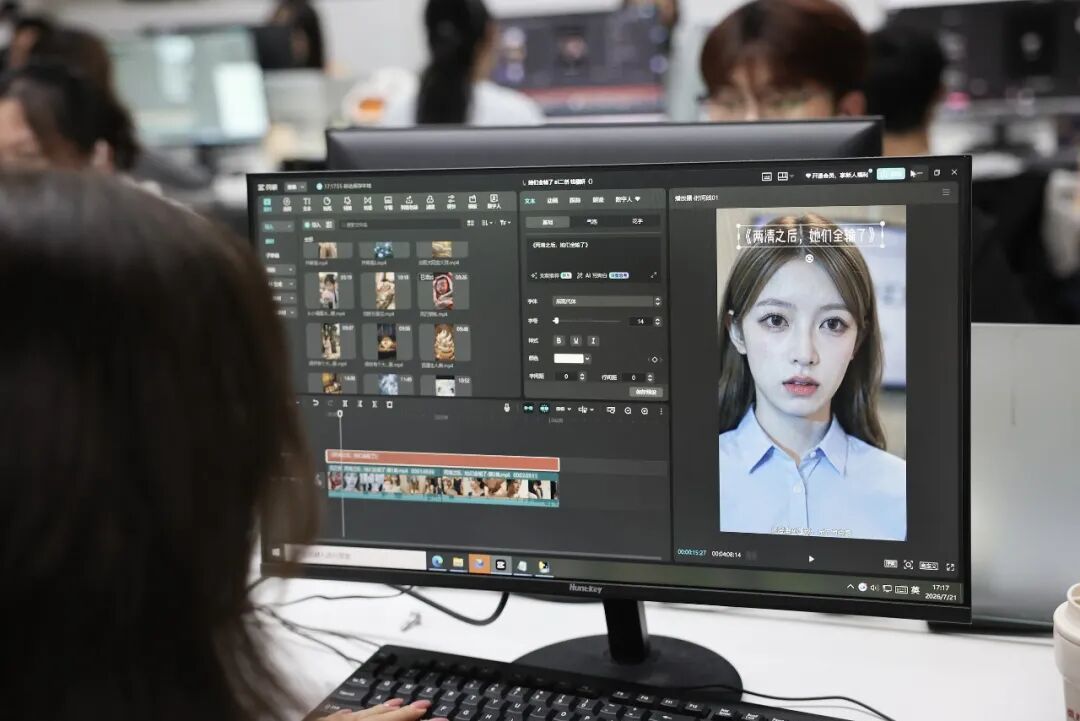
In addition, Li Wenlong mentioned that the generated content may also cause the person to be mistaken for participating in a certain activity, expressing a certain point of view, the image will be vilified, distorted, or used in inappropriate scenes, which may damage personal dignity and social evaluation.
Third question: Can such behavior be regulated?
“A further difficulty brought about by AI training is that faces can be extracted, fused, and repeatedly generated, making it more difficult to identify infringements, track sources, and determine liability,” Li Wenlong said.
He introduced that the portrait rights clause in the Civil Code has provided a basis for protection. When facial data involves sensitive personal information such as biometrics, it must also meet the specific purpose, sufficient necessity and strict protection requirements of the Personal Information Protection Law.
However, Wu Shenkuo admitted frankly that in practice, many platform format contracts have overbearing clauses and do not fully implement relevant legal requirements.
To make up for the shortcomings of the industry, he suggested that supervision should strengthen inspections of platforms, standardize the content of authorization agreements, clearly prohibit arbitrary sub-authorization, and urge platforms to protect facial data security; platforms should open convenient channels for withdrawing authorization and deleting facial information; the general public should carefully review the agreement before signing a contract, and promptly report to the relevant departments if they encounter information abuse or portrait infringement.
Li Wenlong suggested that through industry guidelines, contract model texts and typical cases, detailed rules can be used to separately explain and agree on work production, advertising use, model training and sub-licensing, and to clarify the time limit, remuneration method, exit conditions and subsequent disposal.
Face processors should also keep authorization and call records, and provide channels for usage inquiries, complaints and cessation of abuse.
"As AI reshapes the production and dissemination of film and television content, the significance of face authorization will also go beyond the scope of individuals exchanging rewards, and is related to a more profound issue: when a person's image can be continuously generated, used and traded without the person, to what extent can the individual still decide how his or her image exists, and who will share the value of its creation." Li Wenlong said.
Comments