
Abstract:
In "Joan Is Awful" in the sixth season of "Black Mirror", the heroine Joan turns on the TV one night and discovers that her life has been filmed into a TV series by AI. The heroine in the play is experiencing exactly the same thing as she did that day, and even the details of her private life have been restored.

Qiong tried to ask the platform to remove the TV series, but found that she had already authorized the relevant content in the user agreement. Streaming platforms could leverage generative AI and digital likenesses of the actor to continually film her life into new episodes.
This episode is ostensibly about a woman who discovers her life has been made into a TV series, but is actually a very typical Black Mirror-style satire. When AI, streaming platforms and personal privacy come together,
a person's life may be directly used to make a TV series, and she has no control over it.
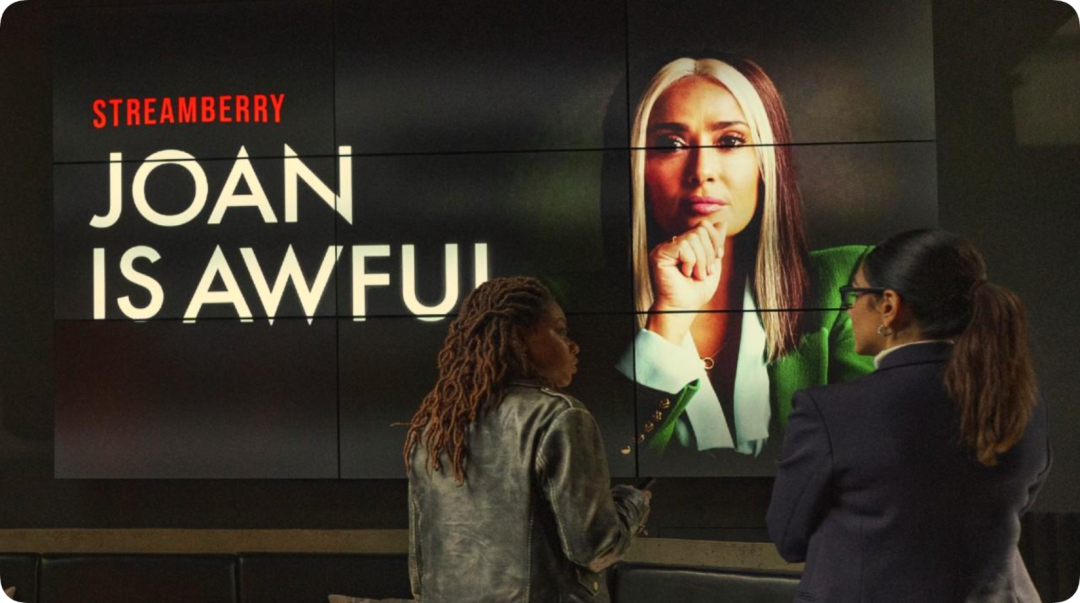
Now, a Google patent proposes a very similar idea. Google wants to create a 24-hour private TV channel for everyone, using AI to generate movies and TV shows exclusive to us based on our viewing history and interests.
Even the protagonist in the movie can be ourselves. Of course, the advertisements are also tailor-made.
Google’s 24/7 TV
Recently, technology media 404 Media and patent tracking website Patentlyze paid attention to a patent application by Google called "Creating a Channel of Video Experiences Tailored to a User".
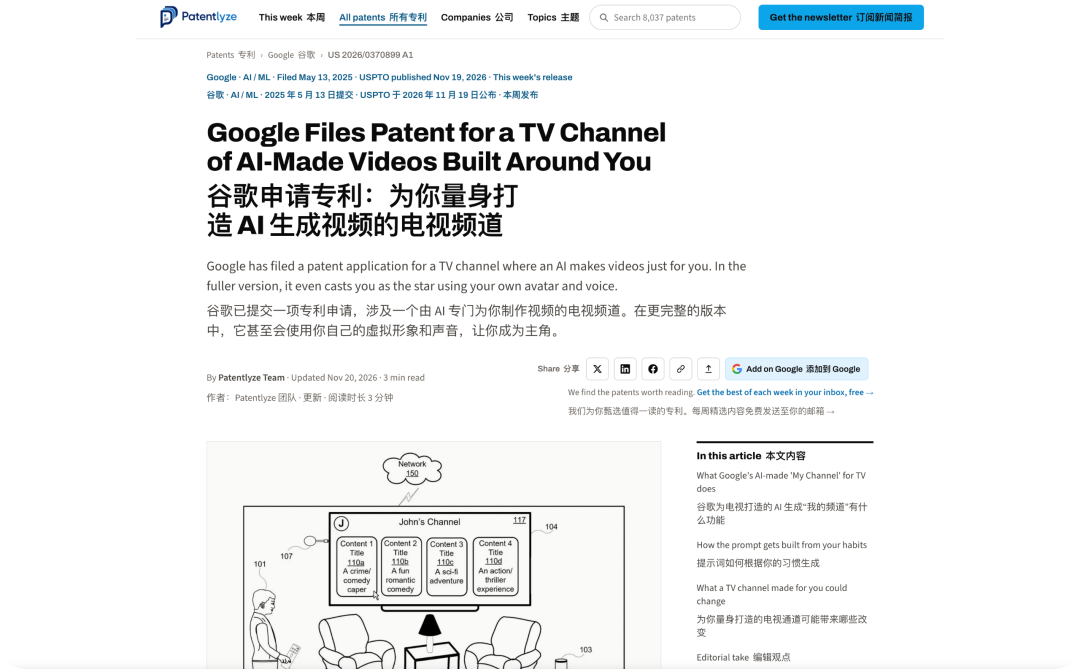
Picture|https://patentlyze.com/patent/google-ai-made-tv-channel-built-around-you/
In Google's vision, this system is called "My Channel." It can broadcast programming around the clock like a traditional TV channel, but the content can be generated individually by AI based on each viewer’s preferences.
From the collection of user data, the generation of video content, to programming and advertising, Google has provided corresponding technical solutions in patent documents.
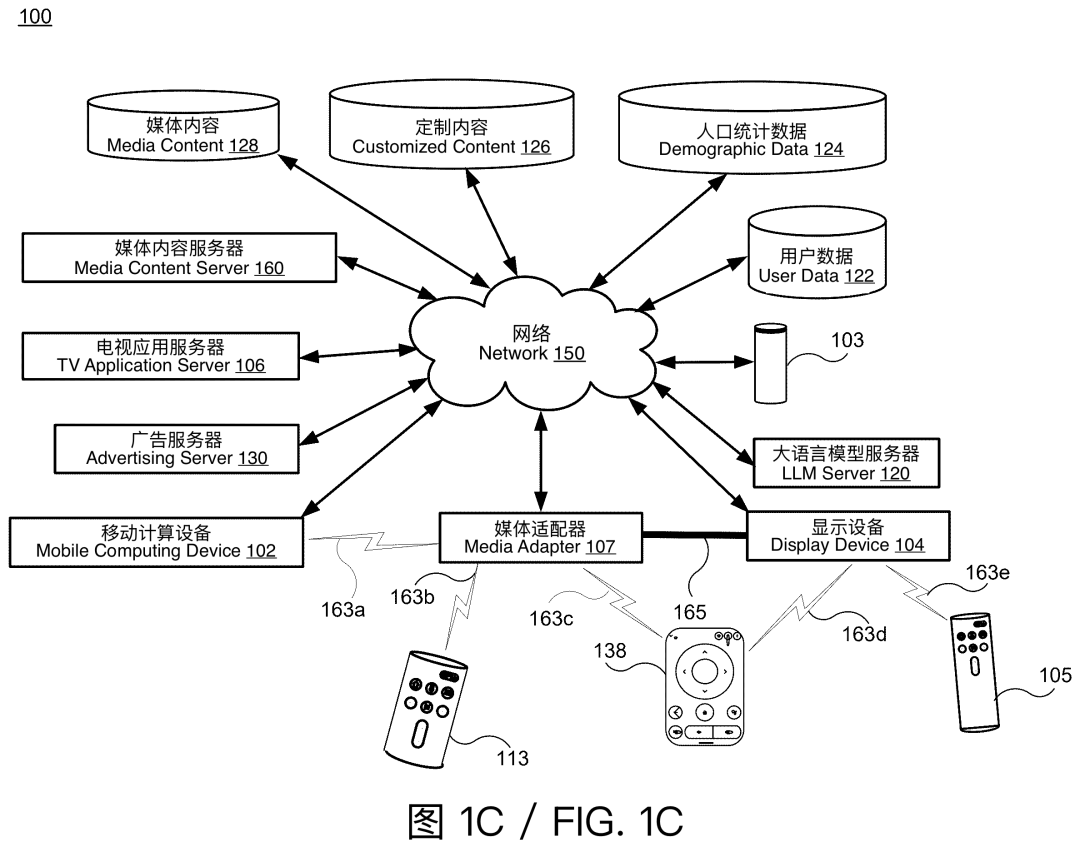
Picture | Internet-connected device connecting the living room to the AI server
The system will refer to the user's demographic information, personal portrait, viewing history and preferred film and television genres. This data will become reference information when AI generates videos.
Events that are happening in the real world can also be added to the prompt words generated by the video.
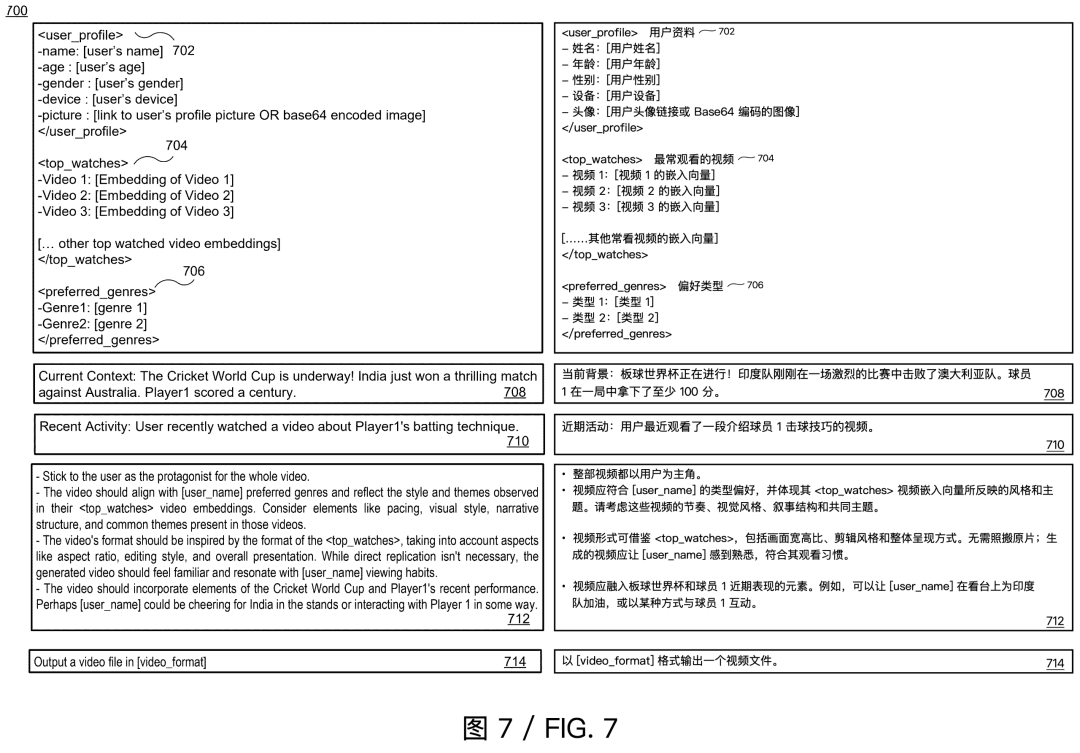
Picture | Adding real-world events to AI video prompts
What’s more interesting is that Google has proposed a plan to let users personally act as the protagonists of film and television works. The patent document even directly gives an example of a prompt word.
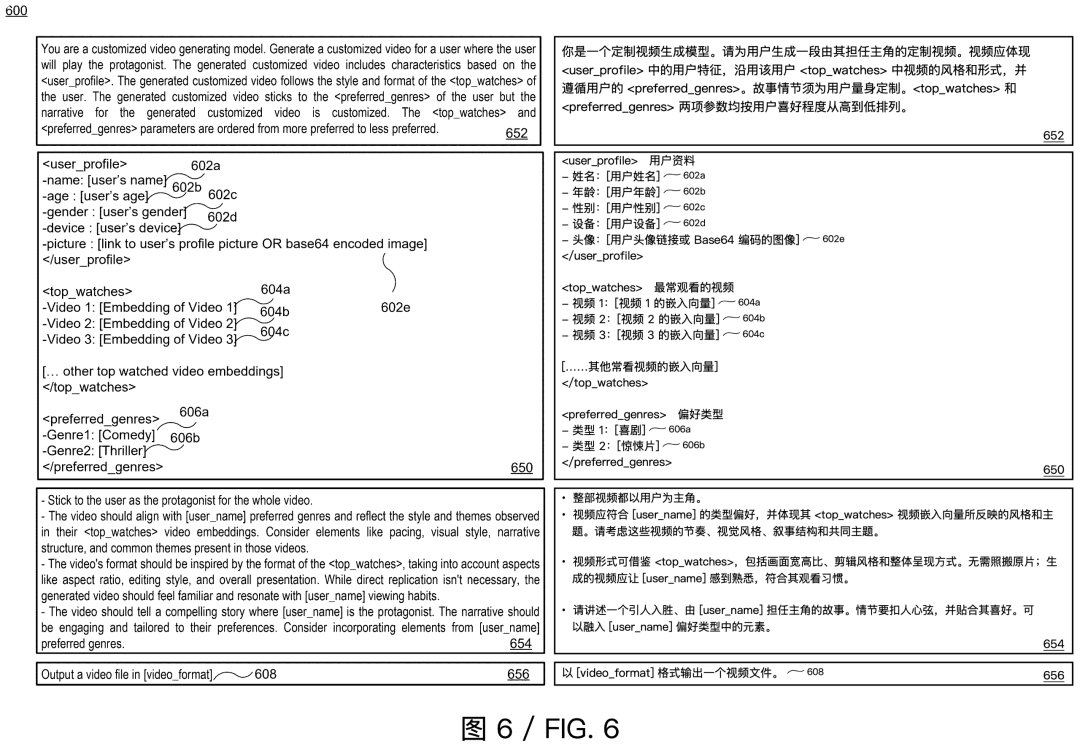
"You are a custom video generation model. Please generate a custom video for the user, allowing the user to play the starring role in the entire video. The generated video needs to contain features based on , follow the style and form of the user, and fit , but the narrative must be completely customized..."
In order to make the protagonist closer to the user himself, the system can also use the user's photos, videos, sounds and other materials to generate corresponding digital images and lines.
Google demonstrated several specific usage scenarios in the patent. For example, a viewer named "John" can see crime comedies, romances, science fiction adventures, and action thrillers on his channel, and the protagonists of these films are John himself.
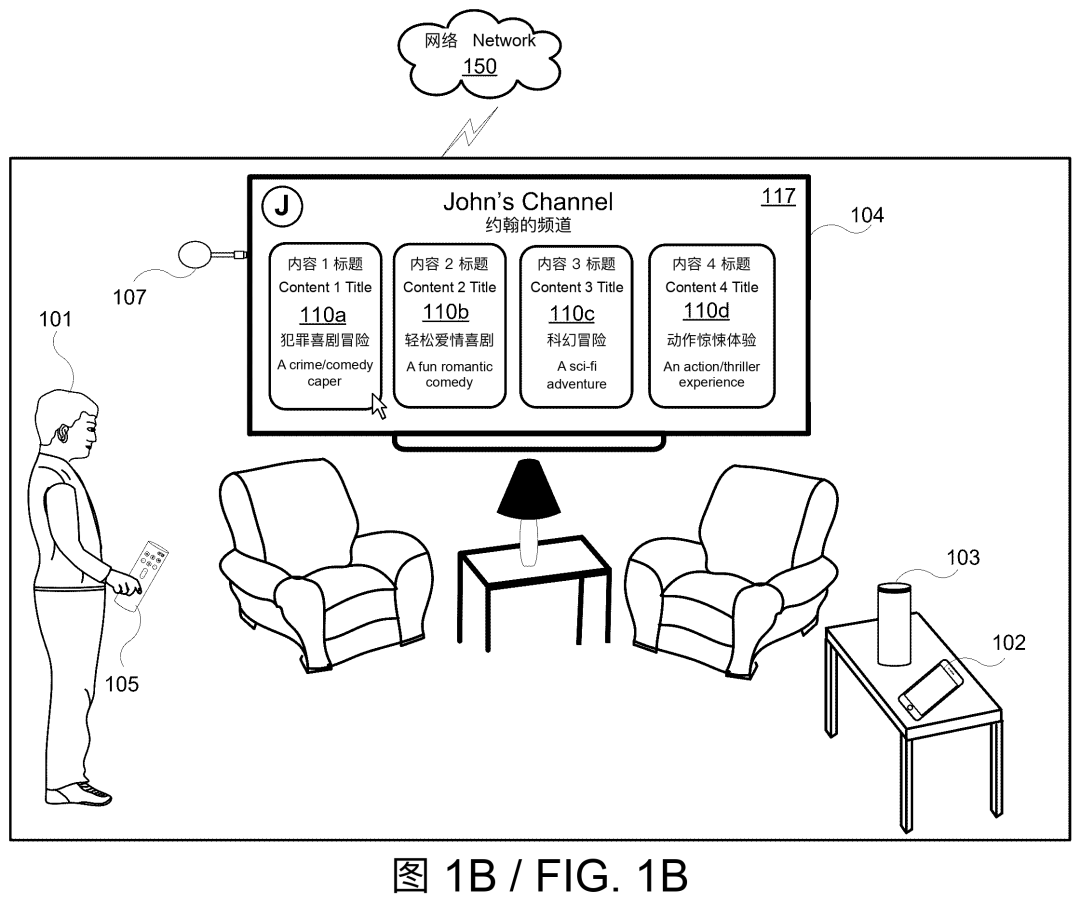
For another example, if the system discovers that we have recently watched highlights of a certain cricket star, AI can generate a video related to the Cricket World Cup, allowing us to appear at the game and even interact directly with our favorite stars.
Beyond these shows, Google is also thinking about its main business: advertising. The patent document mentions that this private channel can connect to an ad server and insert personalized ads into AI-generated programming through a component called an "ad splicer."
In the future, we may have just finished saving the world in a science fiction movie, and the next second we will see an advertisement specifically targeted at our consumption preferences.
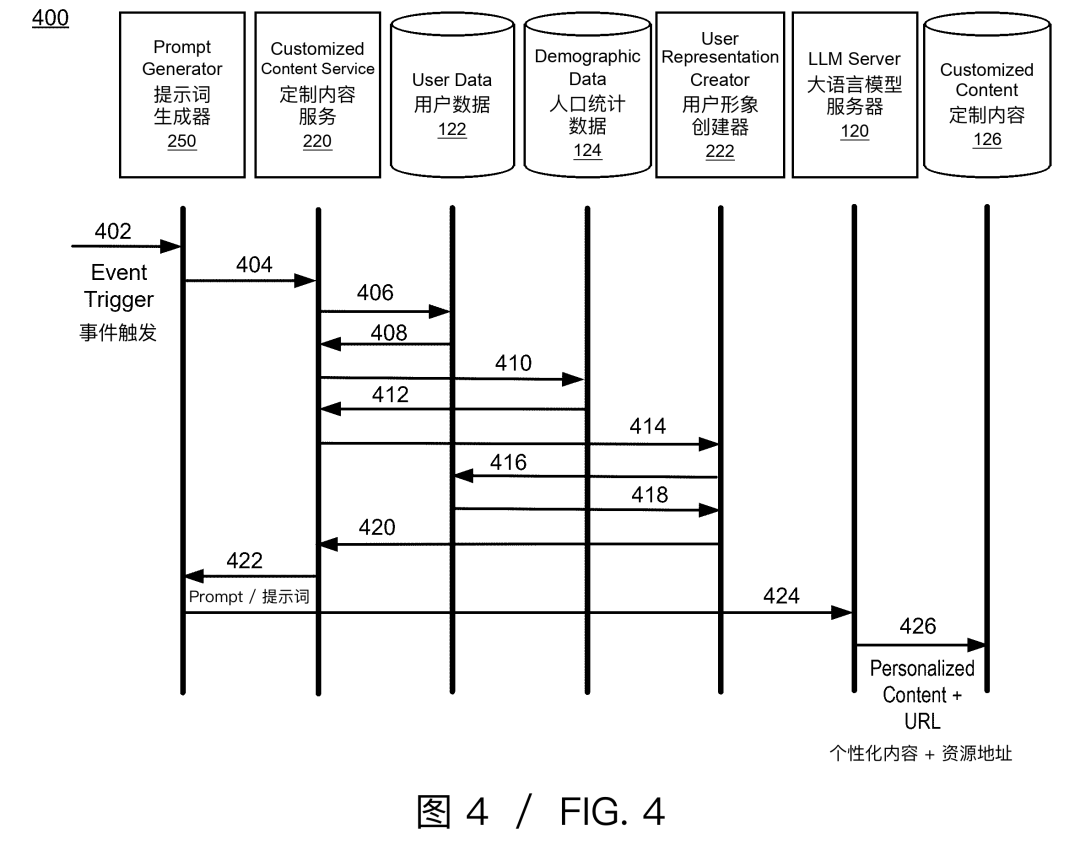
Picture | Generate personalized videos based on audience habits and AI prompt words
Although Google's private TV channel is still in the patent application stage, if you take apart several of the technologies involved, you will find that many things have actually been implemented.
From recommended content to produced content
Some time ago, we shared an "infinite swill machine" project. When we open the website, we can see an infinite cross-dimensional TV.
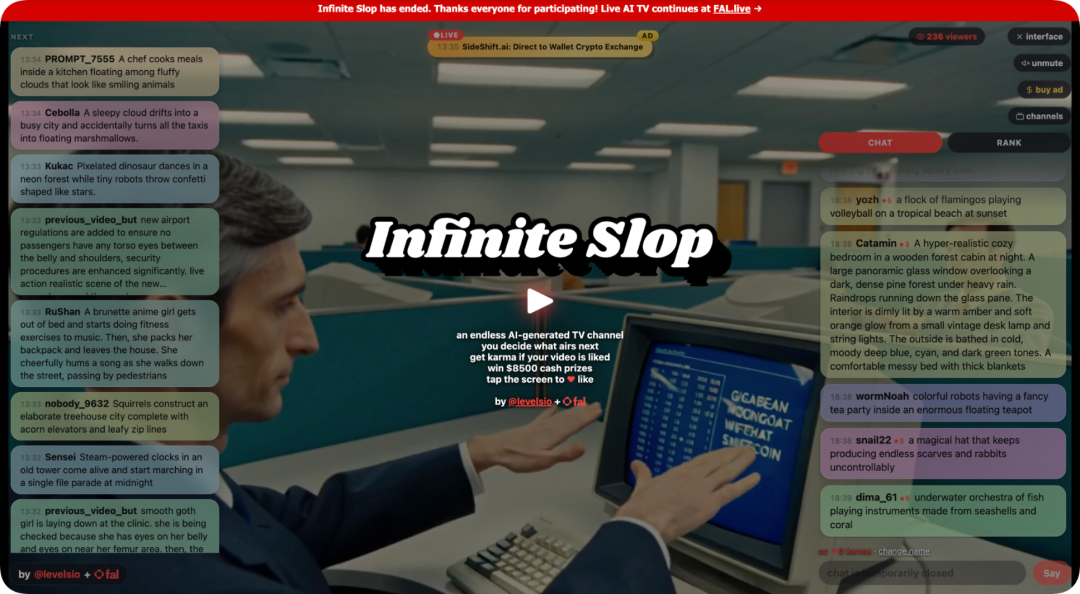
Picture | https://infiniteslop.ai/
Unlike ordinary TV channels, these programs can be generated and played at the same time. Audiences can even enter prompt words and participate in voting during the viewing process to decide the next plot direction.
The protagonist who was eating normally one second may encounter a sudden alien invasion because of a word from the audience the next second.
Last year, Fable, which received investment support from Amazon, also launched Showrunner, which is called the "AI version of Netflix". We can use simple prompt words to let AI complete the script, dubbing, animation and editing to generate the TV series we want to watch.
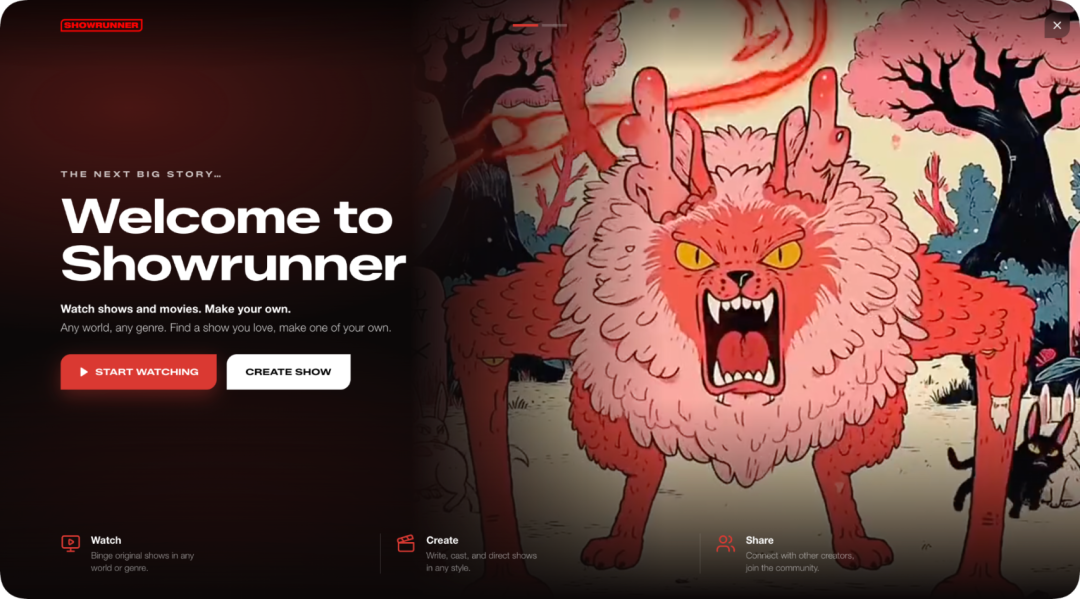
Picture|https://www.showrunnerstudio.com/
As for letting users play the leading role, this technology has even appeared in Google's own products.
At the Google I/O conference in May this year, Google demonstrated the personal digital avatar function in the AI film and television creation tool Flow. We can create a digital character that looks and sounds like ourselves, and then let it star in various AI-generated film and television scenes.
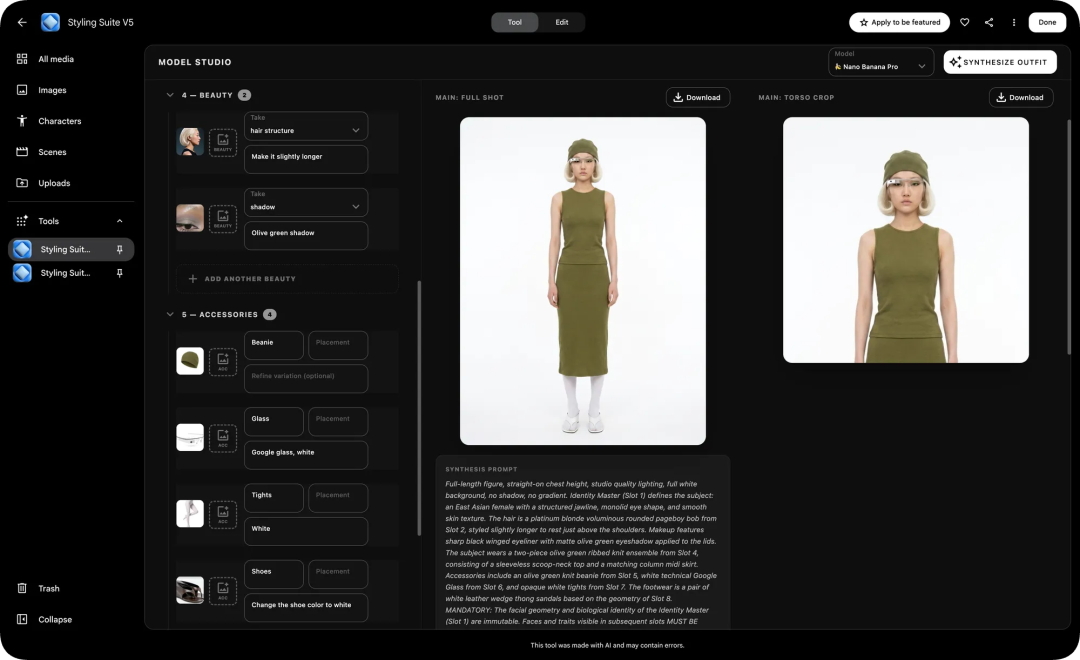
Currently, this digital doppelganger can also be used across products such as Gemini, Flow, and Google Vids.
Similar changes are happening in the advertising industry. Meta already allows advertisers to use generative AI to create ads with different copywriting, images, and videos for the same product, and then deliver them based on the audience's preferences.
The same product can have completely different advertising materials for different consumers. Advertisers no longer need to organize separate shooting and production for each version.
In the field of overseas free advertising-supported streaming television (FAST), platforms such as Samsung TV Plus and TCLtv+ have already divided TV channels into very detailed categories. There are even some channels that air the same classic TV series 24 hours a day, 365 days a year. Manufacturers such as TCL have also begun to try to provide AI-generated film and television programs on their own platforms.
In July this year, Fairground Entertainment also launched Fairground AI Creator TV, a free streaming TV channel dedicated to AI-generated content, and launched it on the Roku platform in August.
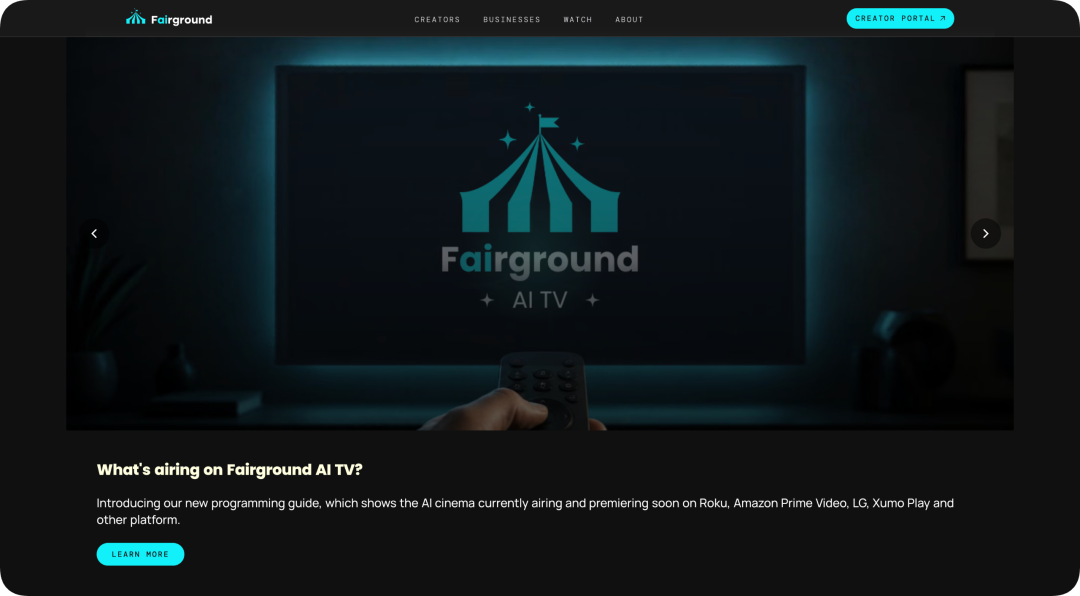
Picture|Fairgroud, free to play content completely generated by AI 24/7
This channel is the same as an ordinary TV station, broadcasting programs 24 hours a day and earning revenue through advertising, except that the movies, series and short films in it are all generated by AI.
For the past two decades, Internet platforms have been using recommendation algorithms to solve a problem: how to find the one that users are most interested in from a massive amount of content.
The emergence of generative AI gives platforms another option to directly produce content that users may be interested in. Turning on social media today, we can already see a large amount of low-quality AI-generated content called “AI Slop.”
Some creators will generate videos in batches based on the platform’s popular topics, user preferences and traffic feedback. Whichever subject matter is easier to get traffic from, continue to produce similar content. Generative AI dramatically reduces the cost of this process.
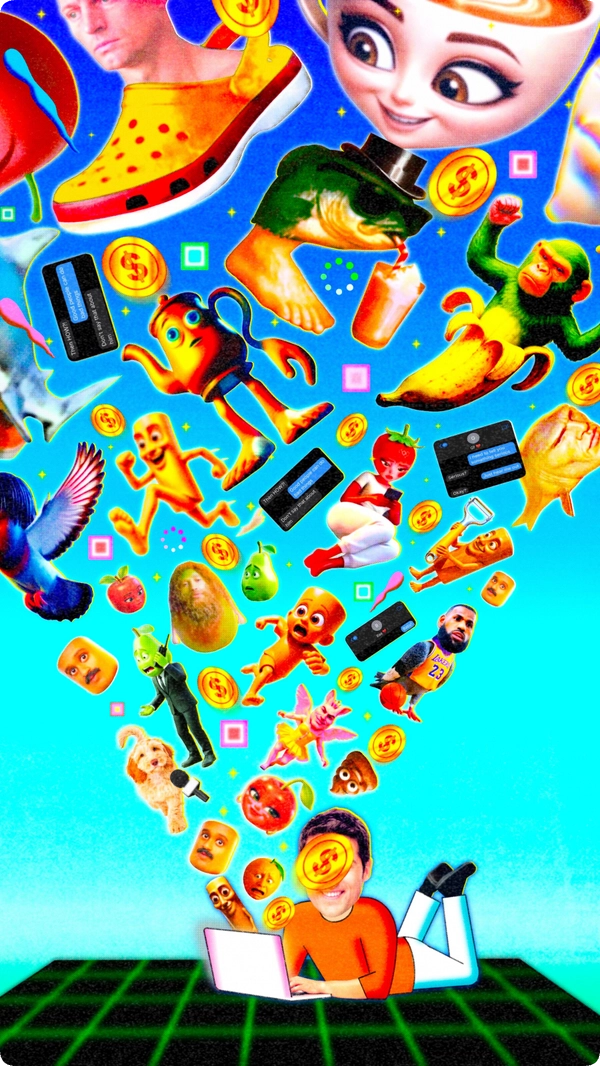
Google has many of the capabilities needed to realize this vision: Veo and Gemini Omni video generation models, personal digital avatars used across applications, user viewing data accumulated by YouTube, and mature ad delivery systems.
Although there is currently no evidence that Google is developing a complete My Channel product, My Channel is equivalent to combining these existing business models and technologies.
If we are obsessed with science fiction movies recently, the platform can generate more science fiction movies. If we particularly like a certain character setting, narrative rhythm, or even the ending of a certain story, AI can also make corresponding adjustments in the next work.
Every time a user watches, it is possible to provide new reference for the next content generation.
From "algorithm recommends the content you like to watch", to "algorithm generates content you like to watch", to "algorithm writes you into the content", Google's patent actually follows the inertia of business logic,
turning real life itself into content that can be infinitely processed, packaged and sold. AI only makes the production cost of this business lower and lower.
However, this also brings a new problem. How much common cultural experience can we have when everyone sees something different?
When everyone is watching their own movie
Long before the explosion of generative AI, someone on the Internet had already started a 24-hour virtual TV station.
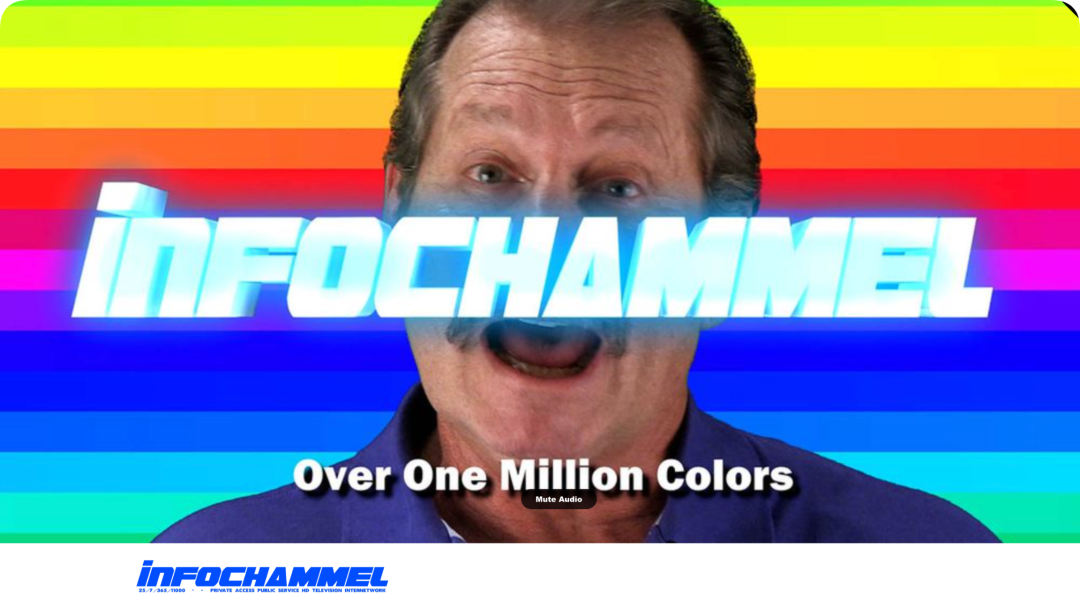
Picture|https://www.infochammel.com/
Older YouTube viewers may remember a channel called infochammel (yes, that’s the weird spelling). It is like a virtual TV station that came out of the GTA world, full of retro and rough 3D modeling, magical infomercials and absurd scrolling news.
These contents are all produced by the creators themselves, and many netizens even hang its round-the-clock live broadcast in the background as a kind of cyber white noise.
More than ten years later, this channel continues to be broadcast in corners of the Internet.
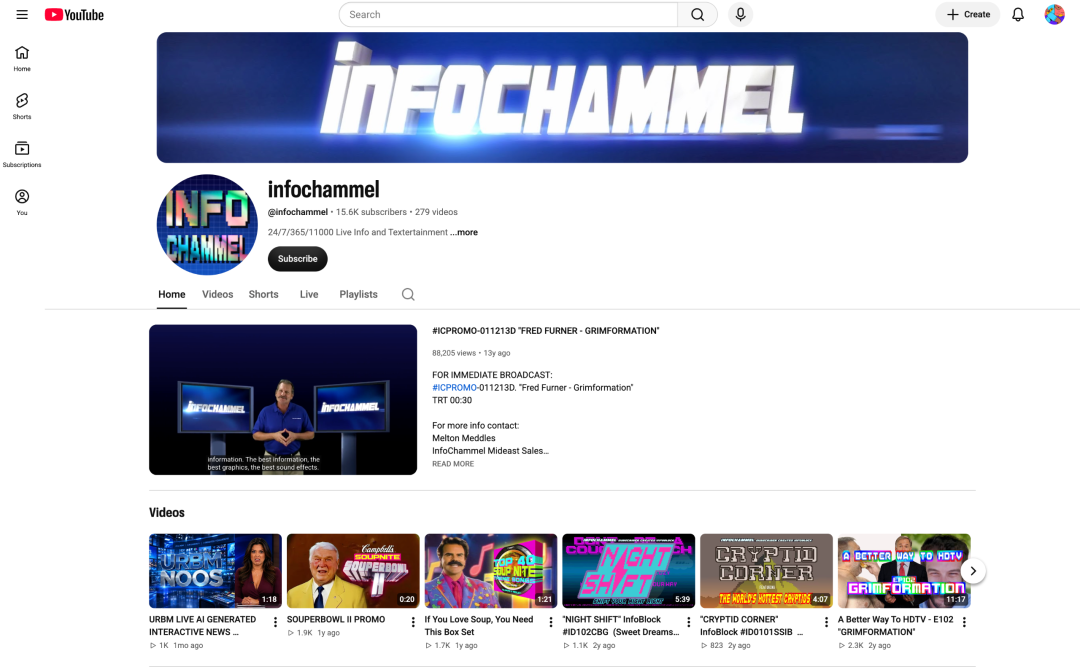
Looking at infochammel and Google's "My Channel" together, they form the most ironic comparison of Internet entertainment: the former is human beings' absurd banter, and the latter is the algorithm's precise flattery.
There is an interesting difference between infochammel and the My Channel envisioned by Google. No matter how many people are watching infochammel, everyone is always seeing the same channel. Even a few strangers who clicked into the live broadcast room late at night were sharing the same absurd story.
In Google's vision, everyone can have their own TV channel, their own program list, and even their own film and television protagonist.
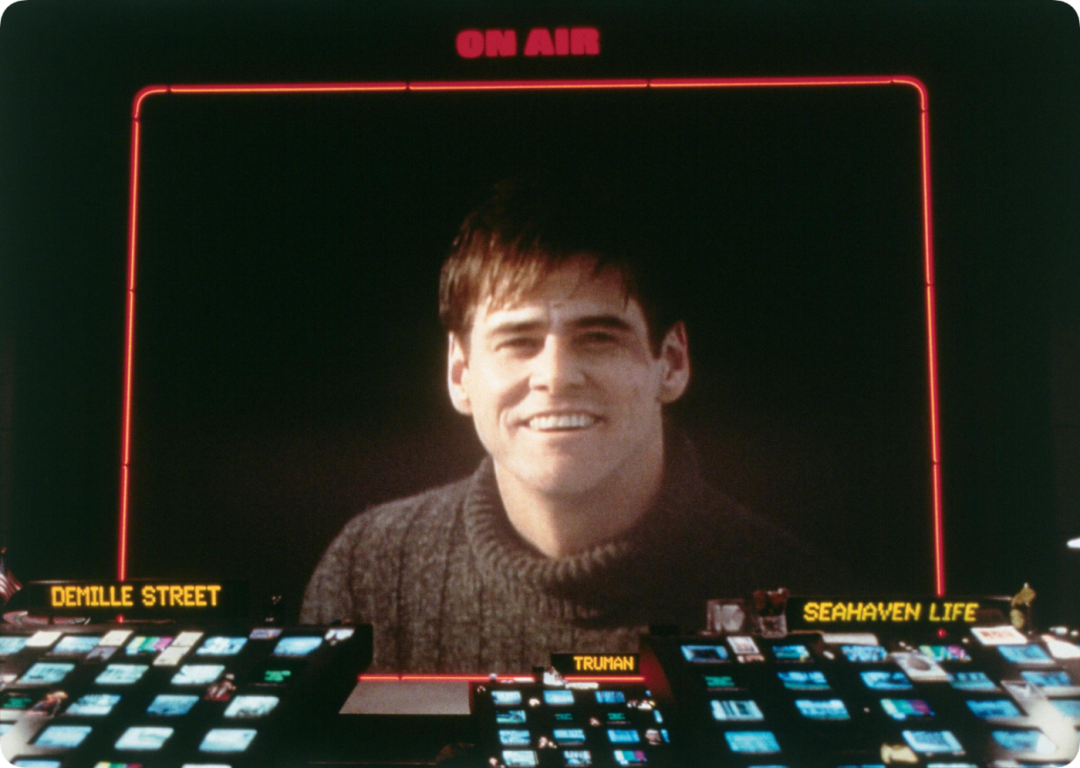
This highly personalized entertainment experience is likely to further change the way we share content with others.
In the age of television, the whole family sat around the living room watching the same drama. The characters and lines in a hit drama could become the shared memory of several generations.
Even in the short video era, although we are trapped in our own algorithmic information cocoons, at least occasionally we can catch the same popular memes and complain about the same bad movie after dinner.
If the movies and TV programs everyone watches in the future are individually generated by AI, such shared experiences may become increasingly rare.
Of course, it is very attractive for many people to be able to watch a movie that suits their taste at any time, participate in games with their favorite stars, or even become the protagonist of a science fiction blockbuster.
Maybe some people feel that they need to be extremely narcissistic to want to watch videos about themselves for countless hours.
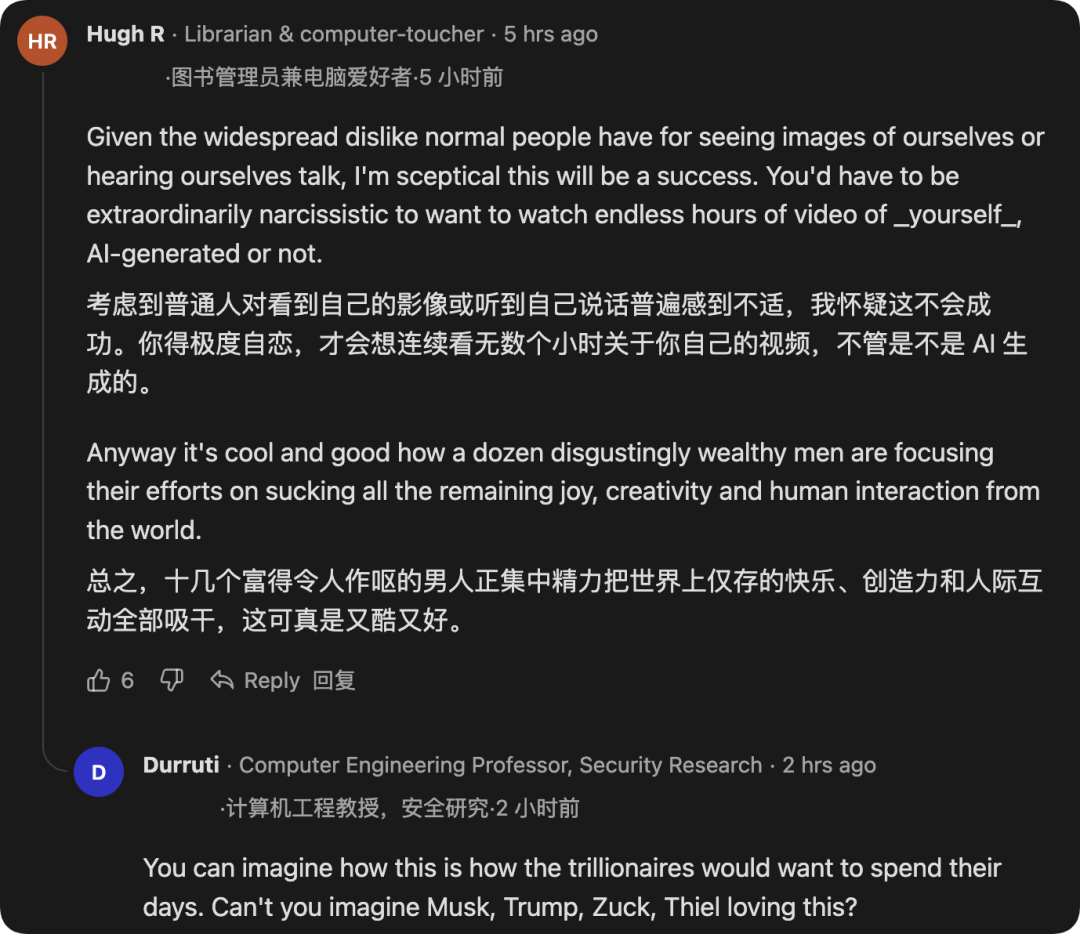
But whether we like it or not, it won’t be long before the ultimate temptation faced by modern people will soon change from “can’t stop watching short video dramas” to living in the aura of the protagonist customized by AI for us, never wanting to return to the mediocre reality.
Comments