
Abstract:
According to a Reuters report on November 13, 2026, although Nvidia has previously stated that U.S. export controls have effectively withdrawn it from China's AI data center market, Reuters' investigation of government procurement announcements, investment plans, construction contracts and corporate disclosure documents across China found that China still has a large number of AI computing power projects surrounding the construction of Nvidia's restricted chips, involving an amount of more than 23 billion yuan, or approximately US$3.2 billion.
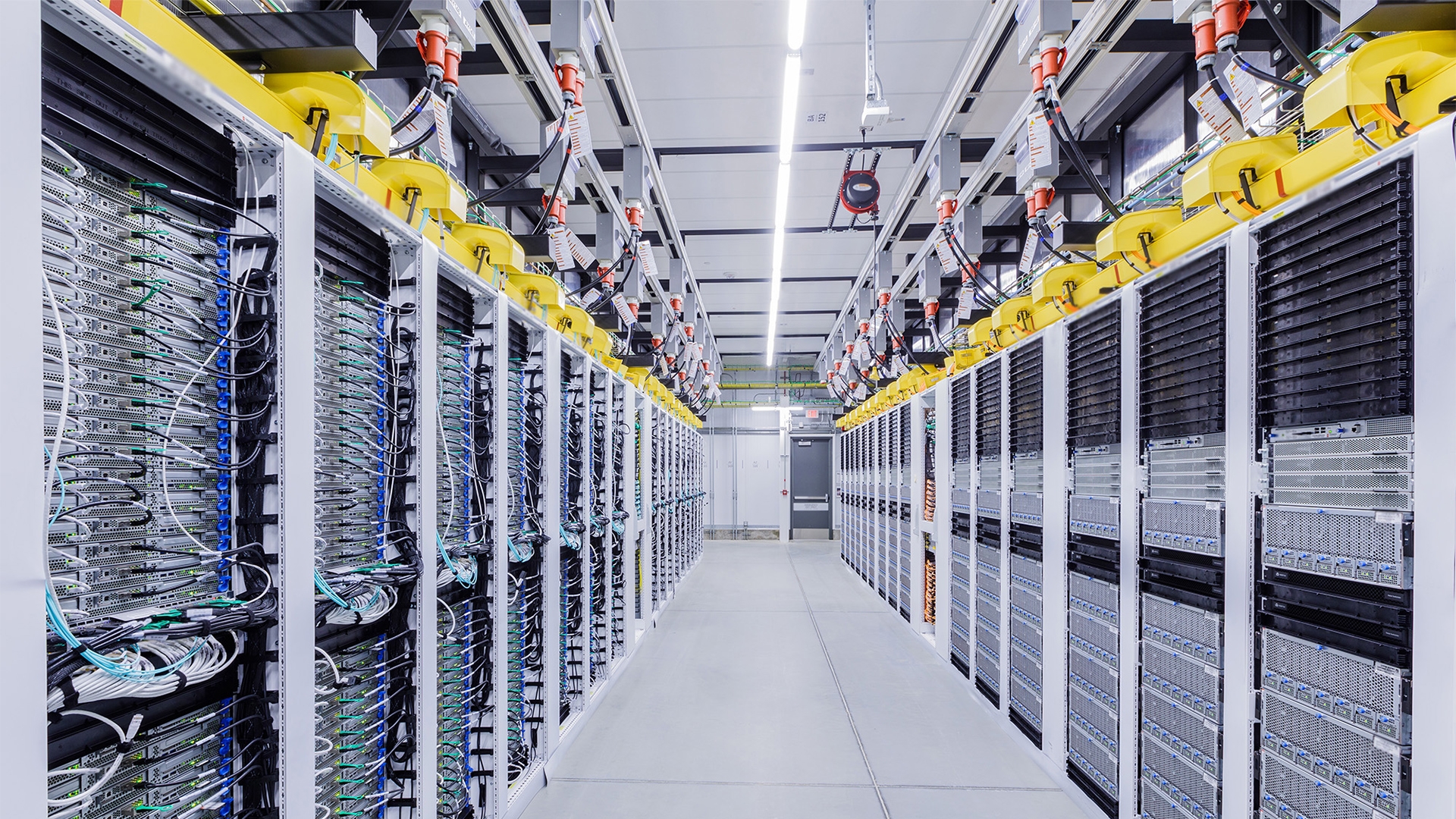
The investigation reviewed more than 150 public documents and found that relevant projects were spread across China's technologically advanced coastal areas and western provinces, involving computing centers, universities and corporate data centers supported by local governments. Nvidia processors used or planned to be used in the project include H100, H200 and H800 models.
Reuters emphasized that more than 23 billion yuan is the total value of related projects and equipment agreements, and does not mean that China has purchased the same amount of Nvidia chips. This figure also includes data center buildings, power systems, supporting facilities and other infrastructure investments, as well as contracts that have been signed, projects under construction and investments that are still in the planning stage.
These projects reflect that Nvidia technology still has considerable influence in the construction of China's AI infrastructure. Even as the United States continues to tighten export restrictions on advanced AI chips, Chinese local governments, enterprises and scientific research institutions are still promoting the construction of computing power based on Nvidia processors.
One of the noteworthy cases is located in Gansu Province in northwestern China. A data center renovation project was scheduled to install thousands of Nvidia chips by the end of the year, but it is unclear whether the processors have actually arrived. Some other projects are already operational or under construction, while others may face delays due to chip supply issues.
As the United States further tightens export controls, operators of these projects may have to face supply disruptions, construction delays, or even redesign the entire computing infrastructure. If a data center originally designed according to NVIDIA H100, H200 or H800 architecture cannot obtain corresponding chips, switching to domestic processors may require re-adjustment of servers, software adaptation and cluster architecture, resulting in additional costs.
Huang Jen-Hsun's departure may further increase this uncertainty. Reuters believes that Huang Renxun has long advocated relaxing restrictions on chip exports to China and is also an important policy communicator for Nvidia’s business in China. His departure could weaken Nvidia's lobbying influence in Washington, giving U.S. lawmakers more space to push for tighter export controls.
The gap between U.S. export controls and China’s actual demand
The United States began to restrict the export of Nvidia's advanced AI processors to China in 2022, and subsequently tightened restrictions on chips specially adjusted for the Chinese market, including H800. In January 2026, the Trump administration began to review and approve applications from qualified Chinese customers to purchase H200 chips on a case-by-case basis, and attached relevant conditions.
Nvidia previously stated in company documents that export controls have effectively withdrawn it from the Chinese data center computing market. Huang Renxun has also previously stated that Nvidia’s market share in China has dropped from 95% to zero.
However, Reuters cited data released by IDC in October this year and pointed out that Nvidia's share of China's AI accelerator shipments in the first half of 2026 will still reach 34%.
The two numbers are not directly contradictory because they measure different indicators: the market share Nvidia refers to involves the company's business in the Chinese data center market, while IDC's data reflects actual AI accelerator shipments. The latter does not prove the channel through which the restricted chips involved in the Reuters investigation entered China.
Reuters pointed out that it is currently unclear whether the Nvidia chips required for these projects were obtained through legal approvals, previous inventory, third-party supply channels, or other methods. The existence of relevant projects cannot directly prove that they involve violations of U.S. export controls.
The Jen-Hsun Huang incident has made Washington further pay attention to the flow of chips
When this investigation was published, Nvidia founder Huang Jensen had just announced his resignation as CEO. Previously, his personal relationship with Alice Huang, a former executive of Singapore-based cloud computing company Megaspeed, was exposed. The United States suspected that the latter had connections with Chinese intelligence agencies.
Megaspeed itself has come under U.S. scrutiny over suspicions that it may help Chinese customers obtain advanced Nvidia chips that are subject to export controls. The company denies illegally transferring chips to China.
Nvidia’s board of directors has previously launched an independent investigation and stated that it has no reason to believe that the company’s trade secrets or U.S. national security interests have been compromised. As of the time of the Reuters report, there was no public investigation conclusion that Huang violated U.S. export control laws.
What needs to be distinguished in particular is that the Chinese AI computing power projects identified by Reuters this time have no evidence to show that they are connected to Megaspeed or related accusations involving Huang Renxun. The two are currently only in the context of U.S. chip policy toward China and national security review.
Chinese AI companies are beginning to reconsider their overseas computing power layout
Reuters also previously reported that Chinese AI companies are stepping up reservations for data center computing power outside China, especially computing resources equipped with Nvidia's advanced processors.
Since the United States restricts the direct export of advanced chips to China, Chinese companies can still remotely use Nvidia processors deployed overseas by renting computing power in overseas data centers. This approach allows companies to obtain the computing resources needed to train and run large AI models without directly importing chips.
Multiple people familiar with the matter said that a large Chinese cloud computing service provider has internally discussed whether to lock in overseas NVIDIA computing power in advance, and some companies have also begun to contact data center operators, hoping to reserve relevant resources. Smaller AI laboratories are considering seeking cooperation with computing power rental service providers in Southeast Asia.
These companies are worried that the controversy surrounding Huang Renxun may push the United States to further tighten restrictions on China's use of overseas Nvidia computing power.
One of the concerns is the Remote Access Security Act (RASA). The bill seeks to give the U.S. Department of Commerce the authority to regulate remote cloud access to restricted technologies. The bill has passed the U.S. House of Representatives but still awaits consideration by the Senate.
If the bill eventually becomes law, the way Chinese companies rent Nvidia chips through overseas data centers may also be subject to stricter supervision. This means that even if the chips do not enter China directly, as long as Chinese users can remotely use relevant computing resources, they may become the subject of US export control policies.
Overall, this Reuters investigation revealed a noteworthy reality: China's AI infrastructure construction still relies on NVIDIA technology to a considerable extent, and the impact of U.S. export controls is no longer limited to whether chips can be exported directly, but may also extend to overseas computing power leasing, data center operations and remote access.
For China's AI computing power projects, which have invested huge sums of money in construction, the real risk is not only whether the chips can be purchased, but also whether supply, maintenance and technical support can be continued in the future. If the United States further expands regulatory scope, some projects may have to adjust their construction plans and switch to domestic processors or other alternatives. However, there is currently no evidence that all US$3.2 billion projects identified by Reuters will be suspended or canceled as a result.
Comments