
Abstract:
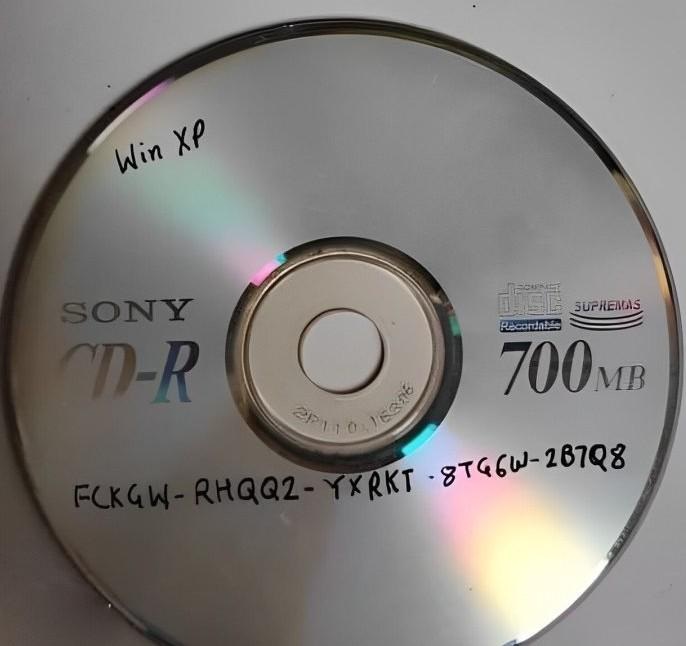
In the memory of early personal computer users, a Windows XP installation CD with a string of characters written in a marker was once an iconic image of the Internet era. For a long time, many people have regarded the widely circulated set of keys as the "god-level decryption code" used by hackers to break through Microsoft's anti-piracy mechanism. But former Microsoft engineer Dave Plummer recently explained that this is not the case: the key itself is not a cracking tool, but a real and valid enterprise volume authorization key that accidentally fell into the public domain.
Windows XP was released to OEMs on August 24, 2001, and was released to OEMs on October 25 of the same year. Officially launched on the retail market today. Back then, Windows wasn't often offered as a free upgrade as it is today, and even Windows 98 users usually had to purchase a physical CD containing the installation files and product key.
For a generation of PC users, this set of keys is almost everywhere: it is written on burned discs, appears in various online forums and download sites, and is also widely distributed with a large number of so-called "pre-activated" Windows XP installation images. Because of this, many people believe that it is a decryptor that can bypass the activation mechanism and defeat Microsoft's anti-piracy system.
However, the truth is even more embarrassing for Microsoft. This string of keys is not a universal password generated by someone through technical means, but a legitimate volume authorization key used by Microsoft for enterprise customers. Since the key and the corresponding enterprise installation media were leaked, they were eventually obtained by piracy distribution networks and used to deploy Windows XP on a large number of computers without regular activation.
Before the emergence of Windows XP, the activation method of Windows was relatively simple: users entered the product key during the installation process to complete the authentication. Windows XP introduced the Windows product activation mechanism on a large scale for the first time, namely Windows Product Activation, or WPA for short. This mechanism generates a hardware identifier based on the CPU, memory and other hardware components, and submits it together with the product key to Microsoft servers for verification; once there is an abnormality or mismatch between the key and device information, the system may mark the copy as pirated.
Dave Plummer, a former Microsoft engineer who participated in the development of Task Manager and the WPA project, said that the core of WPA is to bind hardware information with product keys for verification to increase the difficulty of pirated copying.
However, Microsoft also needs to meet the deployment needs of large enterprises. For a company with thousands of computers, it is obviously impossible to enter the key and complete network activation one by one. Therefore, Microsoft provides such customers with a volume license key, also known as Volume License Key, or VLK for short. Enterprises using this licensing method can deploy Windows XP on multiple devices without having to go through the normal activation process for ordinary consumers.
This is where the problem lies. Microsoft originally assumed that these volume license keys would be strictly retained within the enterprise that purchased the license, but this has not been the case. The set of keys that were later widely circulated was a legitimate VLK that was whitelisted by Windows XP activation logic. When installing, users only need to select the option that already has a product key and enter the corresponding code, and the system will recognize it as an enterprise volume authorization installation without the need to connect to the Microsoft server to complete verification.
This means that the system after installation will not have a 30-day trial countdown, will not have an inactive watermark, and can even pass partial update verification in the early stages. Therefore, pirates can create a "pre-activated" Windows XP image by simply packaging the key with the Enterprise installation media. For the average user back then, getting and installing XP became as easy as downloading a free music album.
Plummer pointed out that from a technical point of view, this does not mean that Microsoft's activation system has been "cracked." To be more precise, the piracy network uses the normal authorization channel reserved by Microsoft for corporate customers; what really got out of control was a legitimate key that should not have left the corporate environment. Today, Microsoft has already shut down the authentication server related to Windows XP, and this key has also been blacklisted.
On the 25th anniversary of the release of Windows XP to OEMs, the outside world is once again looking back at this representative piece of PC history. As one of the most popular operating systems in Microsoft's history, Windows XP not only left behind the classic "Bliss" blue sky and green land wallpaper, but also witnessed the early stages of the rapid evolution of software licensing, anti-piracy and Internet communication methods. Microsoft also quietly launched a 4K version of this classic wallpaper in 2023, continuing the nostalgic influence of this operating system on the user base.
Comments