We've launched so many satellites into space over the past few decades that we now face a huge orbital debris problem. The European Space Agency (ESA) noted in its Annual Space Environment Report that there are currently more than 6,600 tons of space debris floating in low Earth orbit (LEO), 100 to 1,200 miles (160 to 2,000 kilometers) above the Earth's surface.
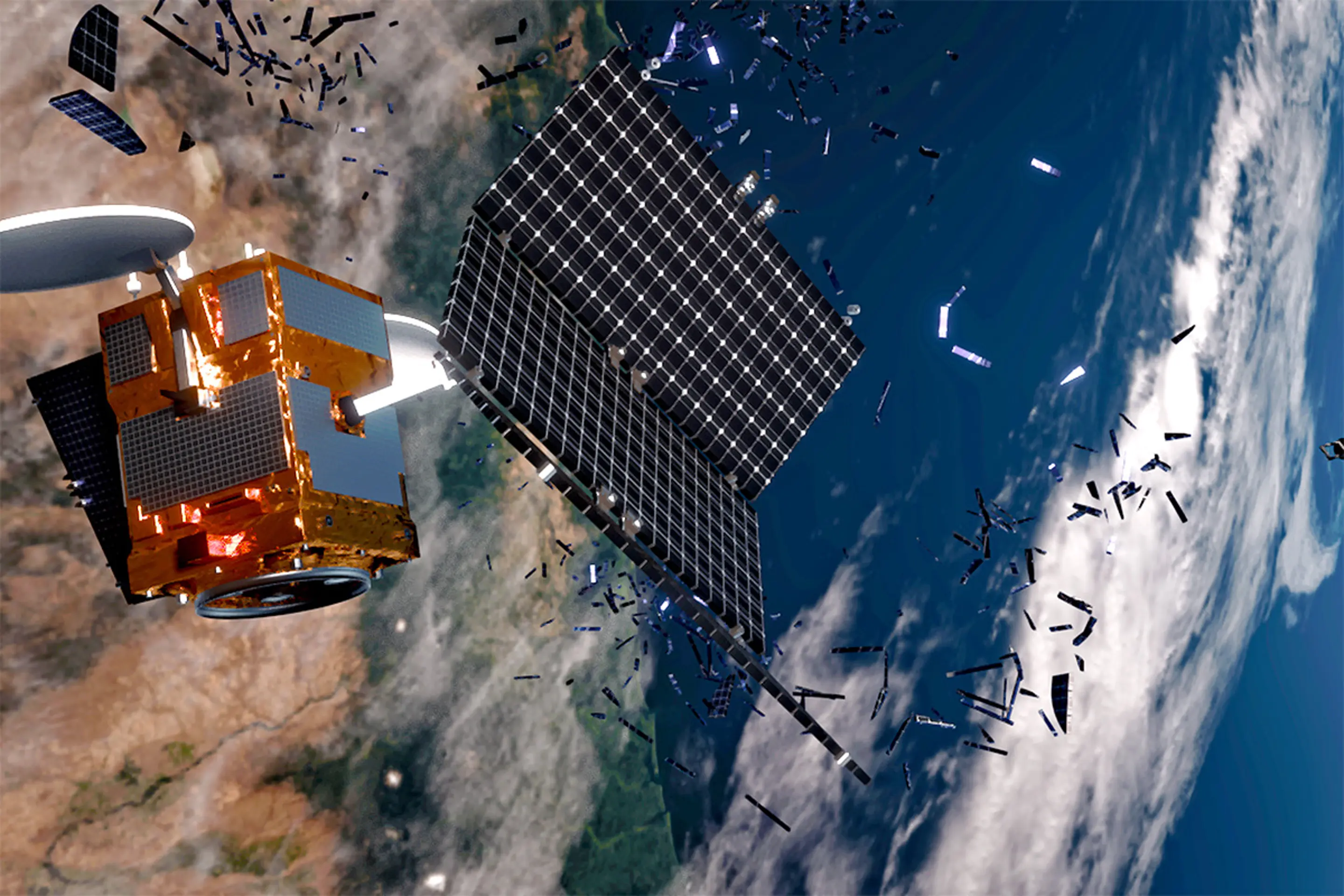
Debris can break off from spacecraft such as satellites and break up into tiny but dangerous pieces in orbit
That's up from an estimated 6,000 tons in 2023, according to NASA. It's an almost invisible but huge problem because "we rely on satellites as a source of information for our daily lives, from navigation, telecommunications, services to Earth observation, and even defense and security," said ESA Director-General Joseph Aschbacher.
Space junk consists of a wide variety of bits and pieces. Some are produced when payloads, such as operating satellites or calibration instruments, explode in space or collide with other payloads. Others are items intentionally released during payload operations, such as covers for optical instruments or astronaut tools. The rocket body, the orbital stage of the launch vehicle, as well as the fairing and engine, also exacerbate the problem. In addition, there is debris from on-orbit disintegration events such as collisions, explosions, and wear and tear on the spacecraft.
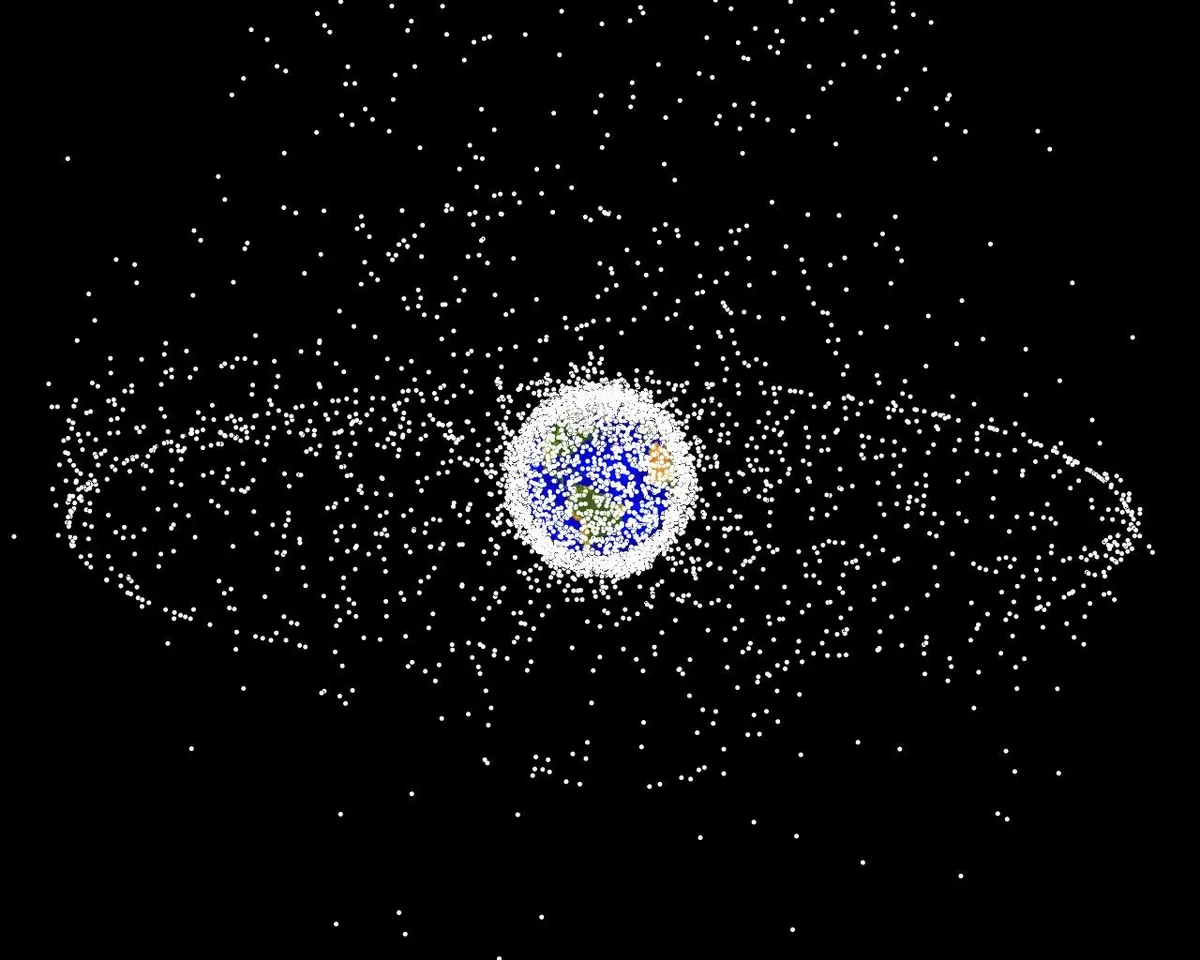
Illustration of a space debris swarm as seen from beyond geosynchronous orbit - debris clouds in low Earth orbit are also clearly visible (not to scale)
Even tiny space debris, only one millimeter in diameter, can cause significant damage to spacecraft and satellites. "A fragment as large as one centimeter has the energy of a hand grenade," said Thiago Suárez, chief engineer at ESA's Clean Space Office.
Now think about it, there are at least 1.2 million space junk objects larger than 1 centimeter (0.4 inches) currently moving rapidly around the Earth's orbit. Each such object could collide with other objects, potentially creating hundreds of pieces of debris in a chain reaction we call the Kessler effect.
Additionally, MASTER, ESA's debris modeling software tool, shows that the amount of debris in low Earth orbit, about 340 miles (550 kilometers) above Earth, is roughly the same as the number of active satellites.
Since the dawn of the space age, the number of objects and their total mass and area has been growing steadily, resulting in involuntary collisions between operational payloads and space debris. Growing space traffic, driven by miniaturization and large satellite constellations, further exacerbates the potential for loose debris. There were several major debris events in 2024, as well as several smaller ones. This resulted in a significant increase in the number of objects in one year, with at least over 3,000 newly tracked objects.
Currently, there is no international space law requiring the cleanup of debris in low Earth orbit. However, various space agencies and industry bodies, including ESA, have developed guidelines and recommendations on reducing debris generation. These guidelines and recommendations include spacecraft design considerations such as:
Prevent release of mission-related objects (such as lens caps and deployment mechanisms)
Use materials and components that minimize the risk of debris during and after operation
Use a reliable deployment mechanism that does not create fragmentation
Design spacecraft structures to minimize the likelihood of disintegration from internal energy sources
Incorporate end-of-life capabilities into original design
Create passivation systems to neutralize energy sources (batteries, propellants) at the end of the mission
Designing a spacecraft to burn completely upon re-entry
ESA plans to use the ClearSpace-1 debris removal spacecraft to remove the suitcase-sized PROBA-1 satellite (used for technology demonstrations) from orbit in 2028. The spacecraft, manufactured by the Swiss company ClearSpace, weighs about 112 kilograms and can grab space debris with four "claws". Tokyo-based Astroscale also provides debris removal services. Both companies have been contracted by the UK Space Agency to remove a fleet of defunct UK satellites by next year.
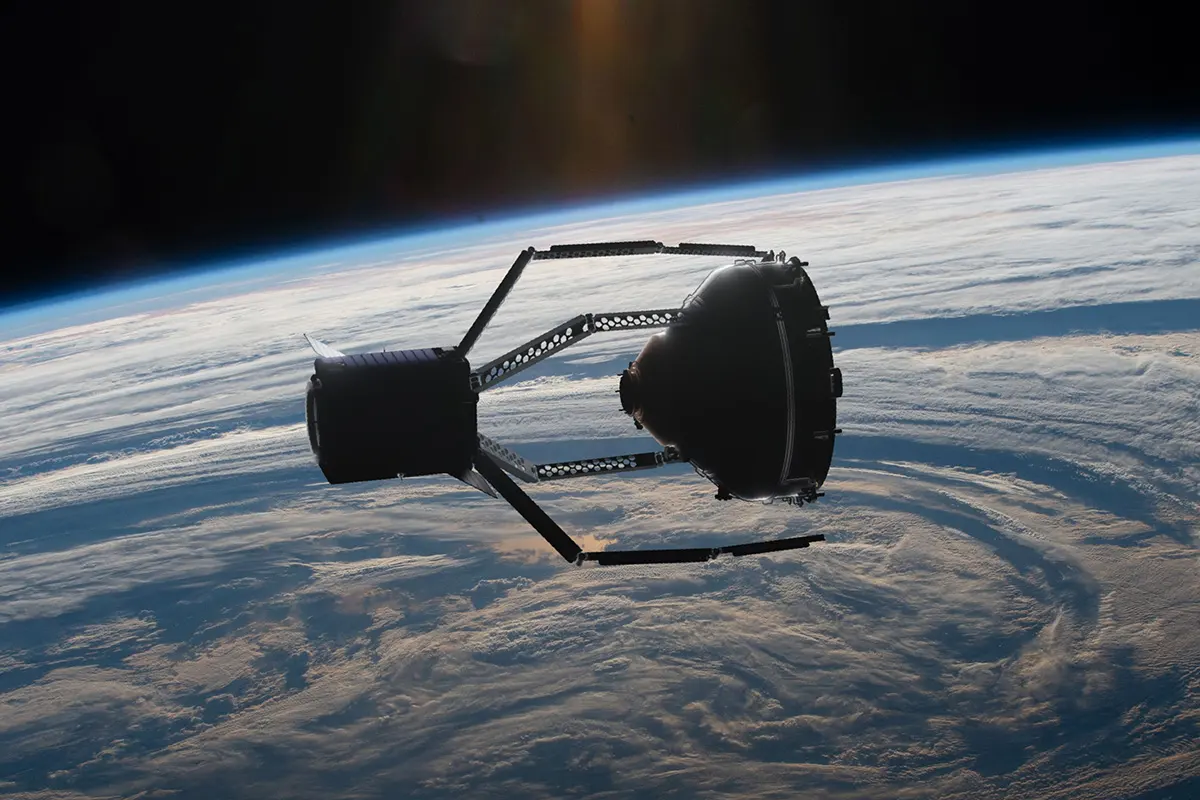
Schematic of the ClearSpace-1 debris removal spacecraft capturing the Vespa payload adapter (now abandoned project)
If these plans are successful, they will be among the first true space junk cleanup missions ever. Scaling up such an operation to clean up even a fraction of the vast amounts of debris in low Earth orbit would be difficult and take a long time.
Hopefully, as launches become cheaper and easier, we'll see more junk removed from orbit — along with ambitious plans to use satellites to enable global internet access and beam solar energy to Earth, among other things.