The global wafer foundry giant's monopoly on the 2-nanometer process technology is intensifying. Taiwan Semiconductor Manufacturing Co., Ltd. has set the wafer price of its 2-nanometer process technology at approximately US$30,000 per piece. The process plans to be fully mass-produced next year and implements a "premium alliance" strategy to implement unified prices for all customers. Samsung Electronics has countered with relatively low prices and quick supply response.
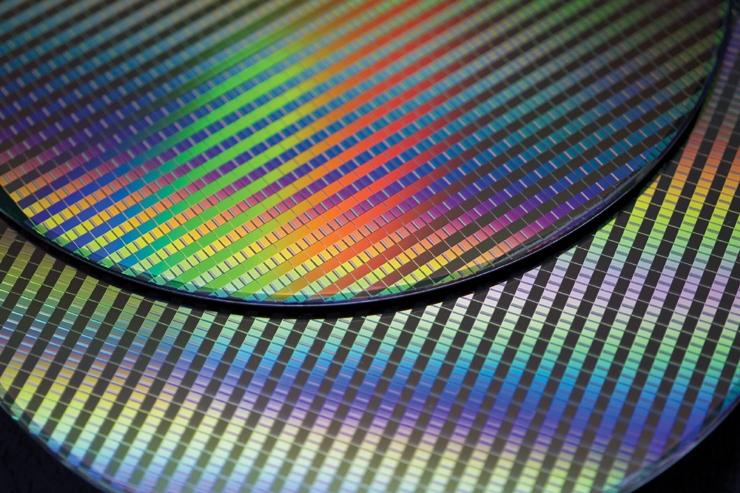
According to semiconductor industry sources on the 18th, Taiwan's wafer foundry company TSMC announced that it plans to set the production price of its 2-nanometer process at US$30,000 per unit and supply it without discounts. This is approximately 50-66% higher than the current 3nm process, aiming to fully leverage its competitive advantages in technology and production capacity to maximize profitability.
TSMC plans to start trial production within the next 34 months, with an initial target of monthly production capacity of 30,000 to 35,000 wafers. By 2026, TSMC plans to establish a production system with a monthly production capacity of 60,000 wafers in four factories. It is reported that the initial yield rate is around 60%, while SRAM’s yield rate is over 90%, which means that mass production will not encounter any obstacles.
TSMC’s high-price policy is not simply about production costs, but a strategy to maximize profits by focusing its limited initial production capacity on “high-quality demand.” Its main target is customers with needs for high-performance computing (HPC) and artificial intelligence (AI), such as Apple, NVIDIA and AMD.
The 2nm process improves performance by 10-15% under the same power consumption, or reduces power consumption by 20-30% under the same performance. This is an attractive choice for customers seeking performance improvement and power efficiency in upstream industries such as AI, servers and mobile. Some industry insiders believe that TSMC sticks to prices in order to guide customers to compete to ensure chip supply in the face of supply shortages.
Meanwhile, Samsung Electronics is emphasizing its price competitiveness to win over customers. According to reports, the yield rate of Samsung's 2-nanometer process is currently about 40%, and its stabilization speed is considered slower than that of TSMC. However, in order to restore its technical credibility and solidify its customer base, the company is adopting a relatively low price and fast response strategy to attract new customers.
A recent example is Tesla’s OEM orders worth 23 trillion won. Tesla is simultaneously expanding its electric vehicles and artificial intelligence infrastructure, and Samsung has been selected as a production partner for its next-generation artificial intelligence chip "AI6", which is interpreted as recognition of Samsung's price competitiveness and supply flexibility. Some industry insiders also do not rule out the possibility that high-end customers such as Apple and Metadata will entrust part of their production to Samsung's 2-nanometer production line.
Samsung's foundry unit continues to suffer quarterly losses of trillions of won. In order to ensure a stable profit structure, attracting large customers is crucial. The Tesla deal is also expected to have a positive impact in the medium to long term, intertwined with yield improvements. In particular, restoring trust in the 3nm GAA process and accumulating experience working with US and European customers can serve as a springboard to expand the 2nm customer base.
An industry insider said: "TSMC is using a high-price, high-quality strategy to enhance the loyalty of large AI and HPC customers, while Samsung is using a low-price, high-speed strategy to find new customers." He added: "Winning or losing in the 2nm era will depend on a series of complex competitive factors, including not only technical strength, but also price, supply speed and long-term partnerships."
Reference link
https://www.ddaily.co.kr/page/view/2025081815110791884