Meta Inc. announced Tuesday that it will roll out artificial intelligence voice translation to all Facebook and Instagram users globally. This new feature, available in any market where Meta AI is available, allows creators to translate content into other languages so it can be seen by a wider audience.
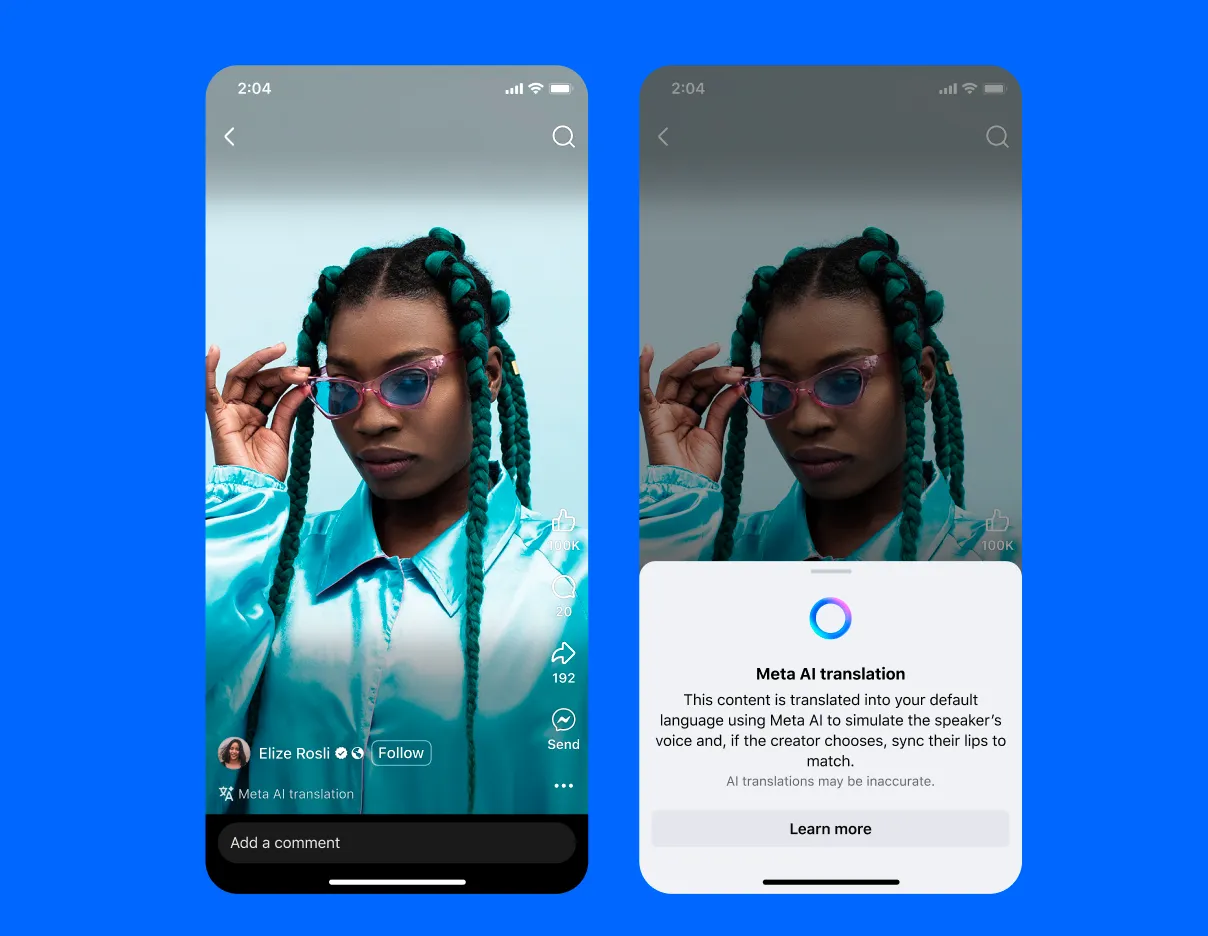
The feature was first announced at Meta's Connect developer conference last year, when the company said it would pilot automatic translation of creators' voices in Reels on Facebook and Instagram.
Meta notes that when translating content into new languages, the AI translation will use the creator's own voice and intonation to make the voiceover sound authentic.
Additionally, creators can choose to use lip sync, which aligns translations with lip movements to make them look more natural.
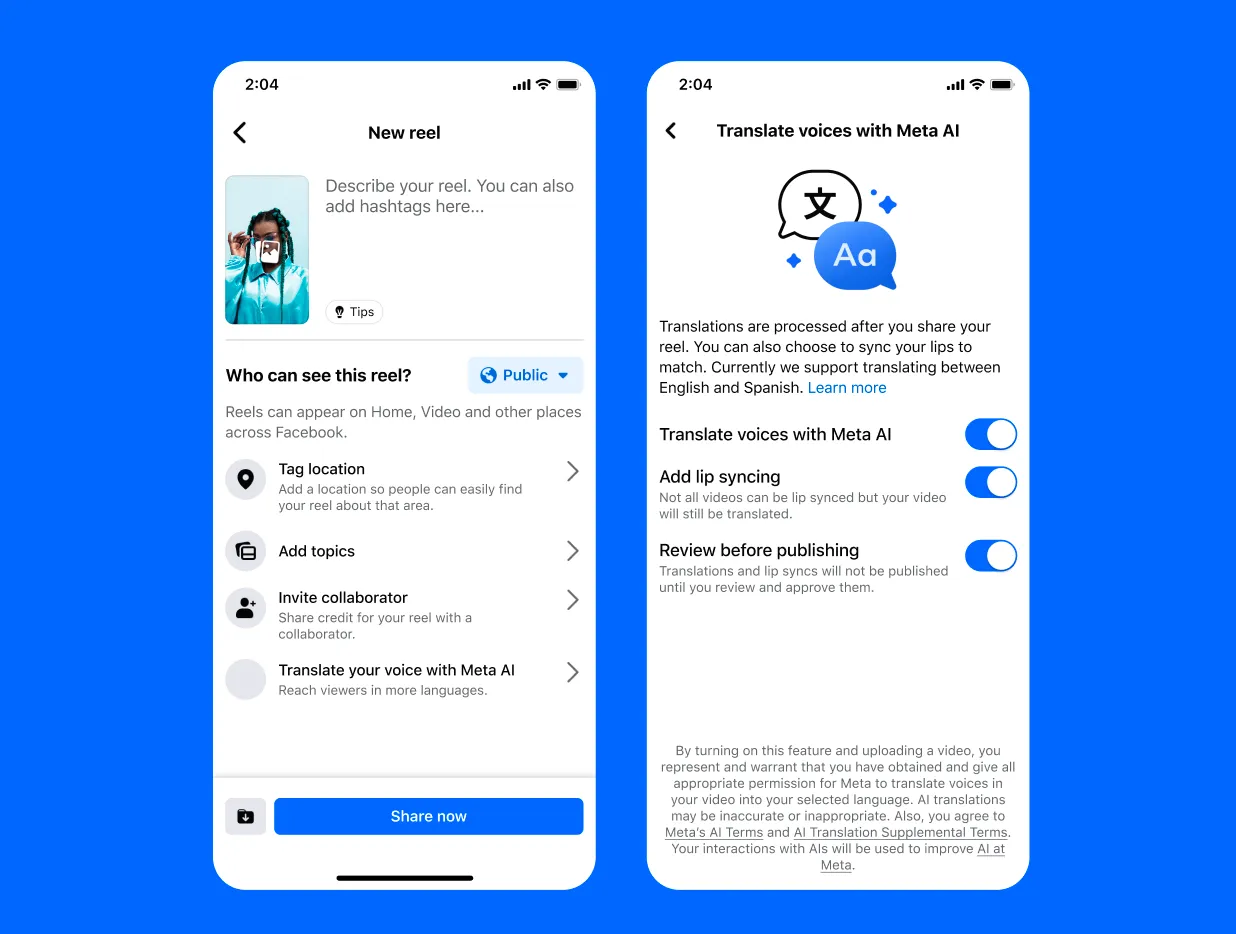
Image source: Meta
The feature currently supports translation between English and Spanish, and more languages will be added over time. These AI translation services are available to Facebook creators with 1,000 followers or more, as well as all public Instagram accounts around the world that offer Meta AI services.
To access this option, creators can click "Translate your voice with Meta AI" before publishing their work. Creators can then toggle the button to enable translation and choose whether to include lip sync. Once you publish your work by clicking "Share Now", the translation will automatically be available.
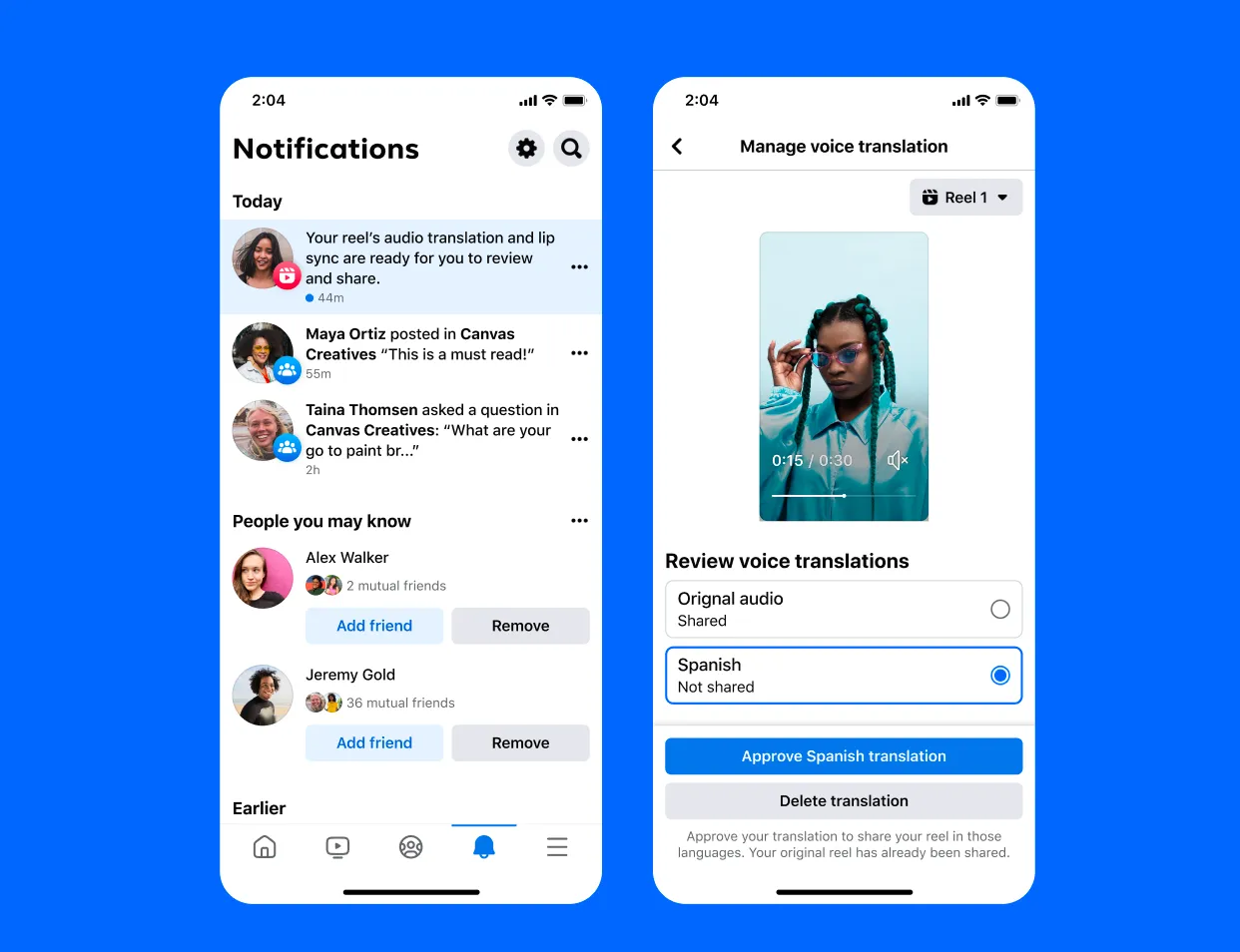
Creators can view translations and lip sync before their work is published publicly, and can turn off either option at any time. (The company notes that rejecting a translation will not affect the original work.) Viewers of a translated work will see a notification at the bottom indicating that the work was translated by Meta AI. Users who do not want to see translations in specific languages can turn off this feature in the settings menu.
Creators can also access a new metric in the Insights panel to see the number of views in different languages. This can help them better understand how their content reaches new audiences through translation—a metric that will become even more useful as translations support more languages.
Meta recommends that creators who want to use the feature face forward when recording, speak clearly, and avoid covering their mouths. Minimizing background noise or music can also help. This function supports up to two speakers. To ensure normal translation function, speakers should not interfere with each other.
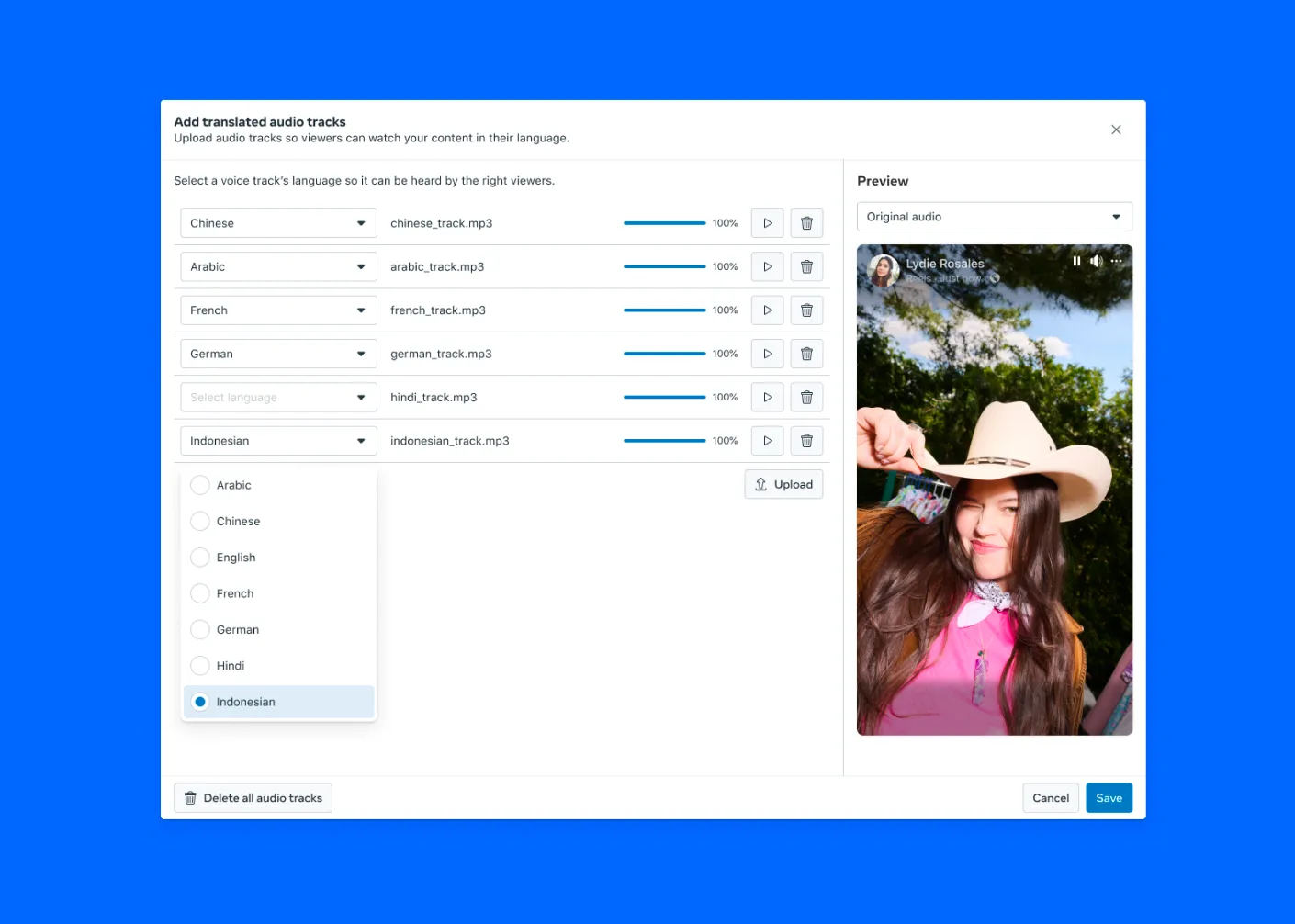
Additionally, Facebook creators can upload up to 20 voiceover audio tracks to Reel, expanding their audience beyond English or Spanish-speaking markets. This feature is available in the Closed Captioning and Translation section of Meta Business Suite and supports adding translations before and after publishing, unlike the AI feature.
Meta said that more languages will be supported in the future, but did not elaborate on which languages will be supported next and when.
"We believe there are many great creators out there whose potential audiences don't necessarily speak the same language," Instagram head Adam Mosseri explained in a post on Instagram. "If we can help you reach your audience in other languages, across cultural and language barriers, we can help you grow your following and get more value from Instagram and the platform."
As it rolls out its AI capabilities, multiple reports suggest Meta is once again restructuring its AI team to focus on four key areas: research, superintelligence, product and infrastructure.