Nearly three years after its listing, the German luxury car manufacturer Porsche received a notice: In view of the company’s stock price performance in the past year, it will beExcluded from German stock market benchmark DAX index. According to an announcement from STOXX, this change will take effect on September 22,Porsche will be "downgraded" to Germany's mid-cap stock index MDAX. To explain it from the perspective of easy understanding, DAX constituent stocks generally refer to the 40 blue chip stocks with the highest market capitalization in the German market, and are also regarded as a barometer of the German economy.
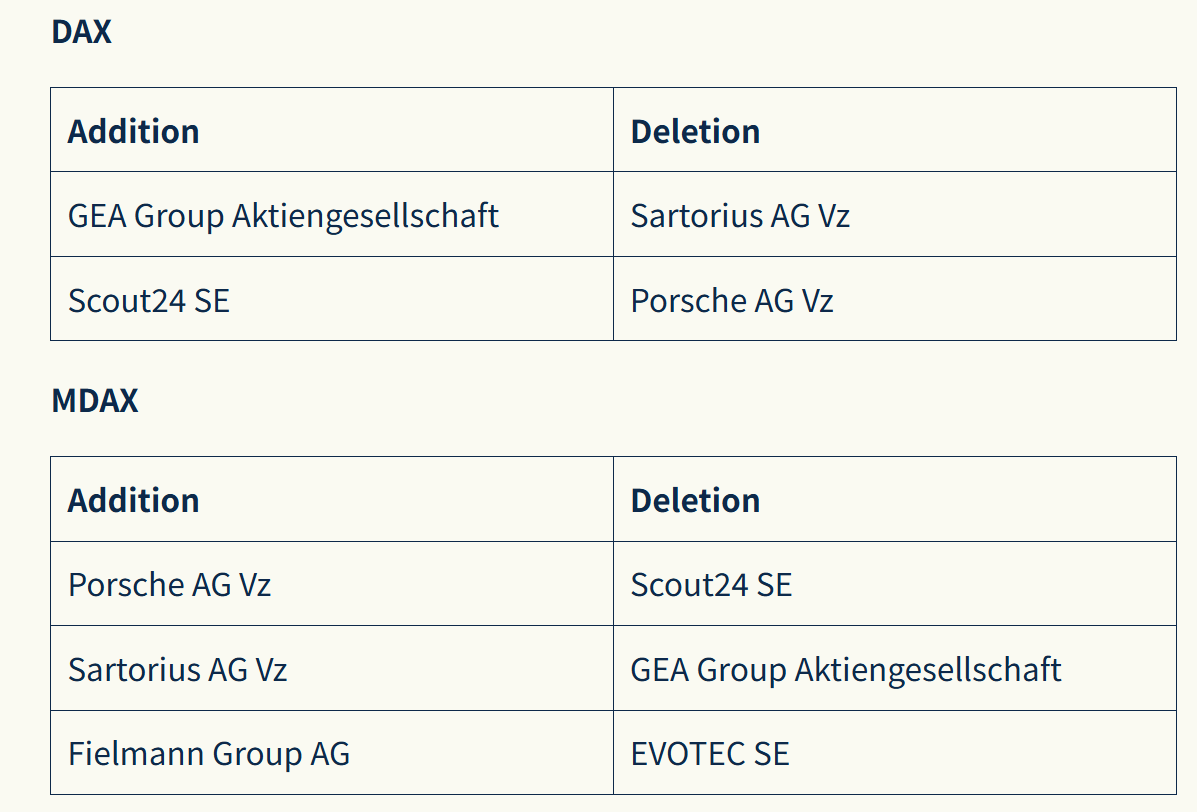
(Source: Stoke)
At a time when passive index funds are gaining traction, joining major indexes is becoming increasingly important. Conversely, being kicked out of a benchmark index also means there is no escape from a relentless sell-off.
Porsche, which was spun off from the Volkswagen Group, completed its IPO in September 2022 and has been a DAX constituent since then.In the early days of its launch, Porsche surpassed its parent company Volkswagen and became theEurope's most valuable carmaker. You must know that Volkswagen delivers nearly 10 million cars a year, while Porsche only delivers 300,000 cars.
Today, the company's stock price is only one-third of its peak value. Porsche's share price has fallen 33% in the past 12 months, and is now roughly half its IPO price.
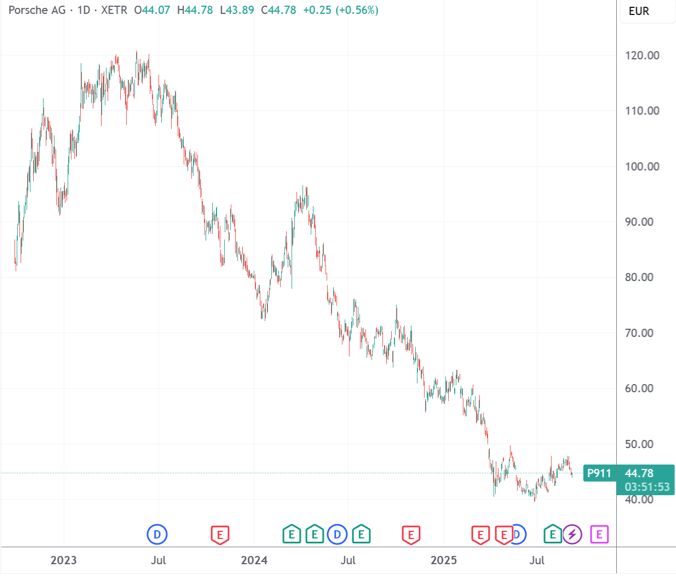
(Daily chart of Porsche European stocks, source: TradingView)
The pressing issue facing Porsche is its declining performance under the impact of Trump's tariffs.
In April, early July and the end of July this year, Porsche lowered its performance outlook three times in a row in just three months.The company currently expects a return on sales of at least 5% in 2025, compared with its previous target of at least 6.5%. In the second quarter of this year, Porsche's operating profit fell to 245 million euros, and its return on sales was only 2.6%, a new low since its IPO in 2022.
The United States is currently Porsche's largest single market, but all Porsches sold in the United States are imported from Europe.
According to the agreement reached between the United States and the European Union at the end of August, the United States will reduce the tariff rate on European car imports from 27.5% to 15% on the premise that the EU meets a series of U.S. requirements. Even so, the tax rate is still much higher than the 2.5% before the tariff storm.
In the words of fellow Lamborghini CEO Stephane Winkelmann,Rich people who can afford luxury cars are rich because they know what they are doing and why they are doing it.Now these luxury car customers are waiting for the tariff impact to become more stable to confirm that the current tax rate is the final number.
Regarding being removed from the key index, Porsche CEO (also CEO of Volkswagen Group) Oliver Blum stated on Thursday that the company's downgrade from the index was a "technical reason" and the next goal is to return to the DAX "as soon as possible".
Bloom also emphasized: "Considering Porsche's total market value and brand influence, we are still among the largest listed companies in Germany."