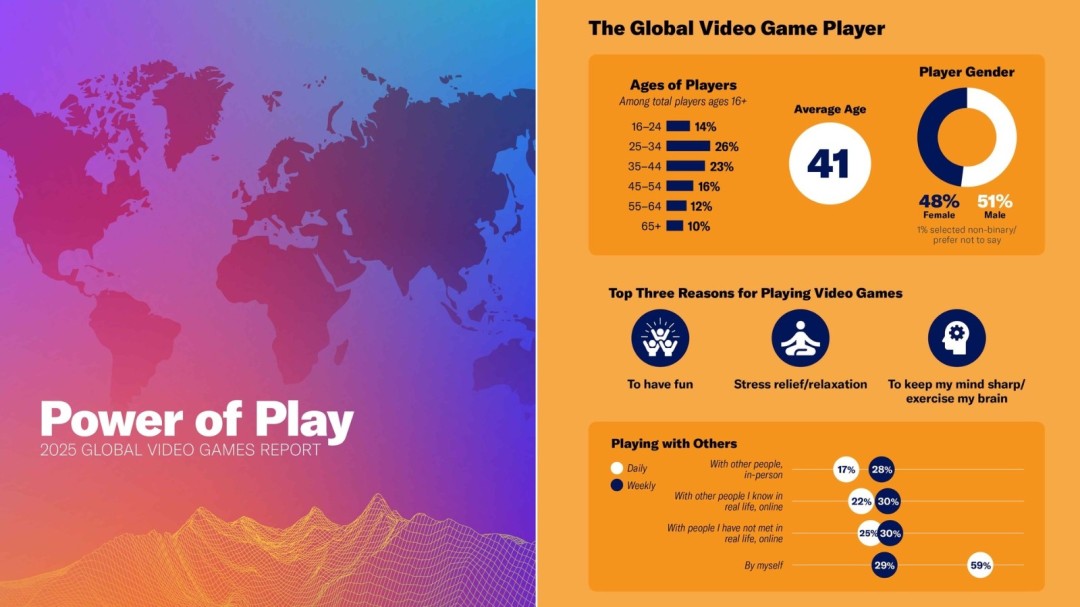
Recently, ESA (American Entertainment Software Association) released the "2025 Global Game Power Report", which shows that 48% of global gamers are women. This marks a historic change in the gender balance of the gaming industry.
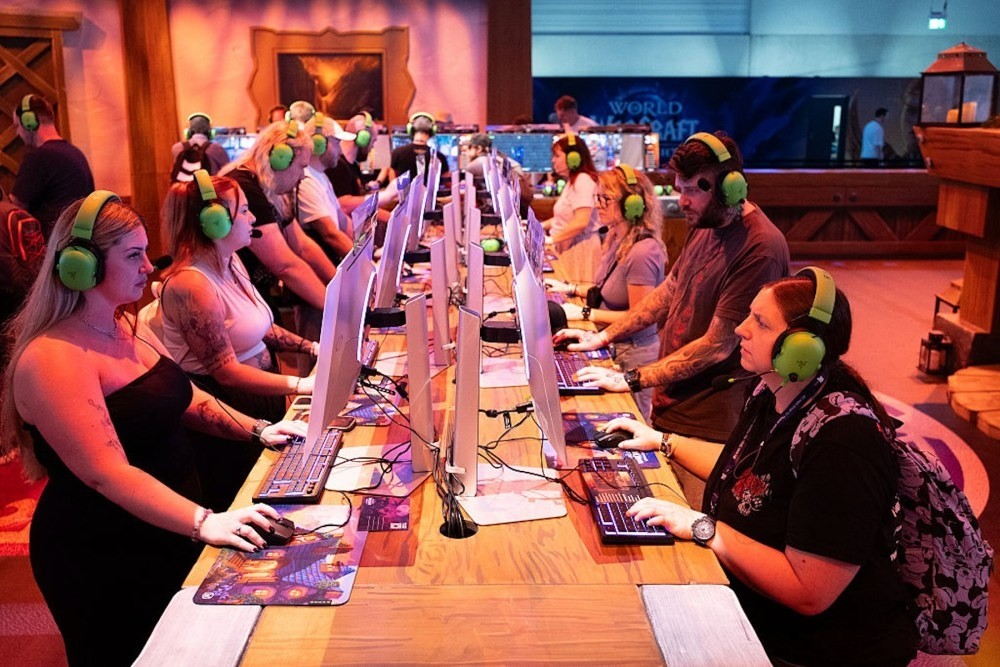
This report is based on a survey of more than 24,000 active players in 21 countries. The results show that in 10 countries, the number of female gamers has exceeded that of men, and in 2 countries, the number of male and female players is evenly split. Brazil (57% female players) and South Africa (58% female players) are particularly prominent.
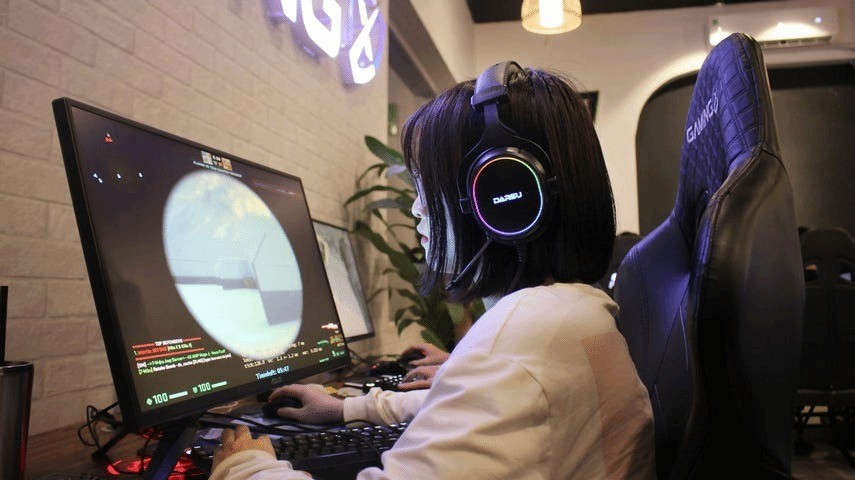
Mobile devices are the most popular gaming platform, with 55% of players liking to play games on mobile platforms, 21% on PCs, and 21% on consoles/handhelds. Female gamers like to play mobile games very much, but they don’t like to play PC games.
Globally, 68% of respondents believe that playing games online with others is a positive or extremely positive experience. This evaluation is particularly prominent in Brazil (82%), with China, Saudi Arabia and Egypt also accounting for 75%. Japan and Germany are completely different. The proportions of these two countries are at low levels, 56% and 52% respectively.
Survey results also vary significantly from country to country as to whether playing games has a positive impact on career development or academic progress. Globally, 50% of respondents said they learned technical or behavioral skills through games that had a positive impact on their studies or work, but this figure was only 33% in Germany and 31% in Japan. The survey did not ask whether gaming has negative consequences, but recent surveys in Germany have shown that gaming as a hobby is still often questioned.
The survey also found that players’ primary motivation for playing games is “to have fun” (66%), followed by “relieving stress” (58%) and “keeping their minds sharp” (42%). 77% of the respondents said that games helped them reduce stress, and 70% of the respondents said that games relieved their anxiety. 64% of respondents believe that gaming alleviates loneliness by allowing them to connect with others.
Half of the respondents believe that playing games has improved technical or behavioral skills and directly assisted their studies or careers. 43% of respondents said that games have influenced their career choices or educational directions, and games help improve creativity (77%), problem-solving skills (76%) and teamwork skills (74%). Improvements in adaptability (72%), critical thinking (71%) and communication skills (67%) also accounted for a higher proportion. European players believe that the three skills that games can most improve are: creativity (73%), problem-solving ability (72%), and adaptability (70%).