Japan, a big gaming country, may have never thought before that its awesome gaming industry would be choked by such an inconspicuous gadget as fonts. In the middle of last month, Japanese media reported that the American-based Monotype, the parent company of Fontworks, Japan’s main font supplier, had made a decision that went against its ancestors.
It ended Fontworks, a program for game developers. This plan would have allowed developers to integrate Japanese fonts into games for $380 per year.
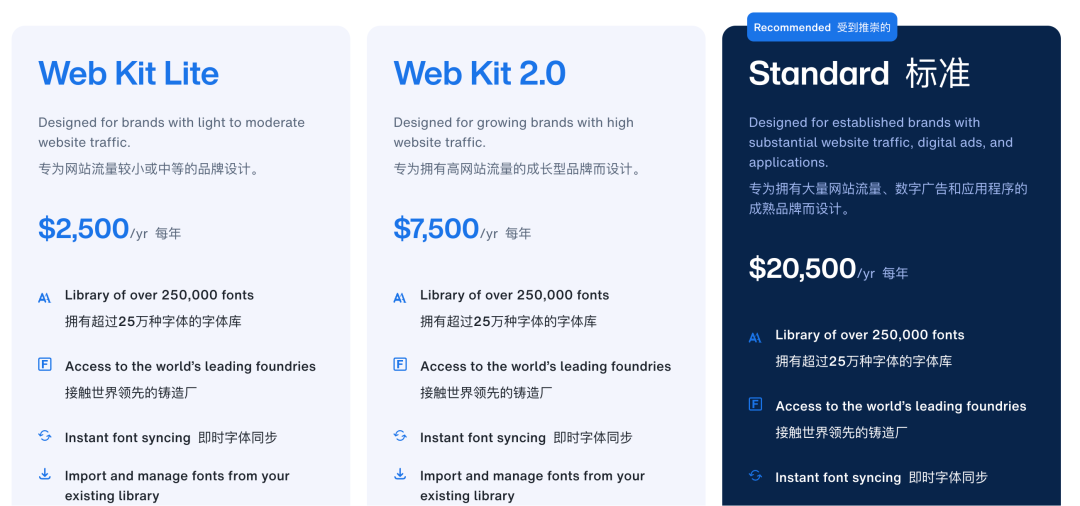
But now, if manufacturers want to use similar services, the amount they need to spend has skyrocketed 54 times to $20,500 per year.
Hey, don’t be too expensive. The most cruel thing about Monotype is not the price, but the 25,000 user limit for this new service, which can be used for up to 5 applications.
In other words, game manufacturers who have no money cannot afford to subscribe to services, and rich manufacturers cannot make money because of the "user limit". Regardless of whether they are small-cost games or large-scale commercial games, the Americans really treat the Japanese as little devils.
Maybe you don't feel anything yet, but actually it has a big impact.
Such as FGO, "Persona 5", "NieR: Automata" and many works in the Mario, Final Fantasy and Dragon Quest series. Major companies with names such as SE, Nintendo, Capcom, ATLUS, Bandai Namco, etc. have used this service of Fontworks before.

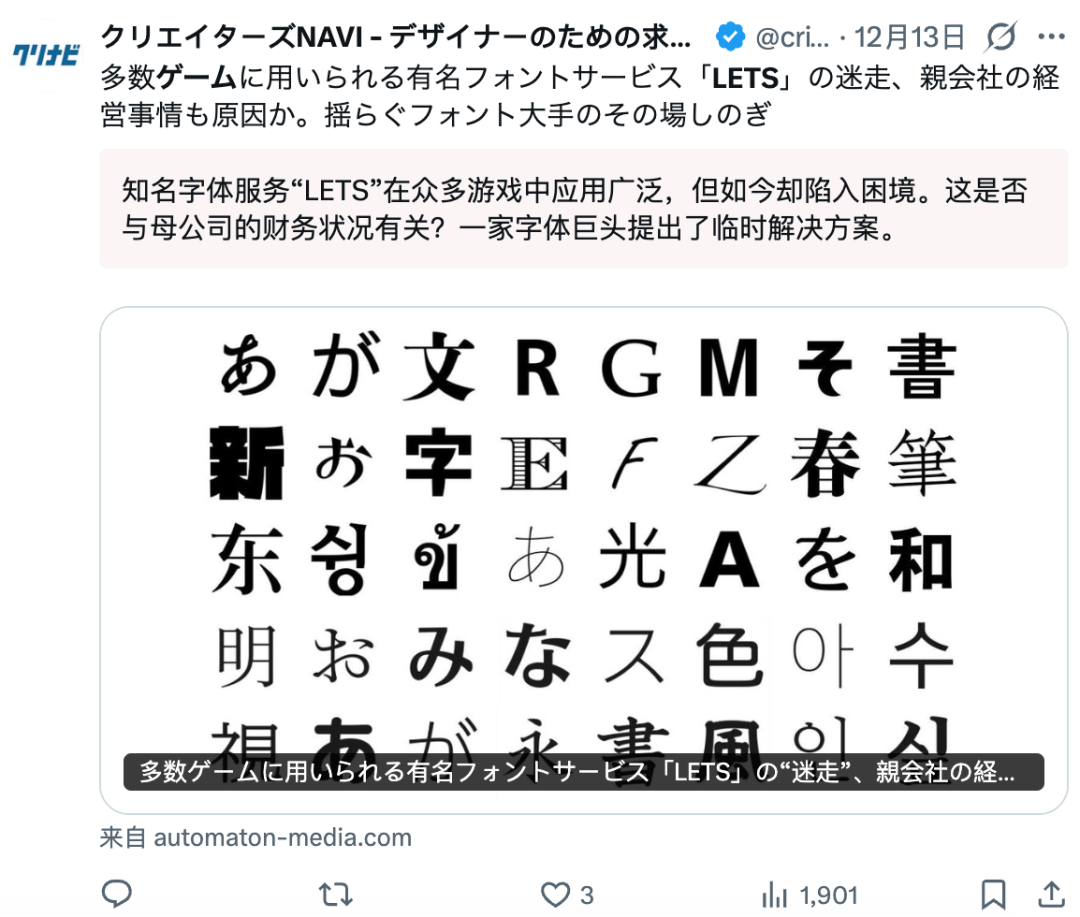
It is normal for Fontworks to be favored by Japanese manufacturers. After all, it is also a veteran in the font industry. In 1990, it released the Postscript Japanese font "Rodan-DB". In 2002, it launched the annual subscription font service "LETS" very advancedly, and the font services that game manufacturers subscribe to are part of LETS.
In 2013, SoftBank acquired 88% of Fontworks shares for 1.771 billion yen. In 2023, Fontworks was acquired by Monotype.
The reason why we are going through so much trouble now is not because Monotype is full and has nothing to do. The official statement it gave was "to align the original project with global standards", but it did not explain it specifically.
Japanese media analyzed it. Simply put, Monotype has already become an industry leader by acquiring font copyrights, occupying 16% of the global font and font market share, which is 3% higher than Adobe's related market share. But the company is great, but the family background is not strong.
It had previously bet on AI-assisted tools for typesetting solutions, but the results were not good. It lost millions of dollars and laid off a wave of people. There is a certain probability that the sudden price increase this time is due to the deterioration of the parent company's financial condition.
All in all, let’s not talk about the font companies that come up with it. The game manufacturers who are on tenterhooks almost can’t breathe anyway.
On the one hand, as mentioned above, the price has soared 54 times. Many practitioners say that the price is too expensive, and it is difficult for independent game developers, small and medium-sized game developers, and professional developers to afford it.
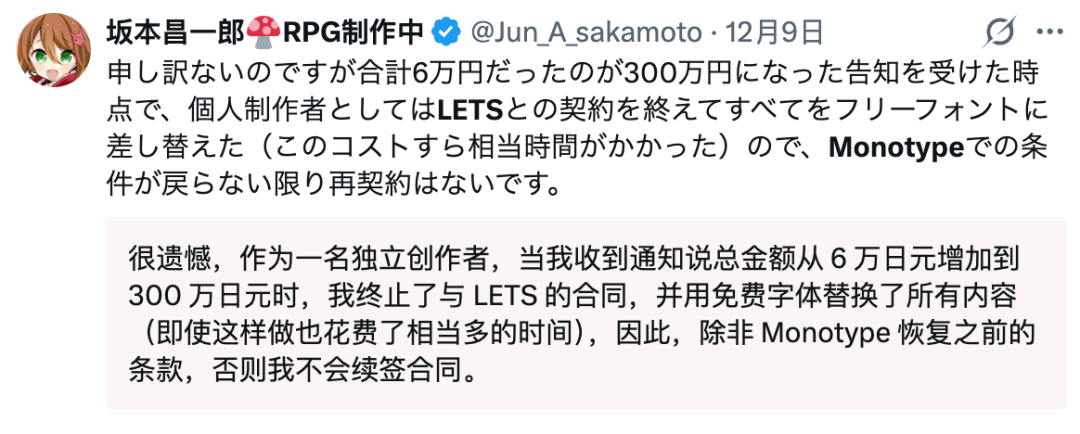
Those who can afford it still face restrictions on the number of applications and registered users, which is unsolvable.
Some people may be curious, why not change the company and change the font?
Friends, you don’t think it’s easy to change the font in the game.
If it is an English game, developers can quickly find cheap commercial fonts or open source fonts instead, because there are only a few letters, and the design is very simple and can be made by anyone.
But outside of English, especially the three brothers of China, Japan and Korea, it is too difficult to make a good font.
Murad Boutros of Boutros Font Company, who has been engaged in font design since 1966, said that a complete set of GB 18030 Chinese fonts contains about 30,000 glyphs, in addition to tens of thousands of Traditional Chinese variants. Korean has more than 11,000 syllables, and the difficulty lies in the combination of syllable blocks. Slightly better Japanese has over 8500 kanji in addition to kana.
Therefore, it is much more difficult to find a suitable Japanese font, and developing it yourself is time-consuming and laborious, so developers are accustomed to subscribing to font services.
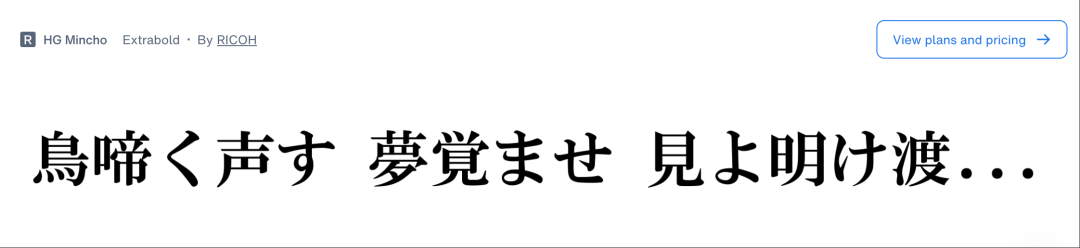
Generally speaking, after a game determines the font, it will not be significantly changed because the workload is really huge.
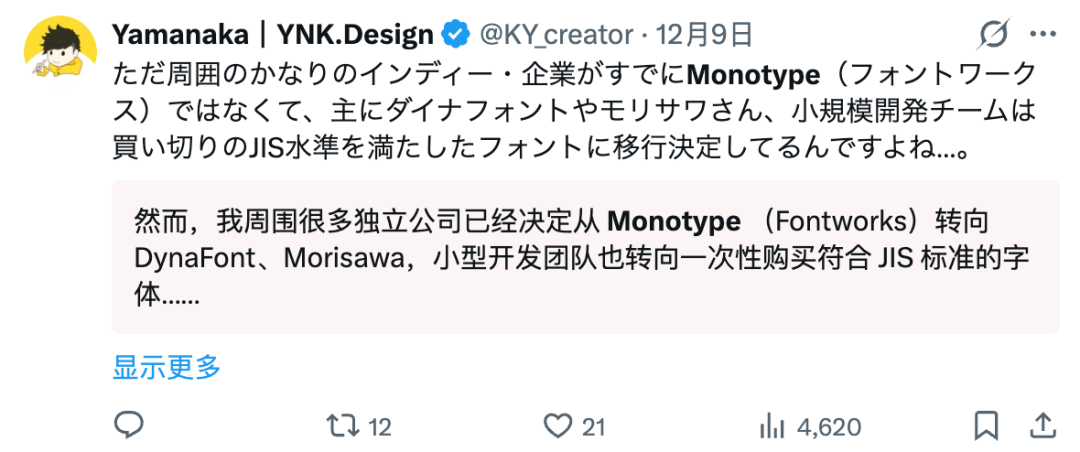
Yamanaka, a UI/UX designer who participated in the production of "Attack on Titan VR" and "The Fourth Realm", said that changing font companies is very difficult for operational games because they need to be retyped in a short period of time and go through the QA process.
It doesn’t mean that you just drag and drop a new font into a file. Different fonts have different stroke thicknesses, shapes and sizes. Developers have to fine-tune the fonts according to their own needs, and check them repeatedly to avoid problems such as missing text or oddly broken sentences, which will affect the game experience. This step is purely a test of patience. In order to adapt to the font, the UI may have to be moved.
This is a big project, and it is completely different from doing MOD.
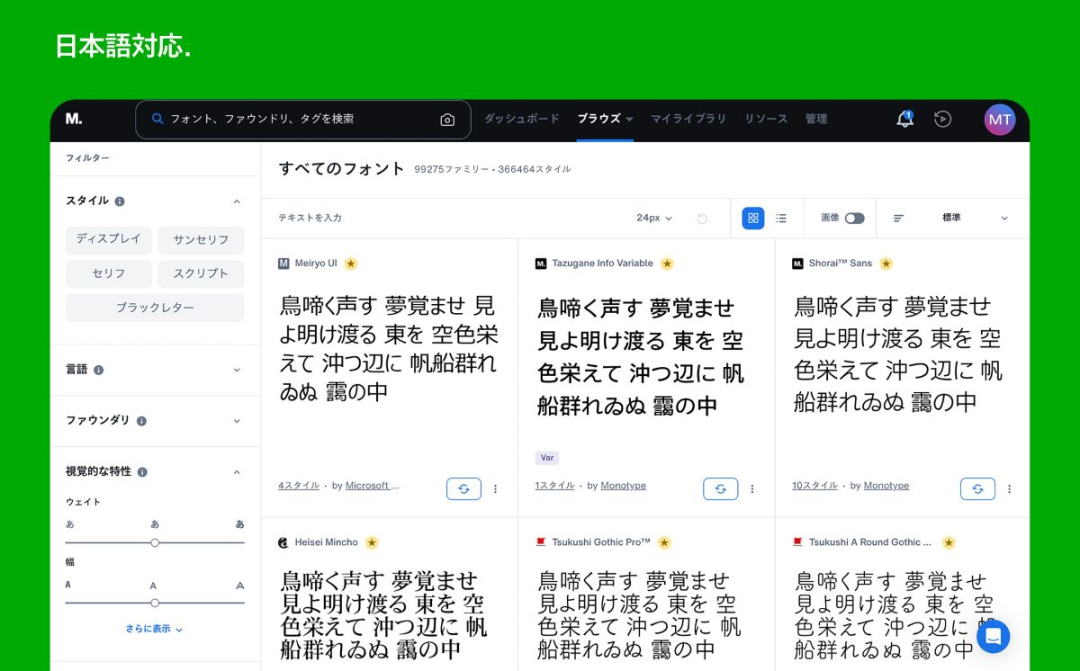
Of course, anything that can be solved with money and manpower is not a big deal.
What’s really terrible is that many times, the font is almost a representative of a game style, such as FGO, which has been in operation for more than ten years. If you suddenly change the font, you can’t only consider the game itself.
Official website, advertising, brand vision accumulated year after year, future publicity. . . Everything needs to be adjusted accordingly.
It’s not enough to just cover your head and work hard. You also have to consider whether players who are accustomed to the old font can accept it.
The words have changed, people have run away, and the game has gone cold. This is the most uncomfortable thing.
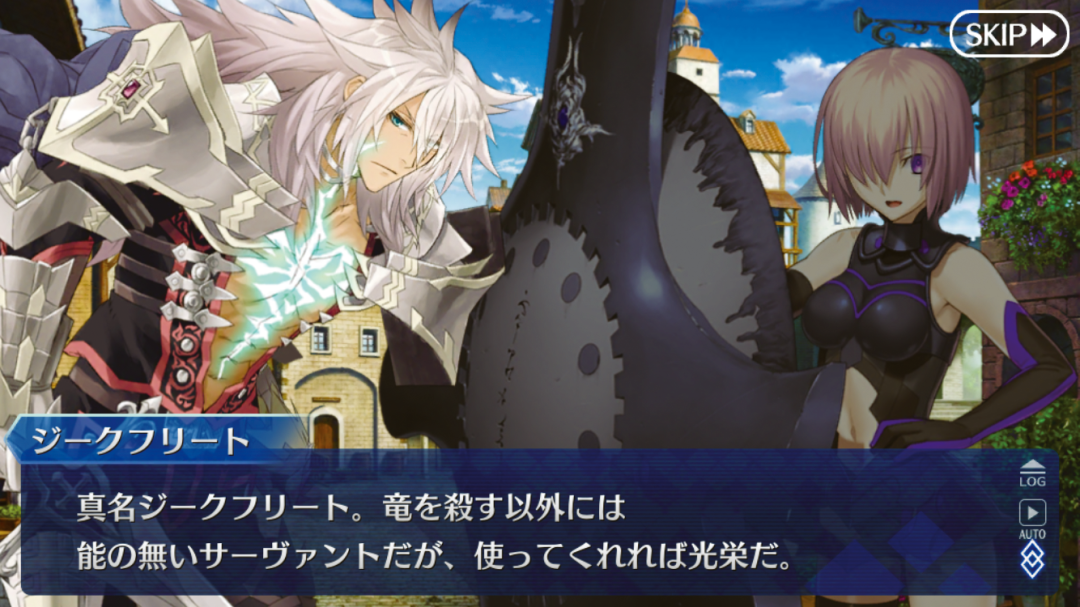
But again, long-term pain is worse than short-term pain. In order not to get stuck, some game companies have begun to change fonts.
In this industry turmoil, DynaFont, a friend of Fontworks, can be considered a winner. Business masters do not need to be very good themselves, they only rely on their opponents to have enough talent. .
In the past half month, the font crisis has become more and more serious in Japan. Fontworks and Monotype, the pair of unfortunate mandarin ducks, have been criticized overwhelmingly.
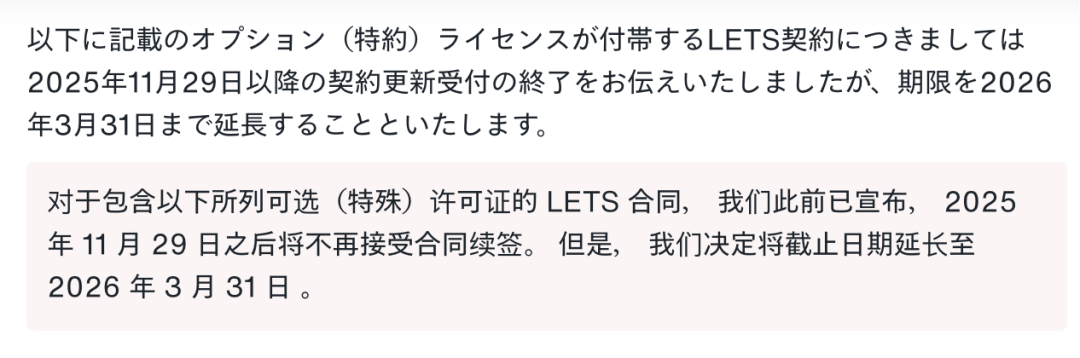
Finally, on December 9, Monotype made a new decision, which was to extend the deadline for the old plan with an annual fee of $380 from the end of November to March 31, 2026.
It’s not why the sense of déjà vu is so strong, it’s about the trade war and Trump.
The failure is certain. Monotype admitted that because it did not publicly explain this operation, many customers came to ask.
However, they have not changed their goal of "bringing original projects into line with global standards" and only plan to launch a new service plan for the Japanese market in early 2026. I don’t know if Monotype will revive or fall off the altar.
It’s hard to say who is right about the font crisis. From their respective perspectives, both sides are reasonable and both speak out for their own rights. From the perspective of a mere outsider, one might laugh at a wave of font companies that have no strategic vision and do not quite understand the market demand.
If I had to pick one unlucky person in this incident, it would definitely be the player.
The wool comes from the sheep, and as the party paying the money, the players have to pay for these weird things in the end.