Google announced this week that the Chrome browser for Android now supports sharing only "approximate locations" to websites, instead of the precise geographic location provided by default, giving users more granular privacy control options. Google said that in scenarios such as ordering takeout, placing an order for delivery, or finding the nearest ATM, the website does need more accurate location data, but when it comes to services such as obtaining local weather and reading local news, approximate location is sufficient.
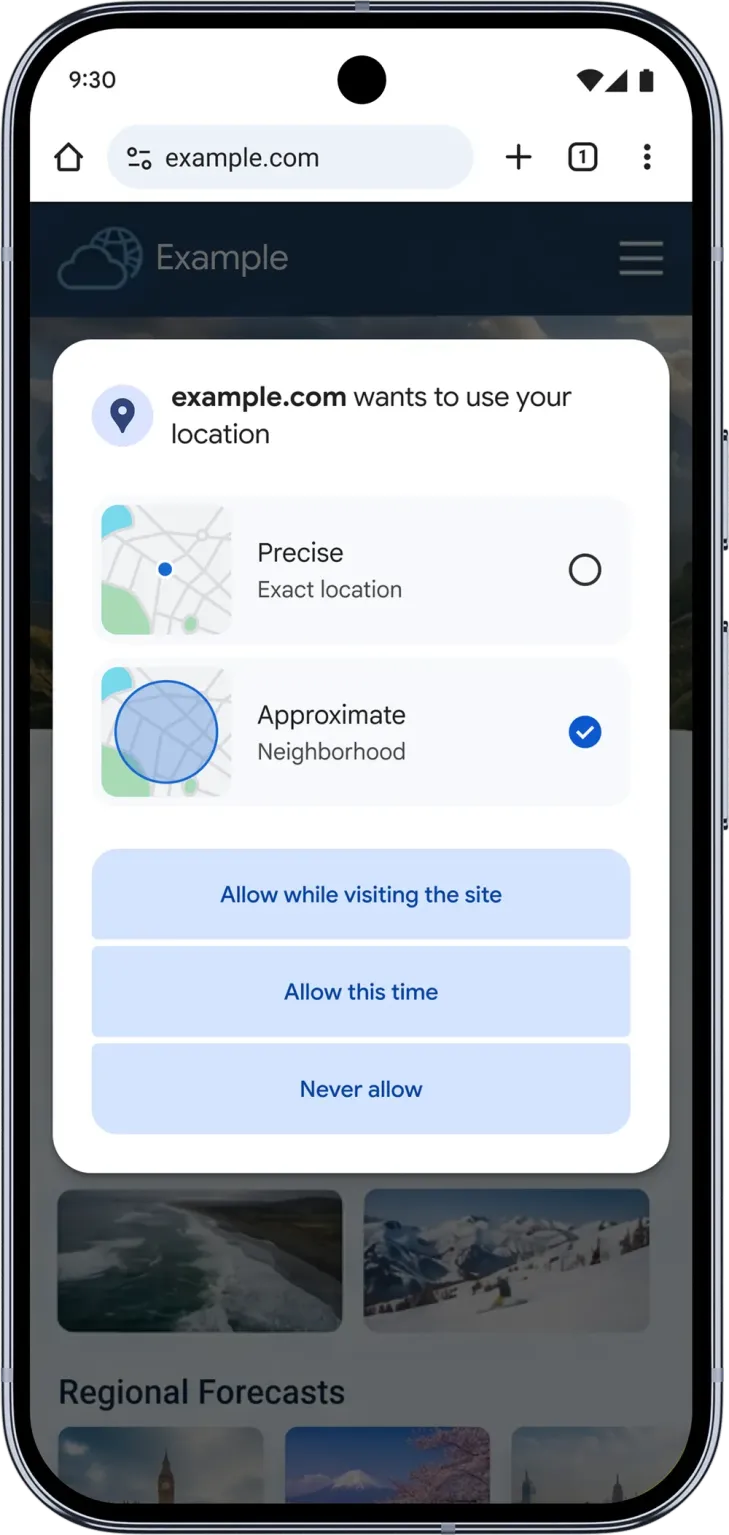
Google noted in a blog post that Chrome is "giving users more control over their location information" by allowing them to choose to share their approximate location. Users can still choose to share precise locations when they need navigation and other scenarios, so this new feature will not come at the expense of the core user experience. In other words, users can dynamically choose location accuracy based on different websites and different scenarios, without having to choose between "fully on" and "fully off".
In addition to Android, Google plans to bring this approximate location feature to the desktop version of Chrome in the next few months, but no specific timetable has been announced yet. As for whether and when this feature will be available in Chrome for iOS, Google has not made any commitments or arrangements. This rhythm of "step-by-step platform advancement" continues Google's consistent practice of first supporting its own ecosystem for new privacy features and then gradually expanding to other platforms.
In order to cooperate with this adjustment, Google also plans to launch a new Web API that allows developers to explicitly select "approximate location" when requesting location permissions, or only request "precise location" when necessary. Google encourages website developers to re-examine their reliance on location data and only initiate precise location requests to users when the site's functionality truly relies on precise positioning. This strategy is intended to reduce the abuse of high-precision locations from the source and make "less data by default" a common practice in the industry.
For Android users, the change is seen as a "small victory" in terms of privacy protection. Users will have a more transparent and controllable location information sharing experience when browsing the web, and websites will also need to re-find a balance between functionality and data collection. Amid ongoing controversies over data privacy and targeted tracking, Chrome is adding another layer of privacy controls to mobile browsers by introducing approximate location options.