Google is testing a new Gmail storage policy on a small scale: some newly registered Gmail accounts will only get 5GB of free cloud storage space by default, instead of the 15GB that has been customary for many years. If users want to unlock the remaining 10GB of storage, they need to add and bind their contact phone number to their account.
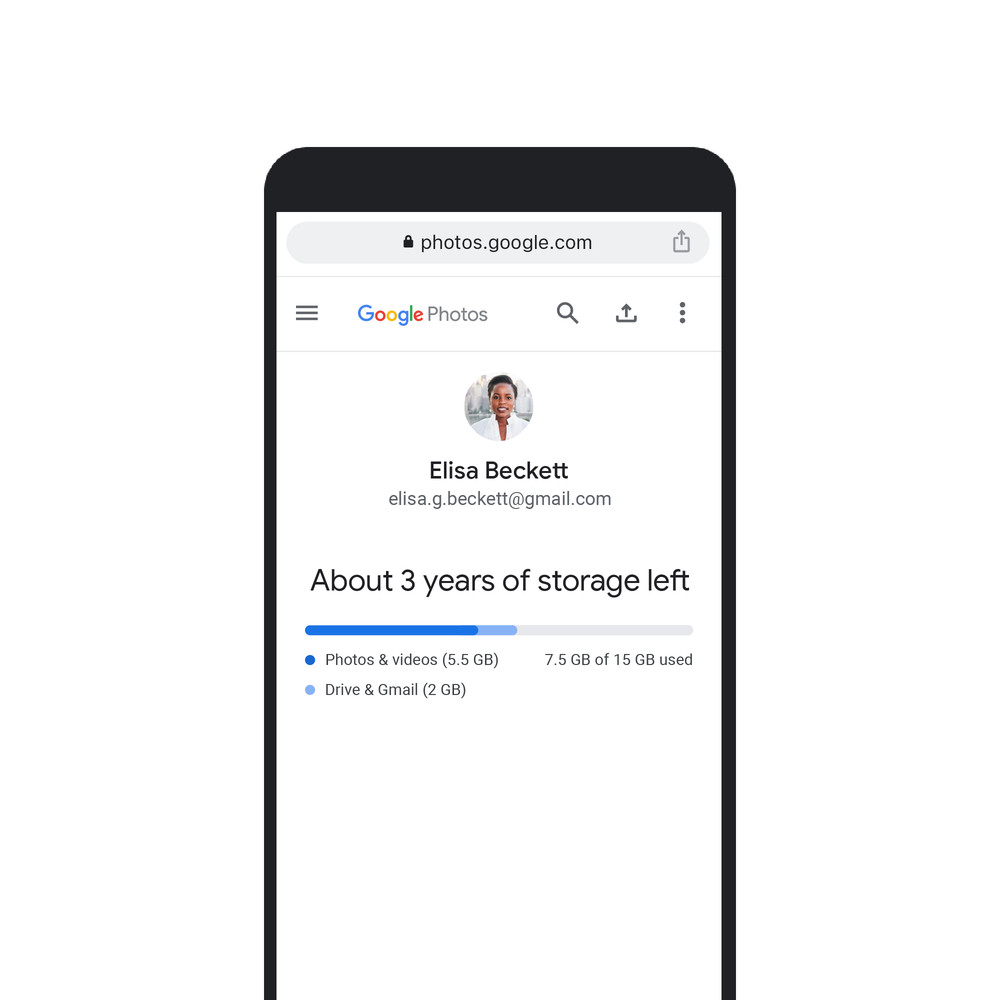
Google has long provided a 15GB cloud storage quota for free Gmail accounts, which is shared among Gmail, Google Drive, and Google Photos. This also means that if a user backs up a large number of photos or files in the cloud and uses up the quota, they may not be able to receive new emails and need to clean the data or pay for capacity expansion. The new plan currently being tested compresses this basic free quota directly to 5GB, but there is still a way to return to 15GB through the condition of "supplementing account information".
According to Android Authority, when trying to create a new Gmail account in some regions, some users found that the free storage space displayed on the system interface was only 5GB, not the 15GB standard that has been used for many years. The page prompts that the remaining 10GB of storage can be "unlocked" only by adding a contact number in the account settings. Currently, this change only applies to newly registered accounts; for existing accounts that have not been bound to a mobile phone number, the original 15GB free storage quota is still displayed on the interface, and there is no sign of a reduction yet.
It is worth noting that Google did not disclose the experimental arrangements for this quota adjustment in advance in the official announcement or support documents. The relevant changes were initially discovered and reported by users themselves before being exposed by the media. After the report was released, Google confirmed to the media that it indeed had this experiment and gave a brief statement, saying that this new storage policy is only for new accounts in specific regions and is used to encourage users to improve account security and data retrieval information while maintaining high-quality storage services.
Google positioned this move as an attempt to "improve account security" and emphasized improving user security and data recovery experience by collecting more contact information that can be used to verify identity and retrieve accounts. As a result, however, this strategy also amounts to offering new users less free storage space unless they are willing to hand over more personal information that can be tied to their accounts. This line of thinking has sparked discussions within the technology community: security and retrieval efficiency on the one hand, and privacy and data collection boundaries on the other.
From a mechanical point of view, by linking "replenishing mobile phone numbers" with "restoring 15GB free space", Google has reserved a potential expansion path for itself: in the future, if it uses "security" as a reason to extend similar requirements to existing users, it will be easier to gain explanation space in the narrative. However, there is currently no sign that the company has planned to make similar adjustments to existing accounts, and the scope of the test is still limited to the regions where some new users are located.
Currently, this policy adjustment is still in the experimental stage, and Google has not yet announced whether it will be officially implemented globally. It is widely expected that Google will decide whether and how to implement this policy on a larger scale after observing user feedback and test data, including whether it will continue to maintain the differentiated plan of "only 5GB for unbound mobile phone numbers and return to 15GB after binding."
If you are a user preparing to register a new Gmail account, you may see an interface prompt with only 5GB of free storage by default in some regions in the future, and be advised to increase the storage limit and account security by adding a mobile phone number. For existing users who are already using Google services, the 15GB free quota remains unchanged, but whether this experiment will change Google's long-term free storage strategy remains to be seen.