On May 20, local time in the United States, chip giant Nvidia stated after announcing its latest financial report that in the context of the current tightening of U.S. export controls, the company has "largely ceded China's artificial intelligence chip market to Huawei." This statement highlights the reality that the technological game between China and the United States continues to reshape the global AI semiconductor landscape.
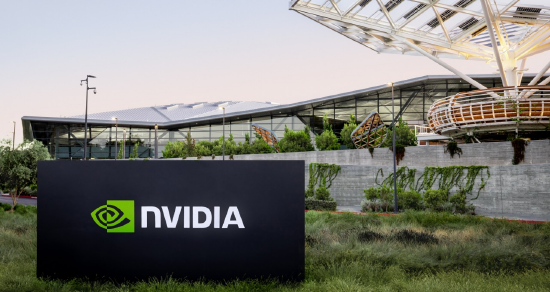
In an interview with U.S. financial media, Nvidia founder and CEO Jensen Huang pointed out that China’s demand for AI computing power is “very huge.” After the United States restricted the export of high-end chips, Huawei and a group of local chip companies have ushered in room for rapid development. "Huawei is very strong. They set a record last year, and this year is likely to usher in another extraordinary year." Huang Renxun said, "We have withdrawn from that market, and their local ecology has performed quite well as a result... We have actually given up that market to them to a large extent."
This statement comes at a time when Nvidia once again handed over "exploding" financial reports. As of the latest quarter, the company's revenue soared to US$81.62 billion from US$44.06 billion a year ago, a year-on-year increase of about 85%. It announced the launch of an US$80 billion stock repurchase plan and raised dividends. Driven by the global investment boom in AI infrastructure, NVIDIA's overall performance remains strong, but the Chinese market has become one of the key uncertainties in the company's prospects.
When asked about his expectations for the recovery of business in China, Huang Renxun was cautious, saying that the company had assumed in its external guidance that "there should be no hope in terms of approvals." He said Nvidia has clearly told analysts and investors not to factor expectations for the reopening of the Chinese market into financial forecasts and business planning. However, he also emphasized that Nvidia still hopes to return to the Chinese market once conditions permit. "We have many customers and partners there, and we have been cultivating there for 30 years."
The Chinese market was once one of the important pillars of Nvidia's data center business, accounting for at least one-fifth of the business's revenue. However, after the U.S. government further tightened its license to export advanced AI chips to China and some other countries, Nvidia was almost completely blocked from China's high-end data center chip market. In April this year, the U.S. government required Nvidia to obtain a license to export some high-performance chips, including the H200, to China, which made the company's sales prospects for high-end AI chips in China even slimmer.
At the same time, local Chinese companies such as Huawei are accelerating the development of self-developed AI chips and related ecological layouts. Under the strong control of the United States, China has strengthened its strategy of semiconductor self-sufficiency. Huawei has made full efforts in AI chips, cloud computing and application levels, and is regarded as one of China's "all-round" AI players. Huang Renxun's latest statement is seen as a public recognition of this trend - in the high-end AI computing power chip track, the dominance of the Chinese market is shifting from American companies such as Nvidia to local manufacturers.
Despite this, the outside world is still paying attention to whether there will be marginal changes in the US regulatory attitude. There are reports that the U.S. Department of Commerce has approved the purchase of Nvidia H200 chips by a handful of Chinese Internet and technology companies, including Alibaba, Tencent, ByteDance and JD.com, but the overall approval is still strict and limited in scope. U.S. trade officials said that chip export controls were not discussed in high-level talks between China and the U.S. last week, which means that overall restrictions on China's high-end AI chip exports are unlikely to be significantly relaxed in the short term.
While business in China is restricted, NVIDIA is accelerating the construction of a more diversified and large global supply chain layout. Huang Renxun said in the interview that with the rapid expansion of the AI economy, Nvidia is increasing investment in what he calls the "five-layer cake" of the AI industry. These five levels include energy, chips, infrastructure, models and applications. He said that "the company's vision of achieving multiple growth is not far-fetched," and the premise to support this vision is that supply chain partners can keep up with Nvidia's pace of expansion "at hundreds of billions of dollars each time."
Huang Renxun emphasized that Nvidia’s current use of huge cash reserves is to support suppliers in expanding production to cope with the demand pressure brought about by the explosive growth of AI computing power around the world. In his view, the current global AI infrastructure construction is still in an accelerated stage, and there is huge room for future development in energy supply, data center architecture, model innovation, and application implementation. In this process, Nvidia will continue to play the role of a core computing power provider, but in China, one of the world's largest single markets, more local companies may fill the vacancies in the short term.