The National Aeronautics and Space Administration (NASA) recently announced that it plans to formally introduce a competition mechanism for the Jet Propulsion Laboratory (JPL) operating contract for the first time after the current contract expires in 2028. This means that the California Institute of Technology (Caltech), which has been responsible for managing the laboratory since the 1930s, may lose control of this iconic deep space research institution for the first time in nearly a century.
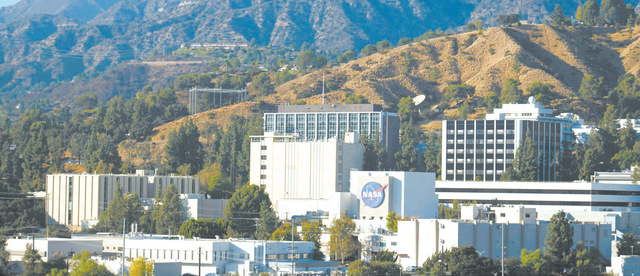
According to a statement released by JPL, Caltech has managed the laboratory since its inception in the 1930s and has operated JPL on a contract basis on behalf of NASA since its founding in 1958. JPL said Caltech had been preparing for a possible change of management since last summer, so the news was "not surprising."
On the same day, NASA announced a major internal reorganization plan that is different from this one. It aims to support the agency's more ambitious development goals in the short and long term and improve the overall delivery capabilities of technical work by increasing the professionalization of each center and strengthening the integration between mission departments.
Currently, JPL is NASA's leading center responsible for robotic exploration missions to Mars and other deep space planets and celestial bodies. For nearly 70 years, NASA has been cooperating with JPL through Caltech as the manager, forming a highly integrated operating model. Although JPL is still considered one of NASA's field centers in terms of organizational structure, it operates under a contract as a Federally Funded Research and Development Center (FFRDC). This special status makes it different from other NASA centers in its management and operation methods, giving it a certain degree of independence while still being under the substantive supervision of NASA.
NASA emphasized that the FFRDC model relies on a specialized contract and governance framework to ensure that JPL's work is oriented to the public interest and consistent with national priorities. This model not only enables NASA to utilize JPL's deep scientific research and engineering capabilities in a long-term and stable manner, but also maintains the institutional boundary between decision-making and execution by clearly dividing government decision-making rights and contractor execution responsibilities.
If JPL's operating contract is open to bidding by institutions other than Caltech in the future, it may have a profound impact on the laboratory's daily mission management and several major NASA science programs. For a long time, JPL and Caltech have been highly intertwined at the personnel, scientific research and management levels. Mission team members, scientists and leadership often cross positions or work collaboratively between the two. Many JPL project meetings are often held on the Caltech campus in Pasadena, California. It is generally believed in the industry that once management rights change, the new operator must take over the complex mission system and knowledge assets in a short period of time. This process poses a severe test to the continuity and risk control of key projects such as deep space exploration and planetary science.