SpaceX was officially listed on Nasdaq last Friday. Its share price surged more than 19% on the first day, and its market value exceeded the US$2 trillion mark. However, even though the company has successfully launched on the public market, the realization of some of its long-term plans is still far away.
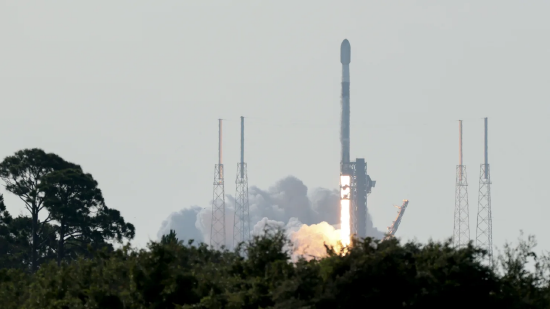
In its IPO prospectus submitted to the U.S. Securities and Exchange Commission (SEC), Musk's company repeatedly emphasized that its core vision is to "land on the moon, land on Mars, and go further into space." The Mars goal set by SpaceX is extremely ambitious: Musk can only receive a restricted stock award when the company builds a colony on Mars with a permanent population of more than 1 million.
But traders on the prediction trading platform Kalshi generally believe that it will take many years to achieve this goal.
Data shows that the market is betting that the probability of SpaceX launching a manned mission to Mars before 2030 is only 18%. Since the event contract went online in March 2024, the highest probability given by traders of achieving a manned landing on Mars within this decade has never exceeded 25%.
The judgment criteria for this event contract are: If SpaceX completes a manned Mars flight and completes official verification before December 31, 2029, the contract will be judged as "achieved."
The market's wait-and-see attitude is consistent with SpaceX's own plans. In the prospectus, SpaceX made it clear that the company has no timetable for the landing of a manned mission to Mars.
SpaceX wrote in the document: "Many of our R&D projects are extremely technically difficult and rely on new technologies that have not yet been verified or even do not currently exist. Such projects may not be commercialized. Therefore, for some projects that rely on cutting-edge innovation and immature technologies, it is difficult or even impossible to determine a timeline for advancement."
Although the exact timetable is unknown, the company's strategic focus on the Mars project is very clear: in the text of the prospectus alone, the word "Mars" appears 63 times, and is also mentioned once in the document's caption.