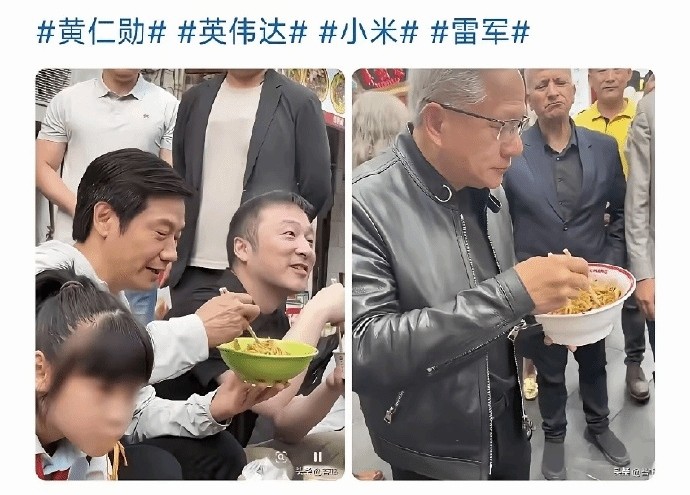
Recently, "Lei Jun was accused of imitating Huang Renxun when eating hot dry noodles" became a trending topic. Xiaomi founder Lei Jun returned to Wuhan and squatted on a small bench at a street breakfast stall to taste hot dry noodles, noodle nests and other local breakfasts. Multiple professional filming equipment and staff were on site to follow the whole process. After the complete footage leaked, it sparked heated discussions online.Many netizens compared Nvidia CEO Huang Renxun's previous scene of eating noodles with soybean paste in a Beijing alley, questioning Lei Jun's deliberate replication of the same people-friendly marketing format, and ridiculed him as "Lei Renxun."
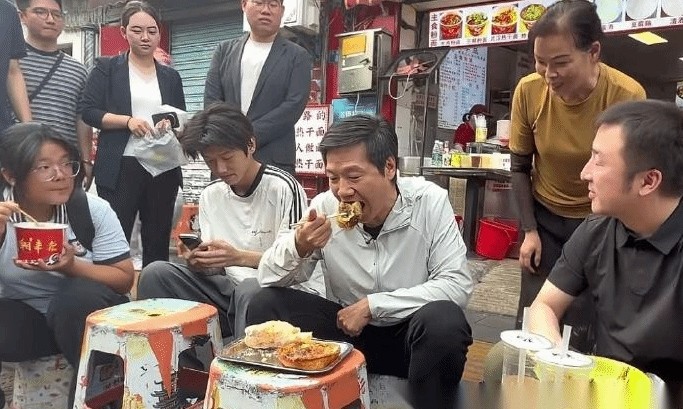
The scene of this shooting shows Lei Jun sitting on a plastic bench on the street eating, with anti-slip blue mats laid on the ground in advance, and multiple cameramen and staff surrounding the camera to control the shooting angle and process throughout the process.A primary school student passing by accidentally said, "There are so many people taking pictures while having breakfast."
Netizens compared Huang Renxun's previous scenes of eating noodles on the street and said that Huang Renxun's encounters with snacks were all casually captured by passers-by. There was no professional team to follow the shooting arrangements, and the natural reactions such as eating sour juice and frowning were not modified. The relaxed life-like state gained a lot of goodwill. In contrast, it is easy to produce the impression of deliberately imitating marketing templates.
Some netizens dug up past controversies.From his early press conference style being called "Rebus", to his marketing being close to Musk during the car-making period, to now being compared to Huang Renxun when eating street noodles, he believes that Lei Jun has repeatedly borrowed from overseas technology giants.