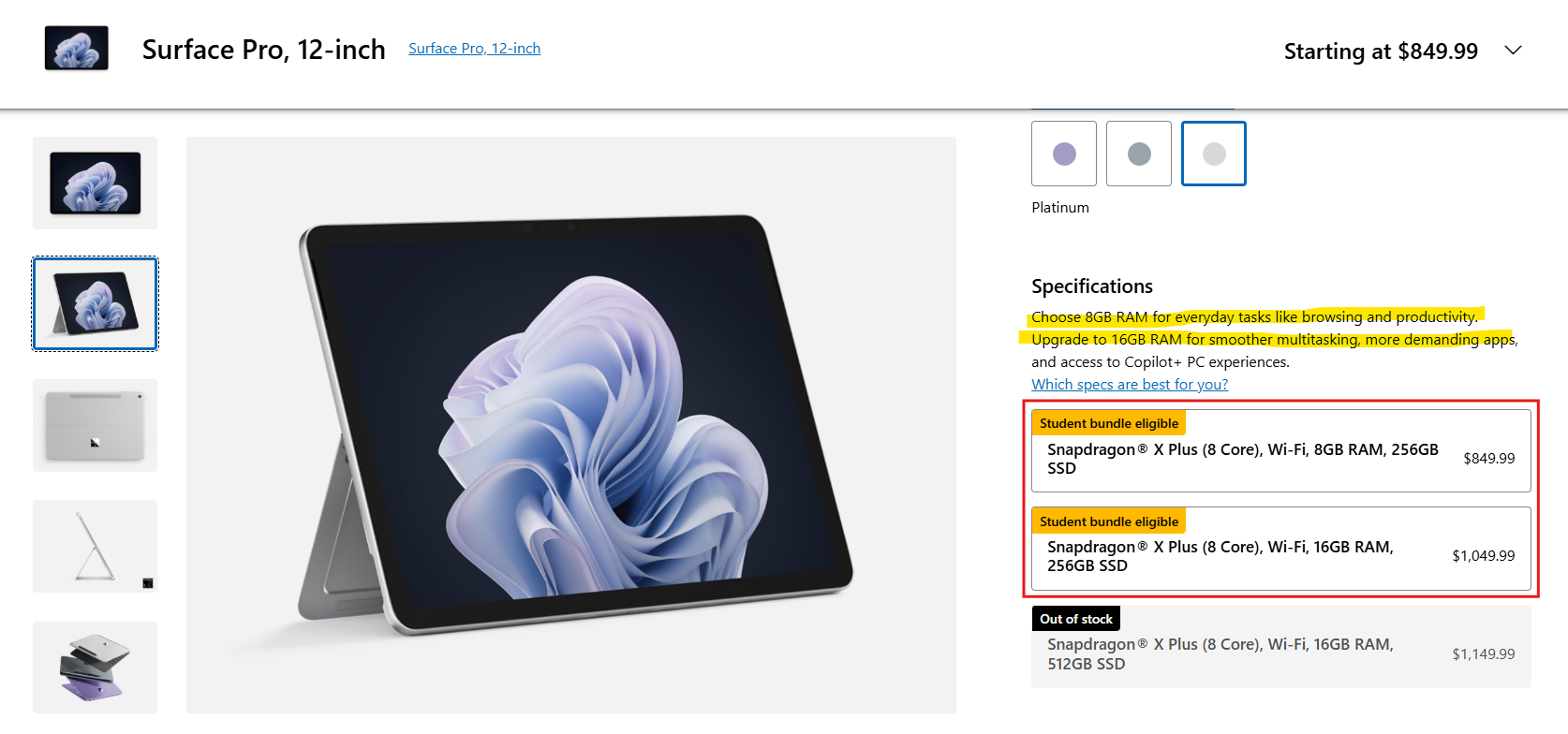
Microsoft recently updated its Surface buying guide to explicitly write that 8GB of RAM is suitable for "everyday tasks" like web browsing, streaming, schoolwork, and productivity apps, while the same FAQ adds that 16GB or more of RAM is still required to use Copilot+ PC features. Microsoft has not acknowledged that it has been describing 16GB as the "minimum threshold" for a Windows 11 experience for the past two years, making the conflict between the old and new narratives all the more conspicuous.
At the beginning of the year, Microsoft said that 32GB of memory was more suitable for serious gamers on Windows 11, and packaged such configurations as a more "worry-free" upgrade plan; but then the company quietly deleted the relevant statement because this suggestion seemed too unrealistic. What’s even more surprising is that Microsoft later launched the commercial-oriented Surface Laptop, with a starting configuration of only 8GB of memory; later, the 13-inch Surface Laptop and Surface Pro also had 8GB as the entry-level version. These models not only continue the previous generation Snapdragon X chip, but also have memory configurations that are more expensive than similar hardware a year ago, but offer lower starting memory.
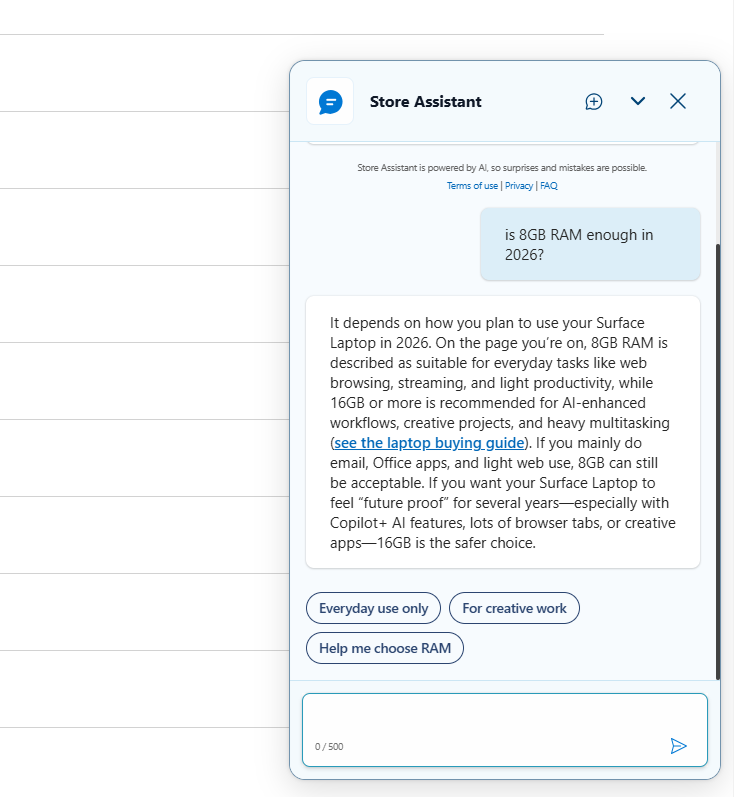
Microsoft's internal tools also have mixed attitudes toward 8GB. The Surface Store's buying guide describes 8GB as suitable for "daily tasks," but when users ask Microsoft's AI store assistant "whether 8GB will be enough in 2026," it vaguely suggests that 16GB is a safer and more "future-adaptive" choice. This inconsistency between the caliber of the front-end page and the back-end assistant is seen as Microsoft's failure to form a clear and unified judgment on memory standards.
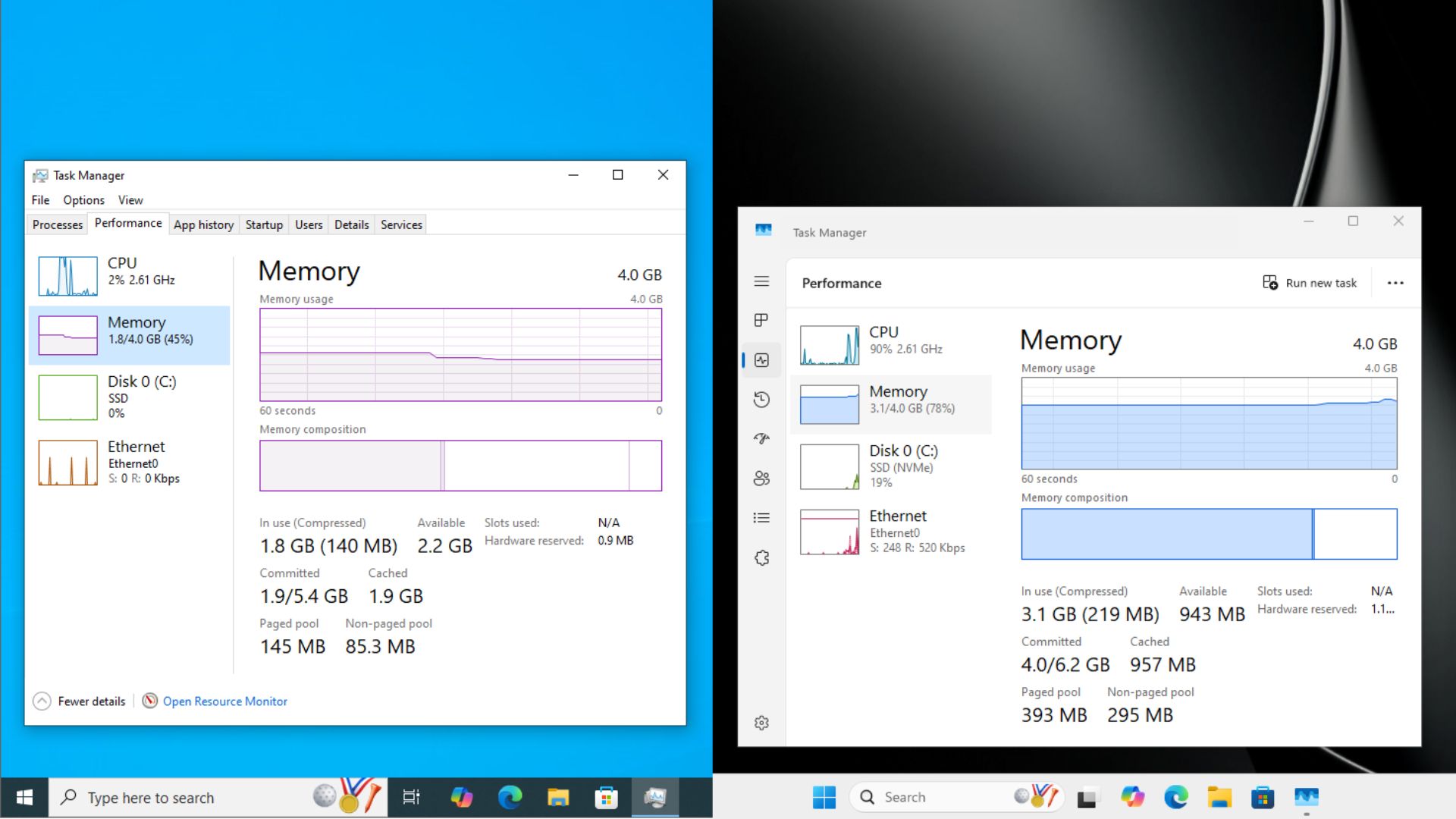
The original minimum memory requirement of Windows 10 was 2GB, and 4GB was recommended. After the requirements of Windows 11 increased, the system itself became more and more bloated with updates, and continued to eat up more memory. Microsoft's huge investments in AI infrastructure, data centers and high-bandwidth memory have also squeezed the memory supply that would have gone to consumer computers, boosting overall RAM prices. At the same time, the increasing number of WebView2 components in Windows 11 and the higher memory usage of the application itself further amplify the pressure on the 8GB machine.
In the field of ARM computers, Microsoft also failed to completely solve the problem. Apple has continuously optimized macOS over the years to provide a better experience with the same memory configuration; in contrast, Microsoft's Prism translation layer has not completely bridged the gap between Windows on ARM and Apple's M series. It wasn't until Qualcomm laid the foundation for Windows on ARM and Nvidia used RTX Spark to promote Microsoft's reconstruction of ARM task scheduling that Microsoft began to seriously re-adjust the relevant architecture. Although the Copilot+ PC brand has been continuously emphasized by Microsoft, it has not driven developers and the system itself to really pay attention to Windows on ARM as the company expected.
The Copilot+ PC strategy is also losing steam. Microsoft has been betting on the brand over the past few years and bundling 16GB minimum memory and NPU requirements in an attempt to create a new hardware upgrade cycle. But reality did not develop as planned. Even when some new Surface products were released, Microsoft had to avoid emphasizing Nvidia RTX Spark and weaken the Copilot+ PC label in the press release. At the same time, Microsoft's software route for Copilot has not achieved the expected results. The company is still shrinking some AI features that do not meet expectations, but still claims to build Windows 11 into an "operating system for the AI era."
For PC manufacturers, the resurgence of 8GB is not an easy signal. After Apple launched the low-priced MacBook Neo, the PC industry really felt the pressure; but Microsoft responded with a new Surface machine that was more expensive, had an older chip, and had lower memory, which made it more difficult to convince consumers in the market. Apple can use 8GB on the $599 entry-level MacBook because macOS has deeply optimized the hardware, but Microsoft has not achieved the same level of system tuning in Windows 11, especially on the ARM platform.
If Microsoft wants to truly make 8GB "reasonable" again in the Windows world, it should first optimize the system itself to adapt to this configuration, instead of pushing the AI narrative while packaging underpowered devices into modern PCs. Instead of continuing to treat 8GB as the new normal, Microsoft should launch a cheaper, more balanced Surface Go or Surface Laptop, and focus on system efficiency and real-life user experience.