Today (29th), the second batch of in-orbit test results of the light boat test spacecraft developed by the Microsatellite Innovation Institute of the Chinese Academy of Sciences were released. The light boat test spacecraft was successfully launched on March 30, 2026, and the first batch of on-orbit test results were released on April 15. This batch of results coversSpace precision testing, space cost reduction and efficiency improvement, future space hospital, space biological cultivationIn other fields, it will provide technical support for the implementation of new space technologies in my country, the safe and efficient operation and maintenance of space stations, and the utilization of space resources.
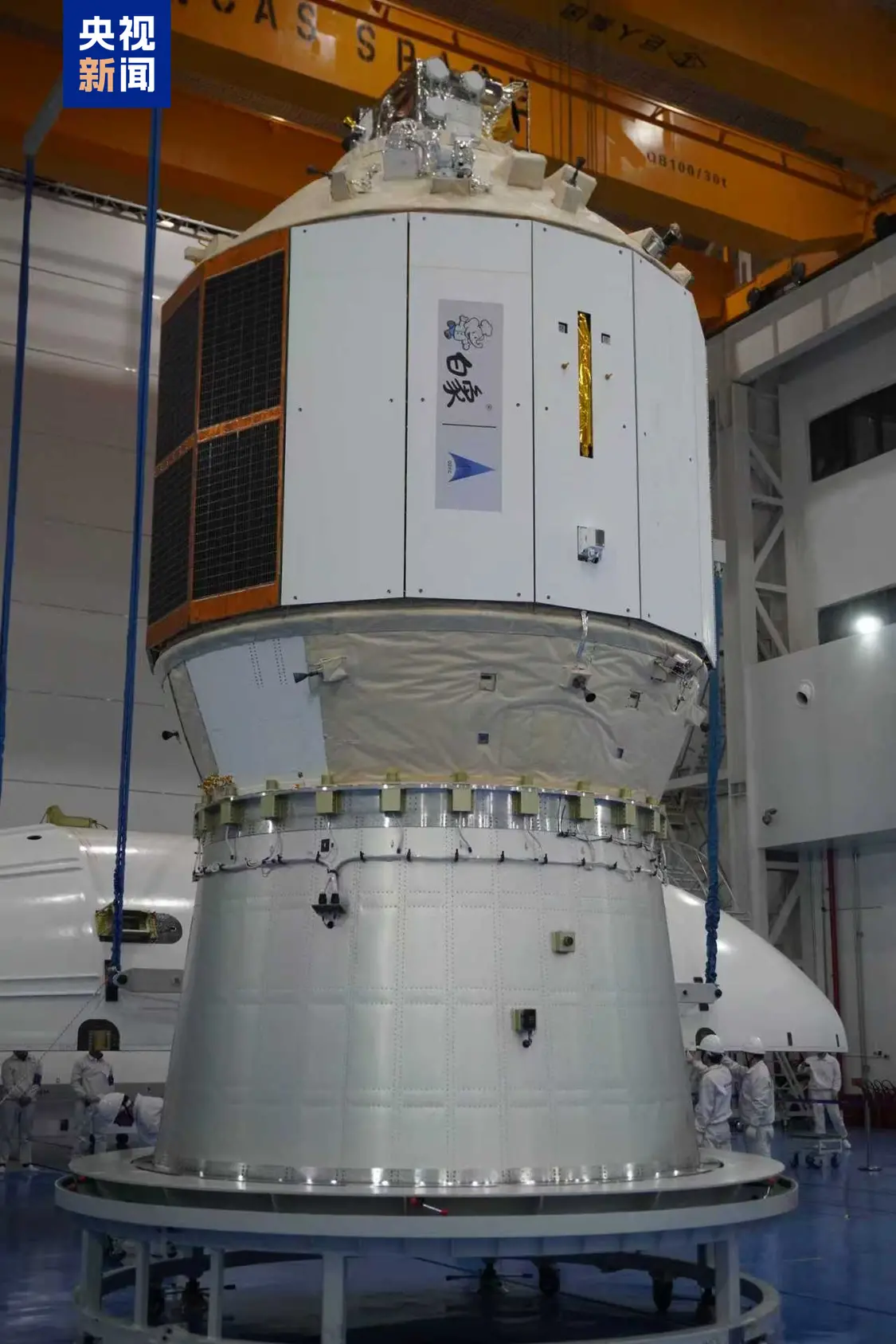
△Canoe test spacecraft
The in-orbit test of the light boat spacecraft is progressing smoothly
Among the on-orbit test results released this time, aerospace cost reduction and efficiency improvement mainly refer to the research and development of supporting equipment to ensure the operation of spacecraft in orbit and support the work and life of astronauts in the space environment.
This canoe test spacecraft is equipped with an improved vapor compression space refrigeration refrigerator, which is an important equipment that provides storage conditions for future astronauts’ lives and biological experimental samples that require low-temperature storage. In the on-orbit test, the space refrigeration refrigerator successfully broke through the problems of gas-liquid separation and stable operation of the compressor in a microgravity environment, providing a cost-effective solution for space station cold chain transportation and off-terrestrial refrigeration applications.
In addition, the space rescue maintenance diagnosis and treatment camera and the navigation camera integrating visible light and laser range finders have also completed on-orbit verification and are currently operating in good condition.
Completed multiple
Space medical and biological culture experiments
If humans want to stay in space for a long time in the future, or even build a space base, a complete space medical support system is indispensable. This is also the core research direction of the future space hospital project. Space biological cultivation has been a key direction for my country to carry out life science research based on the Chinese Space Station in the past two years. It has previously completed a number of on-orbit studies on zebrafish, hornworts, and space mice. During this on-orbit test of the light boat test spacecraft, a number of technical verifications were carried out in related fields.
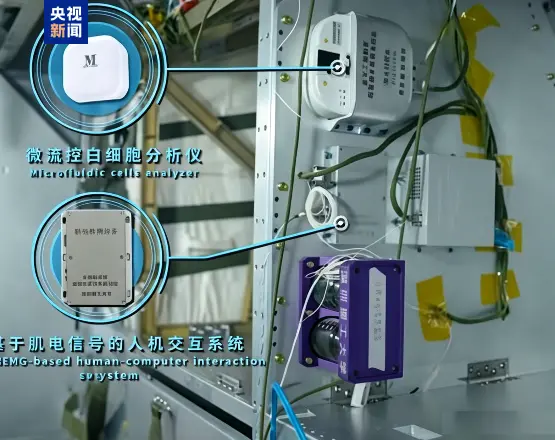
△Real pictures of myoelectric detection equipment
The myoelectric detector developed by our country's scientific research team uses a self-developed neural chip to address the shortcomings of traditional astronaut muscle status monitoring that relies on manual operation and is difficult to monitor continuously. It has verified the feasibility of continuous collection and real-time transmission of weak muscle signals in orbit for the first time. In addition, the handheld blood cell detector eliminates dependence on large-scale medical equipment and ground guidance, and provides key technical support for establishing a real-time assessment and guarantee system for human health under complex conditions in space.
In addition, the industrial-grade low-cost on-orbit biological support module developed by my country's scientific research team successfully completed the on-orbit test for the first time. The support module uses a passive gas-liquid mixing technology device to create a standardized and reusable space fluid test platform, which can effectively reduce the cost of space life science experiments and space pharmaceuticals.
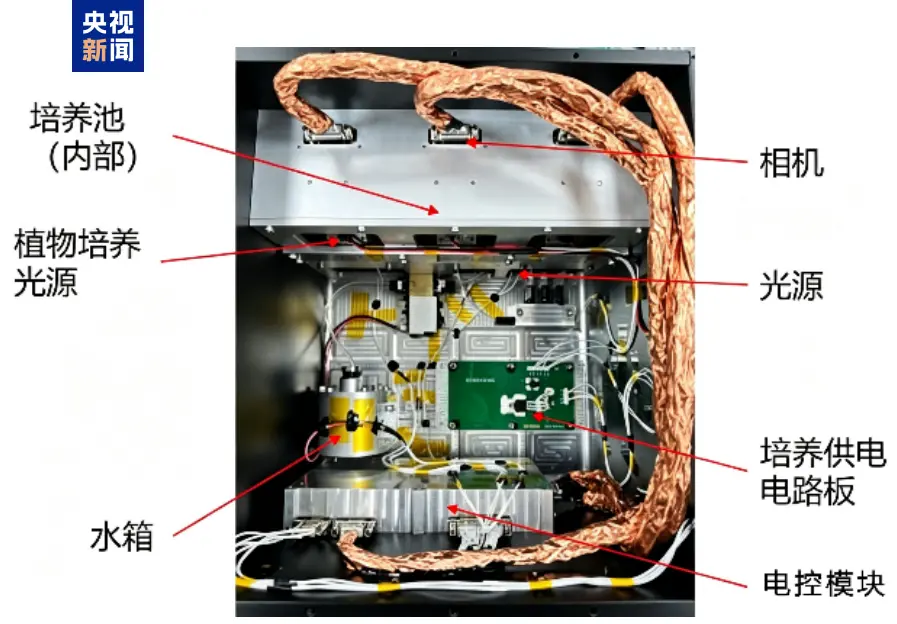
△A real shot of the internal structure of the Erythropus denticola on-orbit culture cabin, which integrates culture, water supply, and optical monitoring modules to support extraterrestrial in-situ ecological improvement experiments
This time, the Canoe test spacecraft also carried out a space recovery test of the extremely resistant plant Erythronium denticola in orbit, which verified the feasibility of life recovery and survival of this species in extreme environments such as space microgravity, radiation and drought, and provided theoretical support for low-energy ecological improvement and in-situ resource utilization in future extraterrestrial bases.
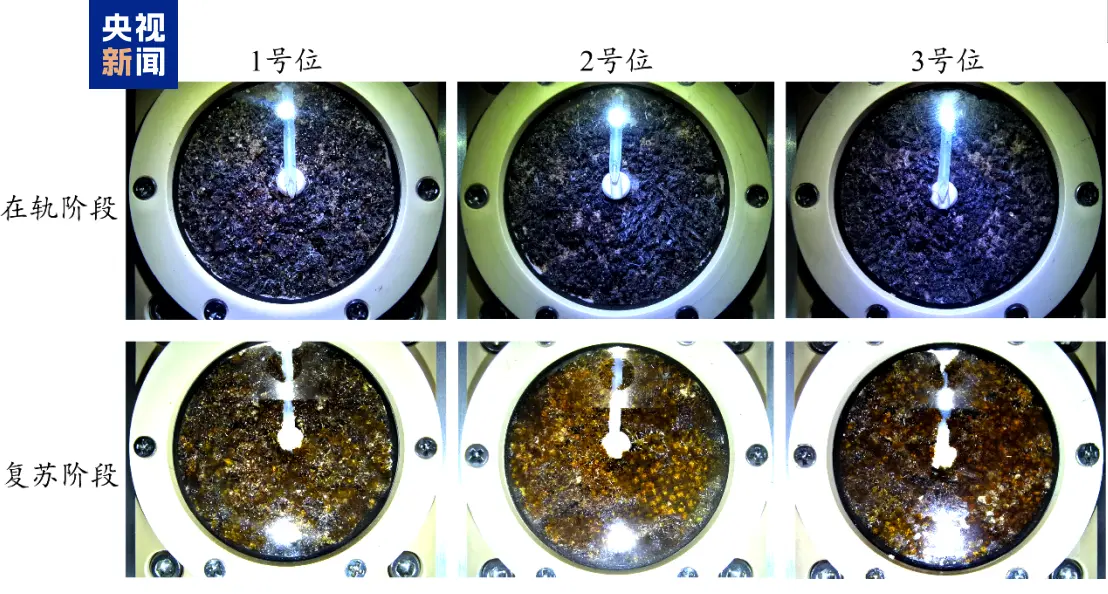
△On-orbit observation images of the recovery and growth of Erythronium denticola, verifying its engineering application value as a cornerstone species of extraterrestrial ecology in orbit
The Qingzhou spacecraft is expected to be launched in 2027
The Qingzhou experimental spacecraft was successfully launched into orbit in March this year. Its design life is three years. After a series of key technology tests, it is expected that the prototype of the spacecraft will be launched in 2027 to provide uplink cargo transportation services for the Chinese Space Station.
The light boat test spacecraft is composed of a main sealed cabin and an unsealed tail cone section at the rear. The entire ship weighs 4.2 tons and adopts a single-cabin integrated configuration. There are 40 cargo compartments inside the main cabin section, which can carry astronauts' living supplies, scientific loads, etc., with a total volume of about 27 cubic meters. In addition to the main sealed cabin, the open tail cone section can carry other loads and some equipment required for space exposure experiments, so that the carrying capacity of the canoe can be optimized.
Chang Liang, chief designer of the Qingzhou cargo spacecraft of the Microsatellite Innovation Institute of the Chinese Academy of Sciences, said that the test flight is a good preparation for the on-orbit test of the prototype spacecraft, and it also verifies many key technologies, including a series of technologies such as sealed cabins and propulsion. After these have laid a very good foundation for the Qingzhou spacecraft, it is expected that in early 2027, the prototype of the Qingzhou cargo spacecraft will be launched and officially docked with the Chinese Space Station. In the future, it will serve as an important supplement to the Tianzhou spacecraft, performing relatively low-cost cargo transportation and other tasks for the Chinese Space Station. At present, the development of prototype parts of the light boat cargo spacecraft is progressing steadily.
(CCTV reporters Shuai Junquan, Chu Erjia and Dou Yunyun)