According to industry rumors, it has been less than a year since the official debut of the ultra-thin iPhone Air 2. Apple is evaluating ways to make this second-generation product more attractive in the market than the first-generation product by enhancing heat dissipation and completing audio and imaging configurations. Although it has been labeled a "failure" by some online opinions, the latest sales data show that the actual performance of the iPhone Air is not inferior. Its sales are believed to be twice that of its predecessor, the iPhone 16 Plus, becoming an important reason for Apple to continue to bet on this product line.
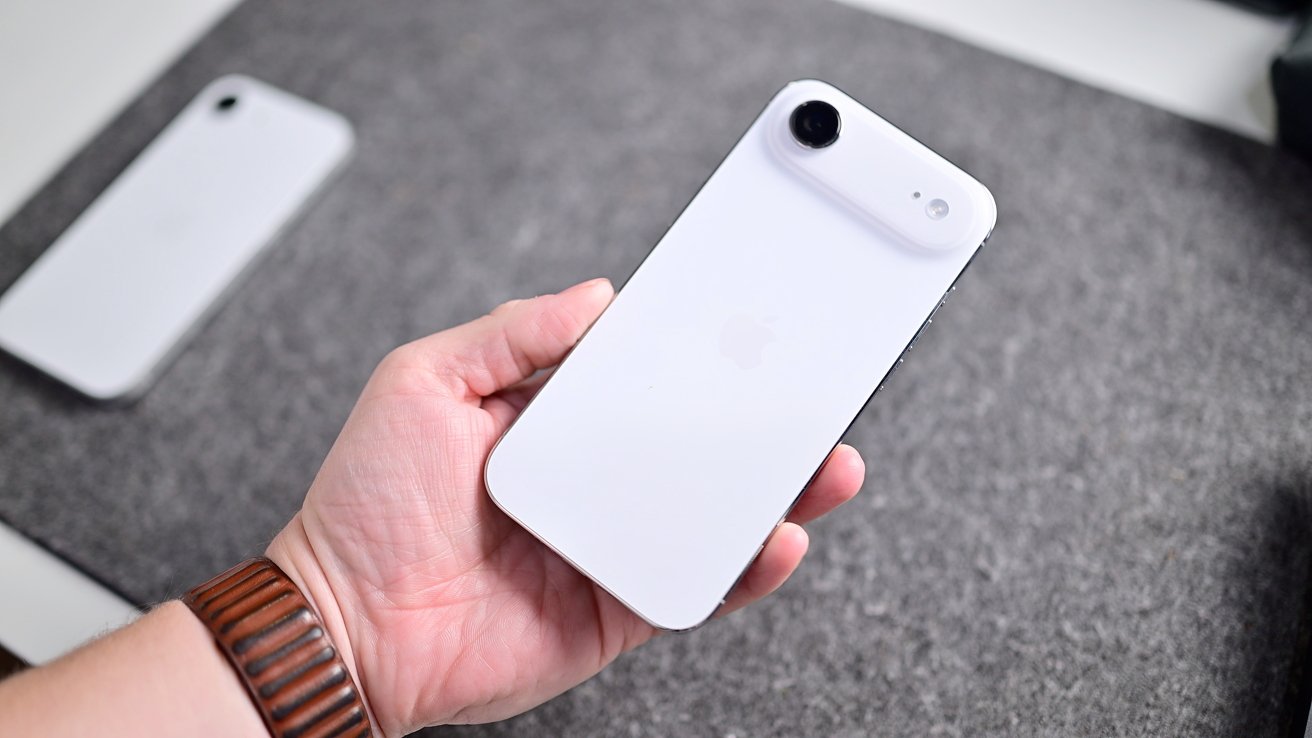
Judging from the feedback from the first generation model, the performance, feel and battery life of the iPhone Air can basically meet the needs of most users in daily scenarios. However, the top of the body heats up significantly during long-term high-load operation, which exposes the shortcomings of the heat dissipation design. Industry opinion believes that if Apple introduces the "vapor chamber" (vapor chamber) already used in the current Pro models in iPhone Air 2, it will not only improve the stability of heavy tasks such as long-term video export and gaming, but may also create conditions for functions such as movie effect mode that require higher sustained performance of the chip.
In terms of audio, the first-generation iPhone Air was only equipped with a single speaker on the top of the fuselage, creating a more obvious "mono" experience. In early use, this arrangement can reduce the embarrassment of blocking the speakers when holding the screen vertically. However, as the proportion of users watching videos horizontally increases during travel and other scenarios, the shortcomings of a single speaker in terms of three-dimensionality and immersion have begun to be frequently mentioned, becoming one of the most common complaints in the comment area. Therefore, it is widely expected that Apple will add a second speaker to the iPhone Air 2 to complement the two-channel output, making the audio and video experience closer to the Pro model.
In terms of image configuration, the first-generation iPhone Air was only equipped with a rear main camera, which naturally limited the viewing angle and gameplay in photo and video creation. Different from many calls for adding an ultra-wide-angle lens to expand the shooting field of view, some people are more concerned about supporting "spatial content" shooting through a dual-camera solution, that is, using two cameras to achieve stereoscopic video recording, which is used to present immersive memory scenes on devices such as Vision Pro. In the past two years, users have become accustomed to using multi-lens iPhones to record space photos and videos, but the single-camera configuration of iPhone Air is obviously missing in this emerging use scenario.
At present, Apple is still continuing to invest in spatial computing, although Apple Vision Pro has not yet become a so-called "hot item" in the mass consumer market. However, considering that spatial content is essentially a non-replicable memory carrier, some users prefer to "shoot now" rather than wait for the future and regret missing precious fragments. In this context, if the iPhone Air 2 can be equipped with a second camera module while maintaining a slim body, and support portrait or landscape recording in both horizontal and vertical screens through solutions such as square photosensitive elements, it will have the opportunity to gain differentiated advantages in spatial content shooting.
How to install a second camera on the slim body of the iPhone Air has become one of the focuses of the supply chain and analysts. There are rumors that Apple is internally evaluating the integration of dual-camera modules within the raised platform of the fuselage, using structure and stacking design to achieve a compromise between thinness and lightness and image upgrades in a limited space. At the same time, continuing the square sensor idea adopted by the iPhone 17 on the front imaging system is also considered a possible direction for Apple to explore, but the specific implementation details are still in the speculation stage.
In terms of product planning rhythm, iPhone Air 2 is considered to participate in the "batch release" of the entire iPhone 18 series. Market news indicates that Apple is expected to be the first to launch iPhone 18 Pro, iPhone 18 Pro Max and the folding screen model "iPhone Fold" in the fall of 2026, while the standard and entry-level product lines including iPhone 18e, iPhone 18 and iPhone Air 2 are expected to be launched in the first half of 2027. This rhythm arrangement is interpreted to guide early replacement users to choose high-end models first, while leaving more time for the subsequent Air series to polish the comprehensive experience of cooling, audio and imaging.
In addition to heat dissipation, speakers and cameras, battery performance is also one of the issues that users focus on, especially the "all-day battery life" capability in moderate to heavy usage scenarios. Combined with the current news about the new generation of models, some analysts believe that Apple will further optimize battery capacity and energy efficiency management in iPhone Air 2, so that it can find a more reasonable balance between battery life, performance and heat while maintaining a thin and light design. If these upgrades are finally implemented, coupled with spatial content shooting and a more complete audio-visual experience, iPhone Air 2 is expected to gain wider user recognition than the first generation after its launch.