Recently, a scientific research team from the University of Minnesota in the United States officially announced thathas successfully created the world's first fully artificial life form with the ability to eat, grow and reproduce independently, named SpudCell. This synthetic life form is made up of only about 200 basic molecules. Its original form is close to natural bacteria in nature. Its basic functions are very simple at this stage.Only the core abilities of stable feeding and occasional autonomous reproduction are retained., with almost no other additional complex behavioral properties.
Despite its simple structure, relevant control experiment data shows that SpudCell can complete a complete autonomous reproduction process every 12 hours.
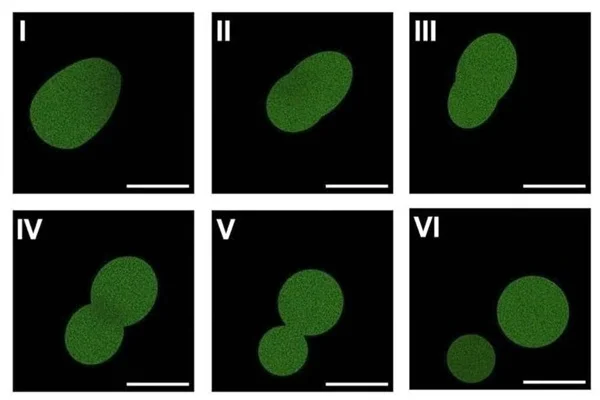
After five consecutive generations of breeding iterations, its growth rate has increased from generation to generation, and the number of offspring produced by a single reproduction has also increased simultaneously. Even under the pressure of survival due to lack of food, its growth competitive advantage has become more prominent than in conventional environments. This directly verifies the natural selection and evolution laws of nature, and it can fully adapt to this completely artificial artificial life system.
This scientific research achievement is regarded by the industry as a milestone breakthrough in the field of artificial life. Its subsequent implementation is expected to significantly promote the development of the synthetic biology industry and bring new technological upgrade paths to many frontier fields such as targeted medicine and environmental management. However, after the relevant research was officially made public, it immediately triggered extensive discussions on biosafety and ethical boundaries around the world.
Some skeptical scientists have pointed out that this artificial life form cannot be regarded as a truly independent life in essence. The core reason is that it completely relies on external artificial care to survive and has no ability to survive independently in the wild.
However, this questioning logic has also been refuted by a large number of researchers in the industry.We believe that newborn human babies in nature are also completely incapable of independent survival, and this cannot be used as a criterion to deny their life attributes..