A well-known hardware geek is trying to use 64,000 cheap RISC-V microcontrollers to build a "homemade GPU" and combine the display panel and computing unit into one to form a very experimental graphics processing system. This player is named Matthias Balwierz, whose online name is Bitluni. Instead of relying on a high-performance GPU, he distributes graphics computing tasks to thousands of microcontrollers, each of which is both a processor and directly corresponds to a pixel on the screen. A basic RGB LED is welded to each chip, ultimately forming a "self-illuminating computing array" composed of a large number of light-emitting pixels.
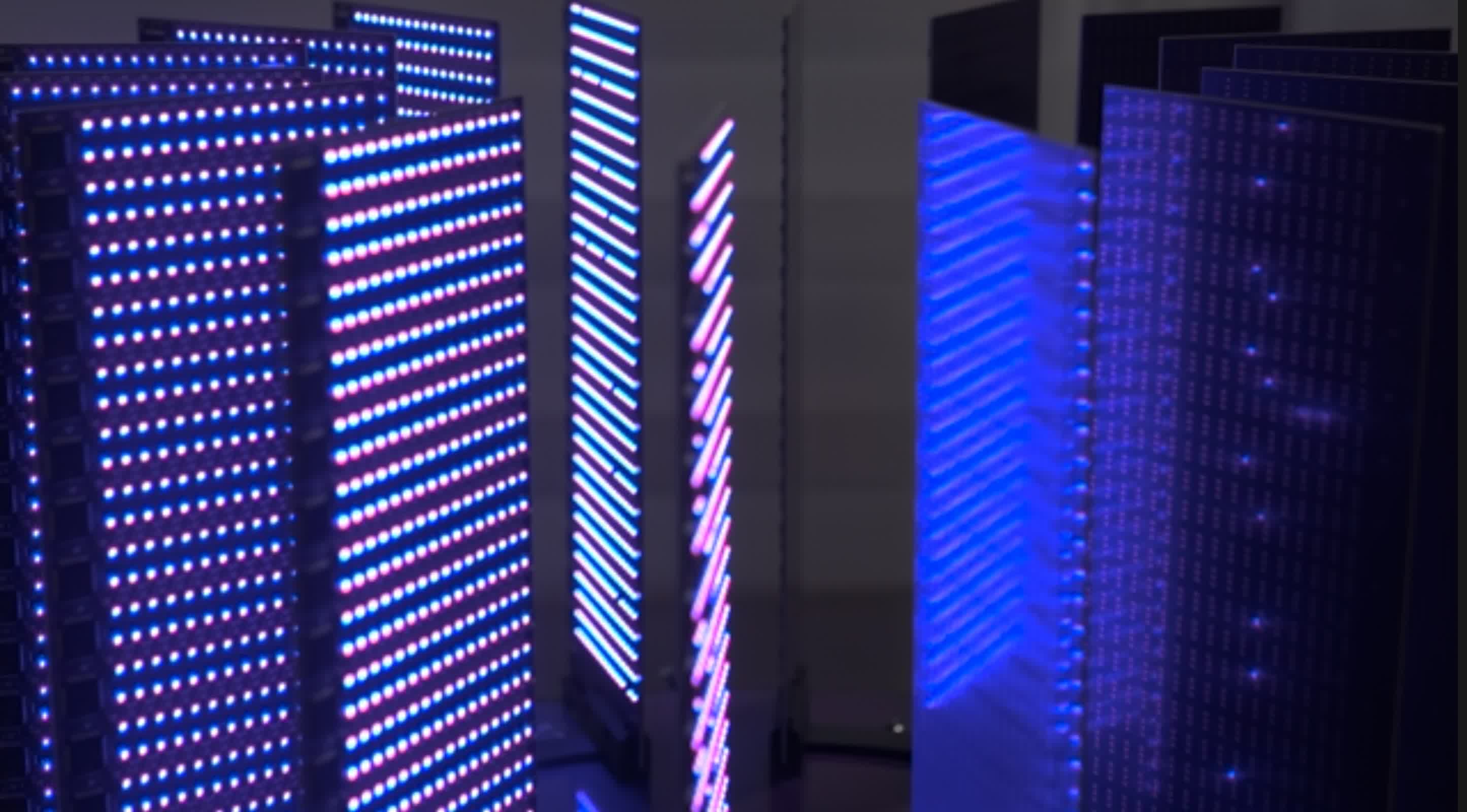
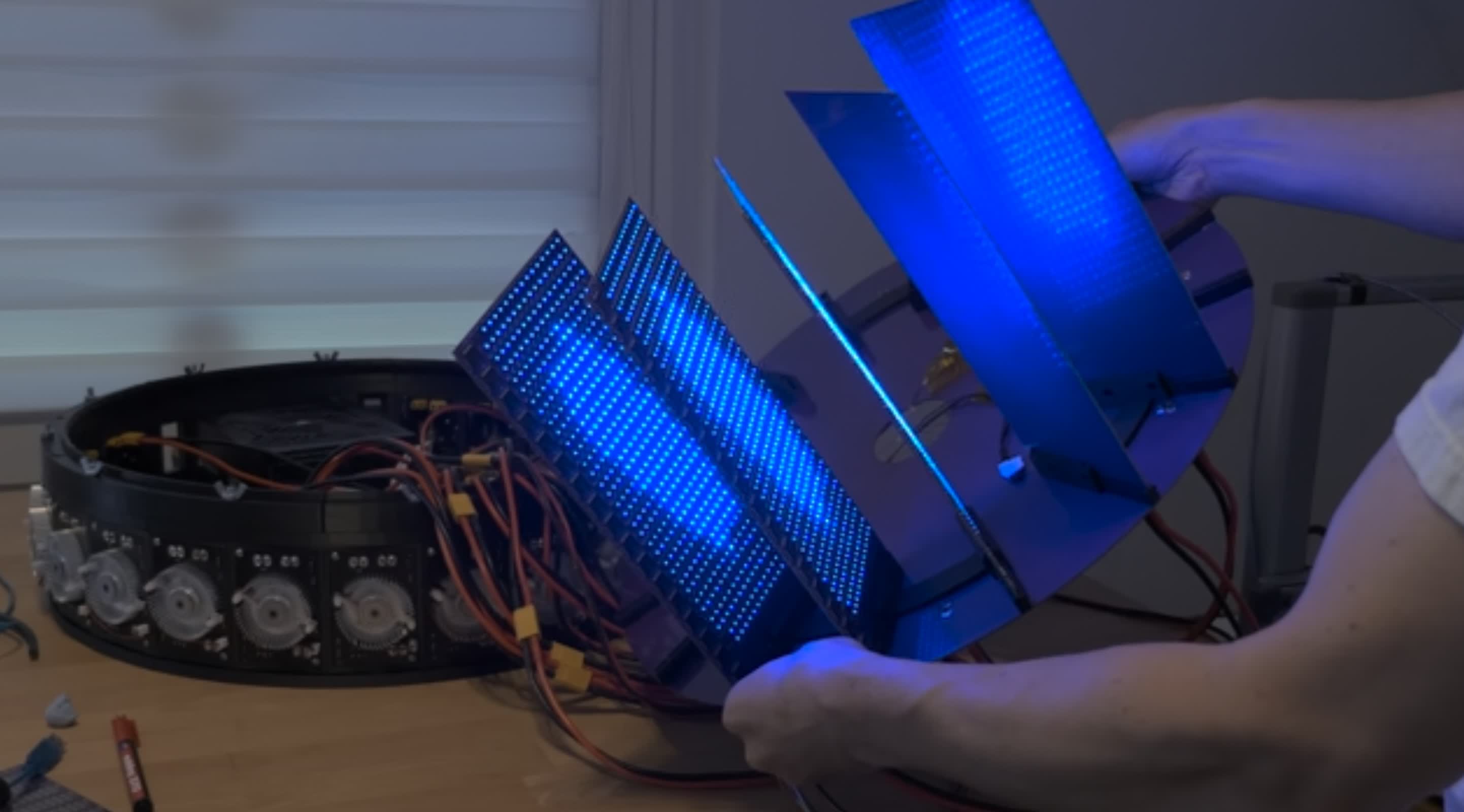
If full HD display is to be achieved, this design would theoretically require more than 2 million chips, making the cost and engineering complexity unbearable. So Balwierz scaled back his target to a 320×200 resolution, and even then the full version would still require 64,000 microcontrollers. The prototype currently being built is smaller, consisting of 8,192 chips mounted on multiple custom circuit boards. Each circuit board is responsible for a 16×32 pixel area, and the boards are arranged in a ring, partly inspired by the classic Cray-1 supercomputer design, giving the overall appearance of a high-density wall of flashing LEDs.
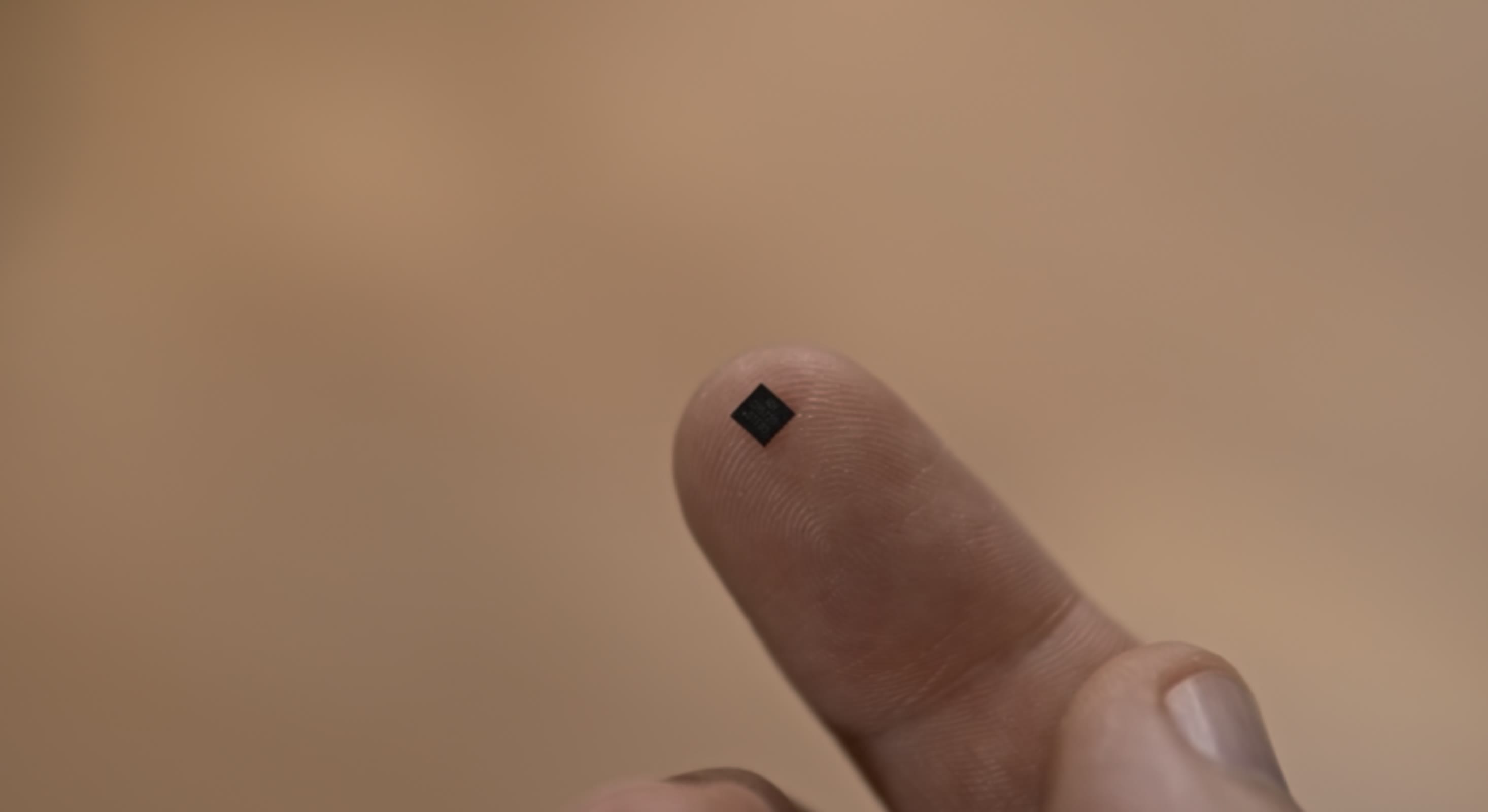
In order to control costs, the project gave up the more powerful and more expensive addressable RGB lamp beads, and instead chose to directly weld an ordinary RGB LED on each chip. The core device used is the domestic QingKe CH570 microcontroller, which costs about US$0.13. It has a built-in 32-bit RISC-V CPU with a maximum frequency of 100 MHz. It also integrates a USB controller, a 2.4 GHz radio frequency transceiver module and Bluetooth 5.0 LE support. It can be said that it is "small but has all the internal organs" in terms of price. Even so, device costs add up quickly when quantities rise into the tens of thousands: Just 64,000 chips cost more than $8,000, not including circuit boards, power supplies and other supporting components.
In terms of system architecture, Balwierz adopts a hierarchical management scheme to group and manage a large number of "small chips" to avoid all control logic being placed on a single central processing unit. Each 32 CH570 microcontrollers are uniformly scheduled and coordinated by a more powerful CH32V control chip to maintain basic order and synchronization in a large-scale parallel structure. This hierarchical design can not only ensure scale expansion, but also maintain the controllability and reliability of the system.
Power consumption was one of the biggest challenges in this experiment. The current requirement of a single microcontroller is about 10 milliamps, which seems insignificant; but when the number increases to thousands or even tens of thousands, the total power consumption stacks up exponentially. The overall power consumption of the current prototype system is approximately 2,161 watts, corresponding to approximately 655 amps at 3.3 volts. To meet such a huge current requirement, Balwierz selected a Corsair WS3000 ATX power supply and designed a custom power conversion module to efficiently step down the 12V voltage to 3.3V while being able to withstand the extremely high current output.
Almost all hardware aspects are designed and manufactured by Balwierz in-house, including circuit boards, power supply systems and test tools. The six-layer PCB design used in the project was his first attempt, which was close to the design upper limit of JLCPCB's board manufacturing capabilities. At first, he considered using immersion cooling to solve the heating problem under high power consumption, but due to cost and environmental concerns, he temporarily shelved this plan.
In terms of programming and production processes, this project is also full of "geek flavor". To meet the burning needs of tens of thousands of chips, he did not choose to manually write one by one. Instead, he made a self-made three-pin contact programming tool and used a 3D printer to achieve automatic positioning. The specific method is: install the programming head on the motion platform of the 3D printer, send G-code instructions to the printer through a Python script, and allow the programming head to accurately move to each microcontroller in sequence, automatically completing contact and burning, which greatly reduces repetitive and boring manual operations.
Currently, this home-made GPU project is still in a relatively early exploration stage and cannot be compared with any commercial graphics card in terms of performance, energy efficiency or size. However, Balwierz’s goal is not to make a “practical” high-performance graphics card, but to verify an extreme idea: using massive low-cost processing units to build a distributed, strongly parallel graphics processing system and rethinking the basic form of GPU. As for whether this system can run classic games such as "Doom" in the future, it is still unknown. But at least it has effectively demonstrated the potential of cheap components in innovative architectures - as long as someone is willing to step outside the traditional GPU design framework and try to redefine the concept of "graphics card" in a completely different way.