Another Geekbench score entry about AMD's "Medusa Point" APU was recently discovered by the well-known whistleblower HXL. This engineering sample appeared in the Geekbench database under the name 100-000001713-33_N. The test platform is Plum-MDS1 FP10, which is a step further in performance than previously exposed results, even though its nominal frequency is only slightly higher than 2.0 GHz.
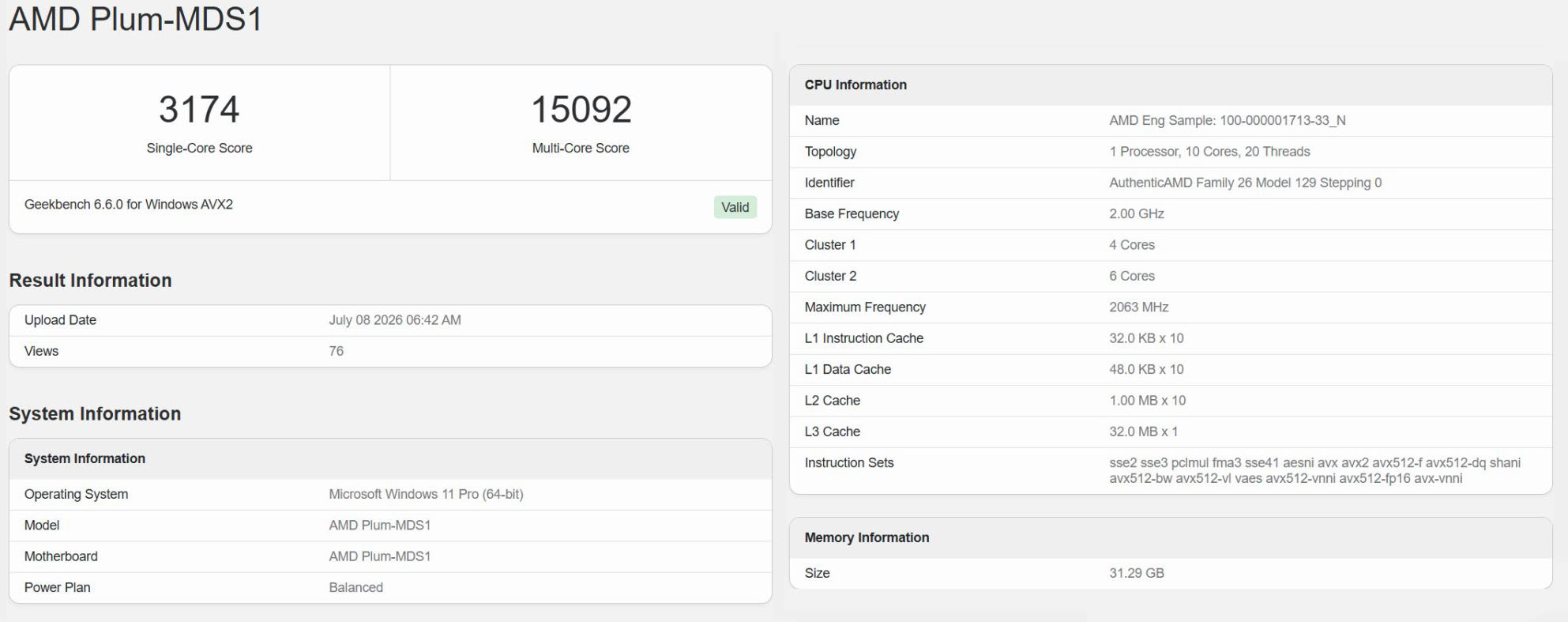
The processor is classified as a Ryzen 9 model in the identification information, configured with 10 cores and 20 threads, with 10 MB L2 cache and 32 MB L3 cache, although the L3 capacity is likely to be a false positive; the core topology is generally believed to be a 4+6 combination based on Zen 6/6c.
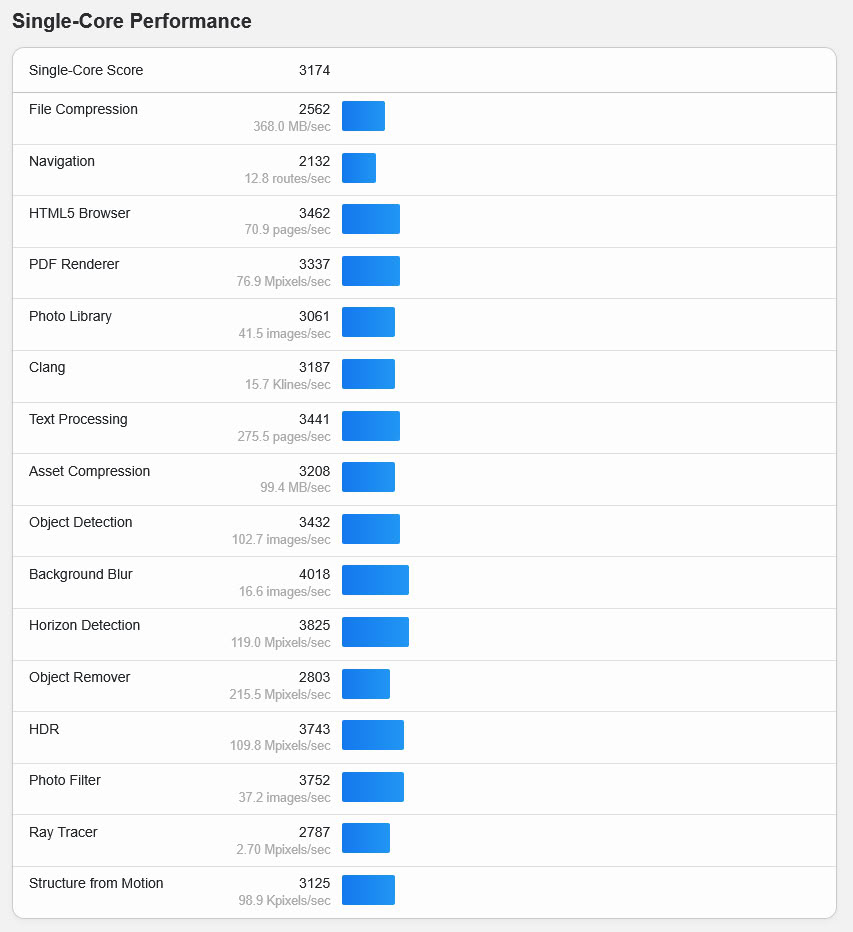
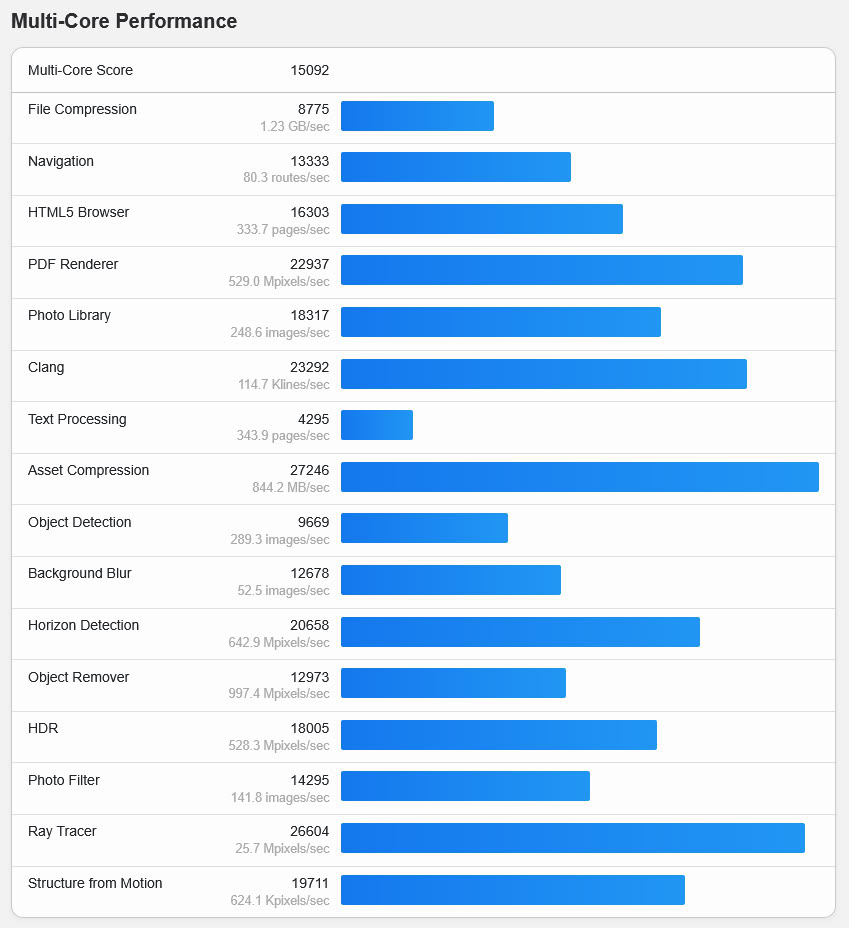
In the Geekbench 6 test, this "Medusa Point" sample achieved a single-core score of 3174 and a multi-core score of 15092, which are about 29% and 22% higher than the current average scores of Ryzen AI 9 365 (Strix Point) respectively. It has shown obvious advantages even when the frequency is far from full. As usual, engineering samples at this stage tend to run at a lower frequency than the final production version, so by the time it is officially released, the performance gap between the Zen 6 APU and the existing Strix Point is still likely to widen further.
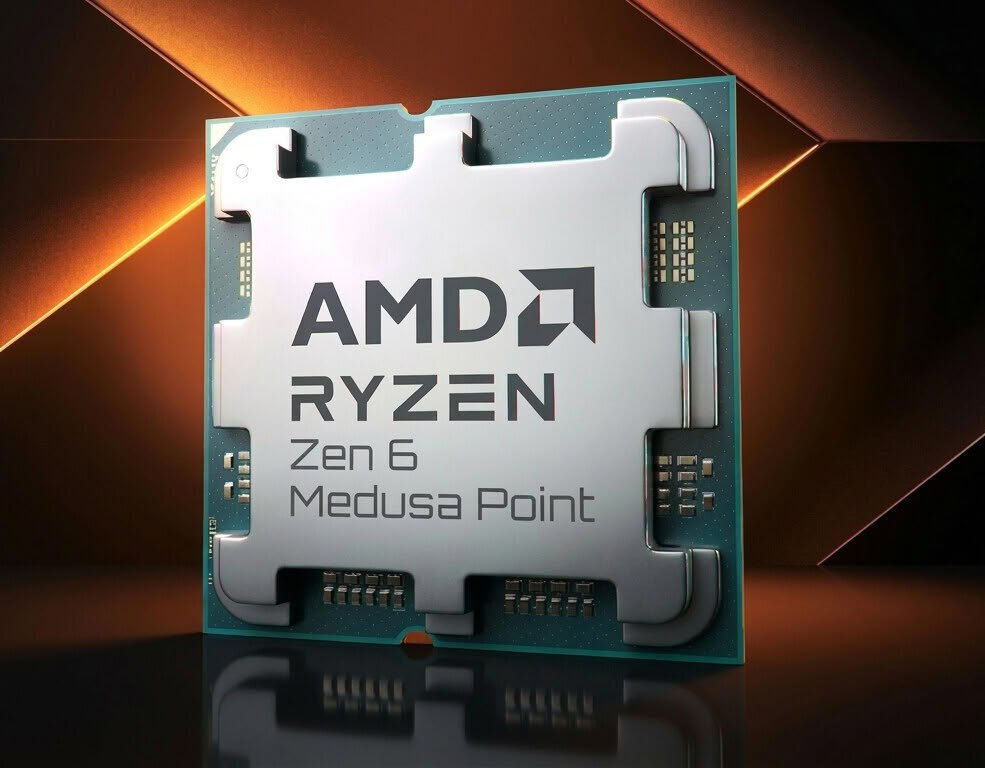
Previously leaked information shows that AMD plans to stack up to 22 CPU cores for the flagship Ryzen 9 model by combining a 10-core APU chiplet with a 12-core desktop CCD, thus covering multiple forms from mobile to high-performance desktop under a unified platform. The integrated graphics part is expected to be equipped with 8 sets of RDNA 3.5+ (RDNA 4m) computing units. While the number of CPU cores is increased, the overall iGPU specifications remain unchanged. The goal is to provide more balanced computing and graphics capabilities on thin and light laptops and small chassis platforms.
This Geekbench entry also clearly lists the Zen 6 chip’s support for FP16 AVX-VNNI for the first time, which means that AMD’s next-generation architecture will be expanded in FP16 instruction processing and vectorized neural network operations, further optimizing for emerging workloads such as AI reasoning and machine learning. For the PC ecosystem that continues to emphasize the concept of "AI PC", this evolution at the instruction set level is expected to work with NPU and GPU acceleration to improve the overall throughput and energy efficiency of end-side AI tasks.
However, all current test results come from early engineering samples. Frequency readings, firmware versions, and platform optimization are far from finalized. There are still large variables in actual specifications and even final performance trends. AMD "Medusa Point" is expected to officially meet the public next year, and it is widely believed that its debut will be during the CES show in January 2027, when the complete roadmap and market positioning of the Zen 6 APU family is also expected to be announced.