Recently, technology giant Google submitted a detailed submission to the European Commission, expressing clear opposition to the implementation of widespread blocking measures for pirated websites in Europe. Google warned that blocking DNS resolvers, VPN services or shared IP addresses would not only have "limited effectiveness" but would also cause "serious harm" to legitimate Internet infrastructure and normal services.
It is worth noting that this submission, although marked "Privileged and Confidential", has been released publicly after being submitted to the European Commission's public consultation process on the review of the Copyright Directive. Not long before the document was exposed, the U.S. House of Representatives Intellectual Property Subcommittee had just held a hearing on Internet copyright protection and enforcement. This shows that the United States is accelerating its website blocking legislation, and its early draft includes DNS blocking and other methods, which also makes Google's position in the EU even more intriguing.
At present, courts in European countries such as France, Belgium, Italy and Portugal have ordered Google to block specific pirated domain names through its public DNS resolver. However, Google questioned the rationality and effectiveness of such generalized blocking in its submission to the EU. Google pointed out that blocking DNS resolvers, IP addresses or VPNs cannot truly remove infringing content from the source, and users can easily bypass restrictions by changing other DNS resolvers. At the same time, this one-size-fits-all approach is extremely "disproportionate" and can easily damage legitimate network services and even trigger legal disputes such as extraterritorial jurisdiction. Especially for IP address blocking, since a large number of legitimate websites often share the same IP, this will lead to a large area of innocent websites being implicated.
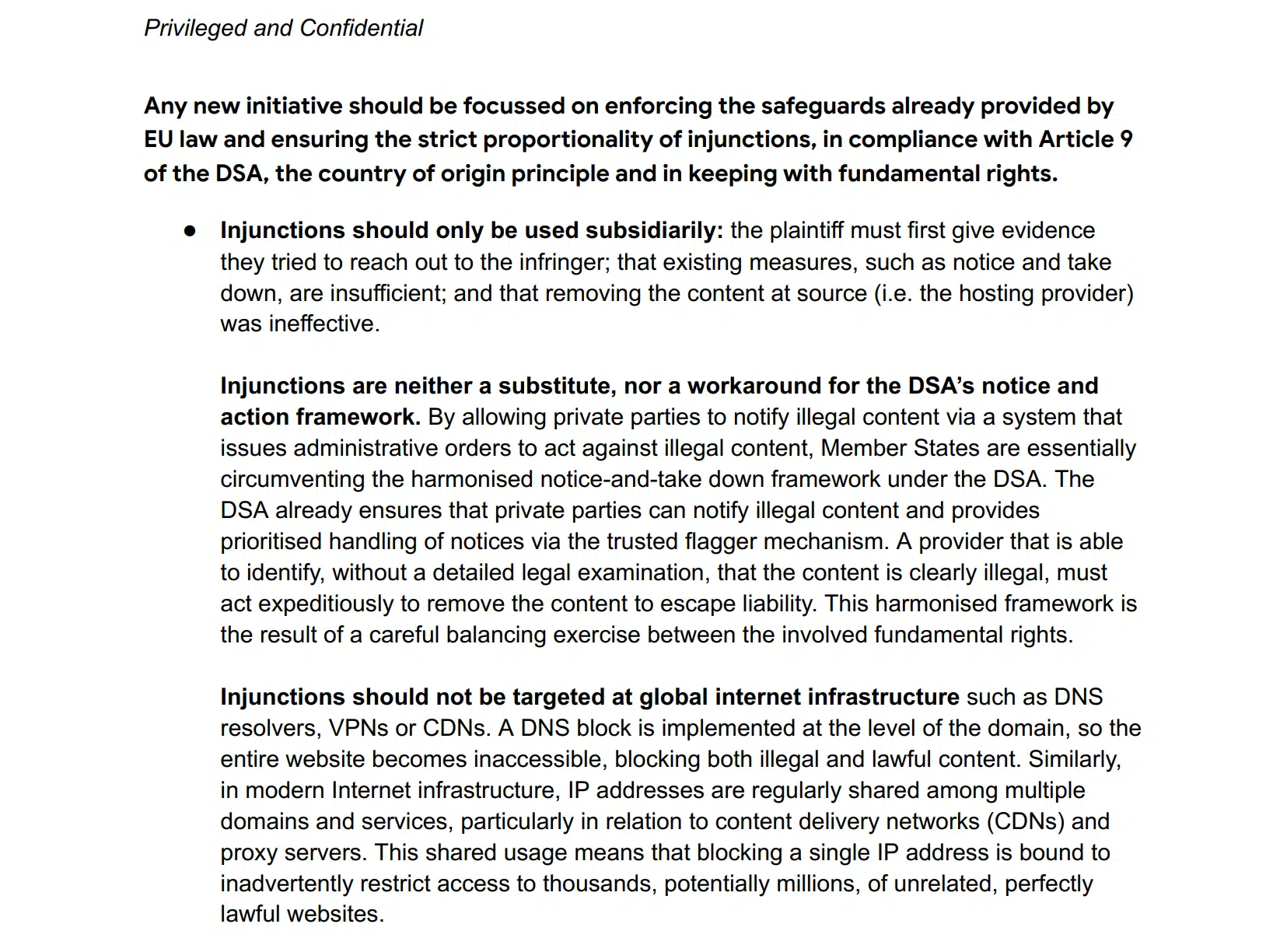
In order to support the above argument, Google cited multiple real-life cases in its opinion. For example, when Italy’s copyright protection system “Piracy Shield” implemented blocking, it mistakenly blocked Google Drive (Google Drive), and affected more than 42 million domain names owned by Cloudflare customers; in France, Cisco Systems (Cisco) finally chose to stop providing its OpenDNS service in the country because the local court forced its DNS resolver to implement blocking instructions; and in Portugal, local operators blocked virtual IPs hosted by Google, which directly caused the interruption of Google's core services and cut off the legitimate traffic of a large number of innocent Google Cloud customers.
Additionally, the submission cites a large-scale empirical study by the Open Observatory of Network Interference (OONI). Research shows that during Spain's implementation of La Liga's blocking directive, more than 554,000 domain names were blocked at least once during live football matches, including a large number of non-infringing official and commercial websites such as the United Nations Children's Fund (UNICEF), the United Nations Refugee Agency (UNHCR), Amnesty International, the American Civil Liberties Union (ACLU), the Australian Senate, and Amazon S3 storage nodes.
In this regard, Google emphasized that any blocking ban should be used as a last resort and clear guardrails must be established. Courts should not simply act as a "mail box" for copyright owners to blindly stamp blocking requests. Blocking orders must be transparent and time-limited, and copyright owners should share implementation costs with Internet intermediaries. Google believes that the fundamental way to combat piracy is not to forcefully block, but to provide better and more convenient legal consumption alternatives.
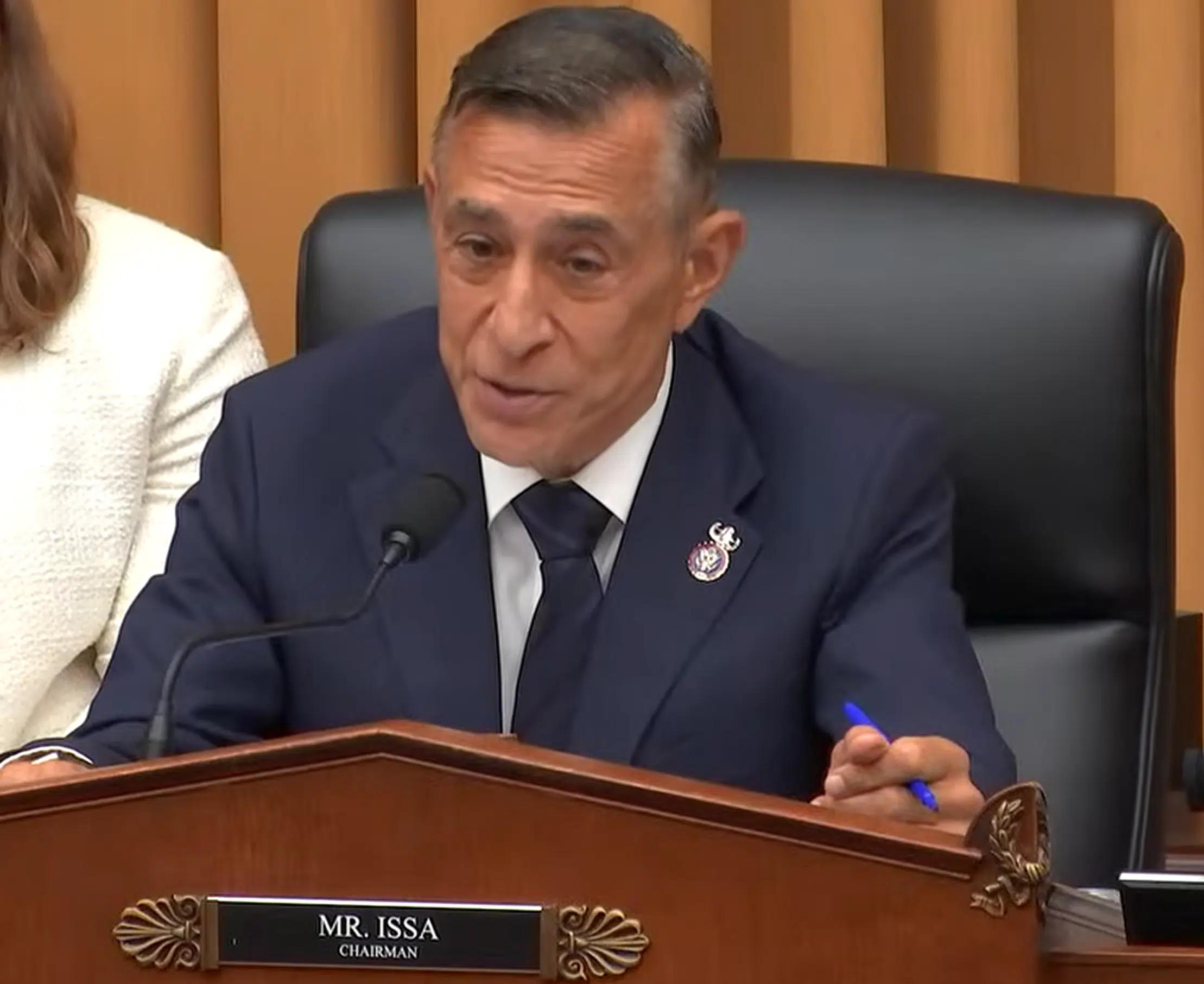
At the same time, website blocking legislation in the United States is gathering momentum. Darrell Issa, chairman of the U.S. House of Representatives Intellectual Property Subcommittee, previously revealed plans to introduce a website blocking bill and said that the "educational phase" of relevant legislative work has ended and that texts are being distributed on the final compromise. In addition, another representative, Zoe Lofgren, also confirmed that negotiations are underway with a number of members of the House and Senate on a cross-party "four-party agreement." The U.S. Supreme Court recently ruled in a ruling involving telecommunications operator Cox that unless an ISP actively induces or tailors infringing services, it does not need to bear indirect liability for users' piracy. This ruling undoubtedly further intensifies the urgent need for U.S. copyright owners to introduce website blocking as a new law enforcement tool.
Although Google has not commented publicly on the U.S. legislative plans, the Software and Information Industry Association (SIIA) and the Internet Infrastructure Coalition (I2Coalition), of which it is a member, have expressed concerns. Relevant industry representatives emphasized at the hearing that future bills must have strong judicial support and technical means must be precise enough to prevent damage to shared infrastructure. As relevant bills in the United States continue to advance, whether Google will publicly express the same strong opposition position in the United States as it does in the European Union in the future is triggering close attention within the industry.