California startup Reflect Orbital has received approval from the U.S. Federal Communications Commission (FCC) to launch its first experimental satellite designed to reflect sunlight to the Earth's surface. Although the project raised concerns about light pollution and its impact on optical astronomy research, regulators approved the company's plan to build and operate the prototype in low-Earth orbit later this year.

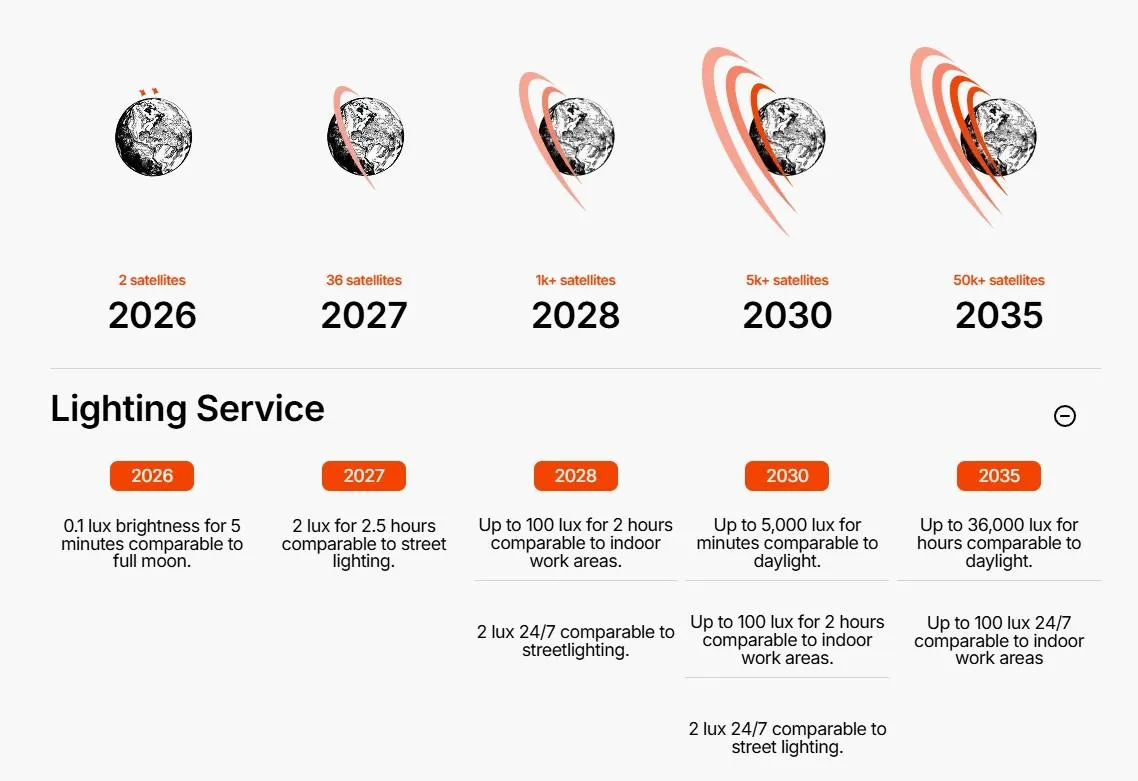
The satellite, named Eärendil-1, is named after the character in Tolkien's work. It features a 59-foot-wide reflective surface designed to attempt to redirect sunlight to specific areas of the Earth at night. If this experiment is successful, Reflectorbit plans to deploy a massive constellation of 50,000 satellites by 2035. It is said that the system can provide light to the ground with a coverage range of up to 3 miles (about 5 kilometers).
The company said the technology will provide "on-demand lighting" services and is designed to serve a variety of areas including solar power generation, agriculture and emergency response. Reflector Orbit Company said on its official website that by getting rid of the constraints of geographical location and day and night time, this technology is expected to help search and rescue personnel accurately locate missing persons within minutes, help cities obtain safer lighting without increasing carbon emissions, and enable construction projects to shorten construction periods through night operations.
However, as the number of satellite constellations in Earth orbit proliferates, there is growing anxiety about space debris and light pollution. Reflectorbit's ambitious plans have already faced a lot of skepticism. Critics worry that these huge space mirrors may interfere with scientific observations and make astronomical observations more difficult.