According to the Wall Street Journal,The Internet's richest source of information is re-evaluating its relationship with Google.According to people familiar with the matter, the company that provides content for a large number of Google search resultsOnline forum Reddit, has discussed cutting off Google’s access to its content for AI purposes.

Google search traffic drops
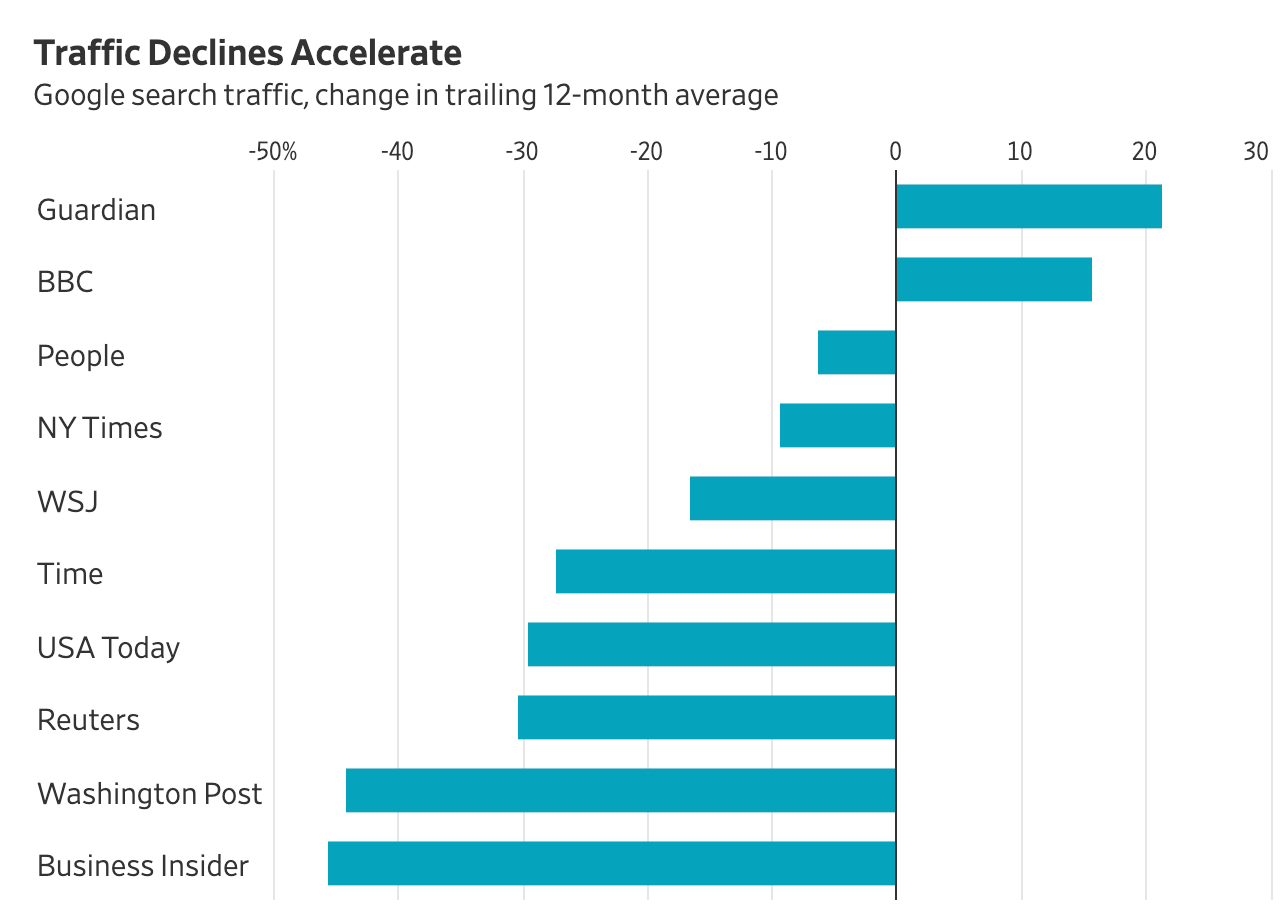
Reddit is just the tip of the iceberg. A growing number of online media companies are unhappy with Google as AI is changing the way people ask questions, diverting search traffic and upending publishers' revenue models. They say search engines are no longer a reliable source of visitors, especially after Google expanded its AI search capabilities in recent months.
USA Today, Politico, The Economist, Publisher People and Reuters, among othersare all evaluating how, or even whether, to continue working with Google.
Reddit signed a $60 million-a-year deal in 2024 to allow Google to use its content to train AI models. But as AI-generated answers reduce the number of clicks users make to external sites, Reddit executives are evaluating what benefits they can gain from continuing to provide their own content to Google, according to people familiar with the matter. Currently, the two parties are negotiating on contract renewal, and the existing agreement is about to expire.
“This is an existential issue for certain categories of publishers,” said David Buttle, CEO of media consulting firm DJB Strategies. “They are considering more radical moves.”
Google traffic to publishers is declining
According to data from Internet company Cloudflare, bot traffic now accounts for more than half of Internet traffic. Some of these bots scrape publisher content to train their own AI models. Others crawl website content to answer user questions more quickly or sell the content to other companies. As related technologies become more complex,Efforts to stop bots from crawling content have become a game of whack-a-mole.Publishers continue to block new methods of bot access, but new methods keep emerging.
For now, publishers are still allowing Google's bots to access their sites because the bots serve both Google's AI tools and search capabilities. If the AI side is turned off, the search side will also be paralyzed.
USA Today Inc., publisher of USA Today, is considering blocking Google's crawlers from accessing its website.This means that its content will not appear in Google's AI snippets, nor will it appear in those blue links in traditional search results.According to data from search analytics firm Semrush, the organic Google search traffic USA Today National received from U.S. users fell by nearly half in the year from June 2025 to June 2026.
"It's time to stand up and say 'enough'," said Mike Reed, CEO of USA Today. He said the company was willing to cut off Google's access if the decline in search traffic continued. They are already preparing for a future without Google traffic revenue.
USA Today currently has a pending lawsuit against Google, accusing the company of having a monopoly in ad technology that hurts the publisher's ad revenue.
Between June 2025 and June 2026, Google search traffic from U.S. users fell by 23% for Politico, about 25% for CNN, and more than 85% for Business Insider.
A large part of Reuters' revenue comes from B2B business. Reuters said it was also weighing whether to block Google's web crawlers for its consumer-facing news products as traffic dropped. "We are really weighing the economic benefits of search versus AI summarization," said Reuters President Paul Bascobert.
Google says its AI search capabilities "send billions of clicks to Internet sites every week" and are meeting the changing needs of users. "Our AI features highlight web links to help creators and publishers expand their audience. At the same time, we also provide website owners with clear control options to manage their content," a Google spokesperson said.