
Abstract:
In the era when software released by Windows 95 was still circulated in the form of CDs, Microsoft put an anti-counterfeiting holographic label on the side of the box to prevent piracy. Unlike ordinary printing patterns, holograms will show different effects depending on the viewing angle, which makes it difficult for pirates to use ordinary printing equipment to imitate the real effect. According to Raymond Chen, a senior engineer at Microsoft, the photographer in charge of the shooting chose his own infant son as a model because the details of the human face were extremely difficult to accurately replicate.
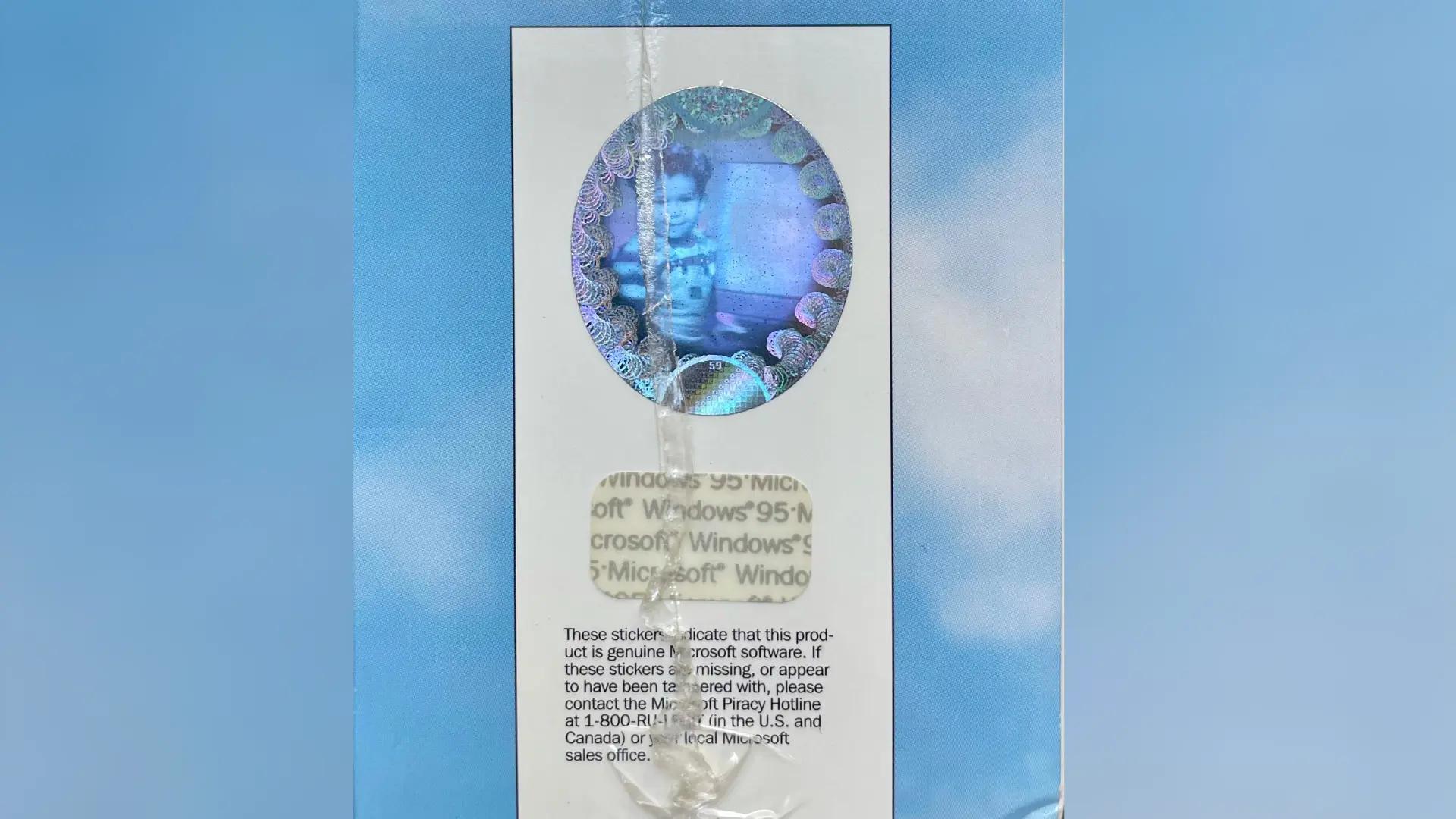
This first-generation holographic label also has dynamic effects: the baby is sitting next to a computer in the picture, and as the box is tilted, his head will turn to the monitor. However, problems soon emerged - according to Chen, the government of a certain country (which country has not yet been disclosed) complained that the packaging of Windows 95 showed images of "naked children". In fact, the baby was shirtless, and because the hologram only showed him from the waist up, officials mistakenly believed he was not wearing pants either.
Face complaints, Microsoft had to rush to create replacement holograms. In the new version, the baby was added with a shirt and suspenders, but due to the hasty changes, Microsoft did not have enough time to re-create the animation effect of the arm rotation in the original version, causing the replacement version to lose an interesting highlight of the original design.
Today, the original "Topless Baby" holographic tag is even rarer than the replacement. Chen said that if anyone still has a Windows 95 box with the original label on it, it is a genuine collectible. It's entirely up to each person's own judgment as to how they should view the image of a shirtless baby on the hologram.
Comments