
Abstract:
The China Judgment Documents Network recently published a case, which triggered heated discussions among netizens. The incident occurred at about 19:00 on March 19, 2026. After being drunk, Zhou manually drove a small bus with a Zhejiang A license plate home from a certain village, and activated the vehicle's assisted driving function while driving. When the vehicle was traveling to a certain road section, Zhou stopped the vehicle to use the toilet. After returning to the vehicle, he fell asleep due to sleepiness. The vehicle did not continue driving but was still started.
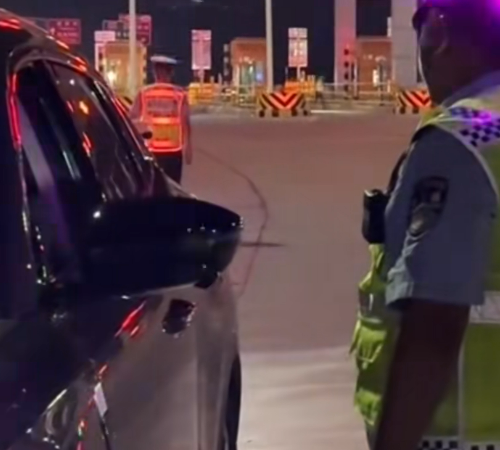
At 20:03, the emergency rescue center of a certain brand detected that the driver of the car had not taken over the vehicle for a long time and there was no response to the call, so it called 110, Zhou's preset emergency contact, to request assistance.
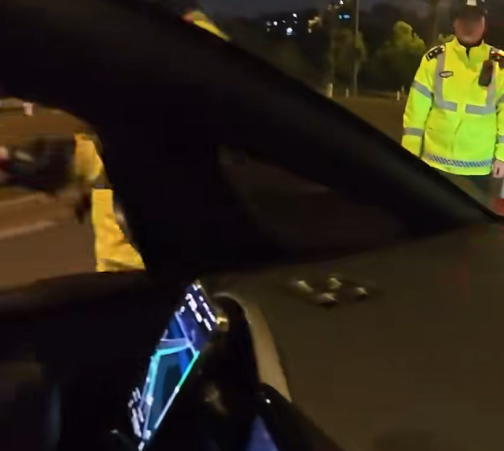
After the police on duty arrived at the scene, they discovered that Zhou was suspected of drunk driving and seized him on the spot. After identification, the ethanol content in Zhou's blood sample was 186mg/100mL.
After Zhou was brought to justice, he truthfully confessed the facts of the crime, but claimed that he had the circumstances to surrender.
The reason is: proactively setting 110 as the second emergency contact in advance, one of the purposes is to enable the public security organs to stop you when you commit illegal or criminal acts; voluntarily reserve a channel for public power to handle, take over the vehicle and terminate dangerous driving behavior after the vehicle engine sends a call reminder, and have the conditions to escape but stay at the scene to wait for the police, which is an automatic surrender.
The defender further proposed that if the assisted driving system and the driver are considered as a whole to be convicted of drunk driving, then the vehicle automatically calling the police for him should also be regarded as the defendant's active surrender.
The court rejected this defense from both subjective motivation and objective performance levels. From a subjective perspective, as Zhou is the person responsible for road traffic safety, the vehicle system is only a driving aid and does not have the ability to make independent judgments and cannot express his subjective will on his behalf. The act of asking for help is the result of the vehicle system being automatically triggered based on a preset program and the car company handling it according to its responsibilities. The purpose is to rescue the driver, rather than being entrusted by Zhou to surrender to the public security agency on his behalf.
Zhou’s argument that the preset 110 number is to prevent the public security organs from stopping him when he commits a crime is unreasonable, and the emergency contact program does not have the stated function.
On an objective level, Zhou confessed that he slept in the car and did not wake up until the traffic police arrived. The emergency contact function of the car company's emergency rescue center was triggered precisely because the vehicle was left unattended for a long time and the driver did not respond. When the rescue center asked for help, Zhou had lost the ability to substantially control the vehicle, lacked normal awareness of vehicle alarms and public security agency handling, and did not have the freedom of will and possibility to surrender. His explanation that he took over the vehicle after receiving the call from the vehicle and waited for the traffic police to deal with it is contrary to the facts.
To sum up, the court found that Zhou did not have the initiative and voluntariness to surrender, and it did not constitute surrender. However, if he truthfully confesses the facts of the crime after arriving at the case, he may be given a lighter punishment in accordance with the law. In the end, the court ruled that Zhou was guilty of dangerous driving, sentenced to one month of detention, and fined RMB 2,000.
Comments