
Abstract:
NVIDIA officially adjusted its China market strategy after major changes in management. On November 17, local time, NVIDIA acting CEO Colette Kress announced during the company's earnings call that NVIDIA will no longer sell H200 artificial intelligence acceleration chips to China, which means that the company will end its previous practice of using special arrangements to continue supplying advanced AI chips to the Chinese market.
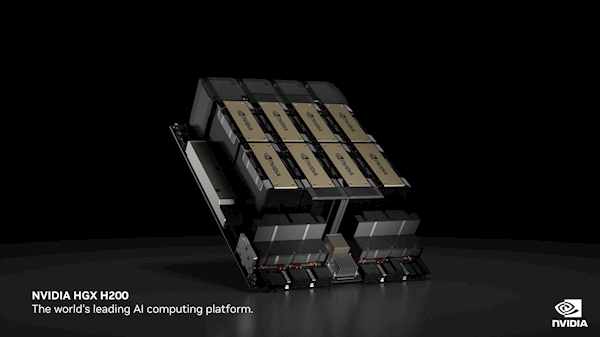
The decision came during Nvidia's first earnings call since the departure of founder and former CEO Jensen Huang. At the same time, NVIDIA also announced the establishment of a new board-level committee responsible for overseeing national security policies, export control compliance matters, and global trade risk management, showing that the company is further strengthening its response to geopolitical and regulatory issues.
Previously, Nvidia’s plan to sell H200 chips to China was reached under the promotion of Huang Renxun and US President Trump. According to the arrangements at the time, the relevant chips had to be transported through the United States, and the U.S. government was able to impose a 25% tariff. This plan has aroused dissatisfaction among hawks in the United States. They believe that China should be completely restricted from obtaining advanced artificial intelligence computing power in order to maintain the United States' leading edge in the AI field.
Huang has long advocated the importance of retaining the Chinese market. He has publicly stated that giving up the Chinese market is not a wise choice for the U.S. technology industry, and believes that U.S. companies should continue to remain competitive in the Chinese market. However, with its departure from the company and the recent tightening of relevant restrictions by the U.S. government, Nvidia's stance has changed significantly.
Just before announcing the suspension of sales of H200 chips, the United States issued new export control regulations, prohibiting advanced American AI chips from being deployed in overseas data centers that provide remote services to Chinese customers. This new regulation not only affects local Chinese companies, but also imposes stricter compliance requirements on data center operators in many regions around the world.
Investment bank Jefferies predicts that the new regulations may cause Nvidia's data center business revenue to decrease by US$44 billion to US$62 billion next year. However, Kress said that because the market demand for new-generation high-end AI chips such as Vera Rubin is still extremely strong, and the company's existing order backlog is huge, it will not have a significant impact on overall revenue in the short term.
Analysts pointed out that Nvidia may face the risk of losing some Southeast Asian customers in the future, including markets such as Singapore, Malaysia, Thailand and Indonesia. The outside world has long believed that a significant proportion of Nvidia's revenue is linked to China-related demand. As new export restrictions take effect and the company actively withdraws from China's high-end AI chip market, this revenue structure is expected to change significantly.
However, the Chinese market's acceptance of H200 itself has shown a downward trend recently. Researchers said that the Chinese government is actively supporting the local semiconductor industry and hopes to guide more customers to adopt domestic AI chip solutions through policies, even though some companies still believe that Nvidia products have a leading edge in performance.
At the same time, China's leading artificial intelligence laboratories are still obtaining Nvidia's advanced hardware through other channels. Research shows that during the training process of many of China’s top AI models, there are signs related to the Grace Blackwell platform, which is banned from being exported to China. This means that part of the training work may be completed in data centers outside China.
As the United States further strengthens supervision, such paths will be subject to stricter restrictions in the future. According to the new regulations, if large-scale AI training data centers want to continue to purchase Nvidia's advanced chips, they need to prove that their service targets do not include Chinese customers. If relevant certifications cannot be completed, these companies may be forced to turn to other chip suppliers, further weakening Nvidia's share in some international markets.
The industry generally believes that stopping the sale of H200 chips to China not only marks an important turning point in NVIDIA's China strategy, but also reflects that the global artificial intelligence industry is being profoundly affected by multiple factors such as export controls, national security, and international competition. In the future, as the competition between the United States and China in the fields of artificial intelligence and semiconductors continues to escalate, the global AI chip market structure may face a new round of adjustment.
Comments