
Abstract:
Artificial intelligence agents are trying to enter professional research fields such as archeology, but a so-called discovery that has attracted recent attention has exposed a problem with AI tools in scientific research: they may identify real targets, but fail to determine whether these targets are already known.
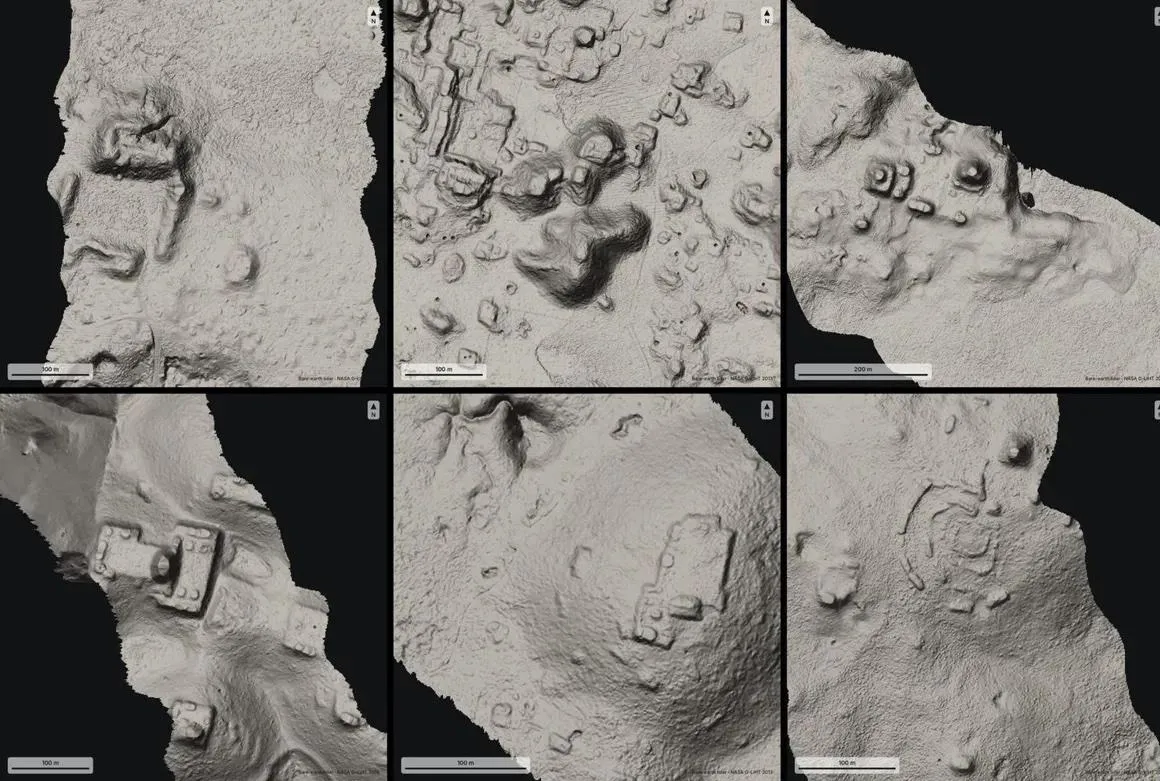
Google researcher Pietro Miotti recently claimed that he used a group of AI agents to discover a Mayan ruins that may not have been recorded yet in the Mayan region of Mexico. However, archaeologists were quick to point out that the site had actually been discovered and published in an academic journal more than a year ago.
Miotti first came up with the idea of using AI to find archaeological sites while traveling in Peru. He imagines what historical explorers might have accomplished if they had used modern technology. So he chose lidar technology (LiDAR), which uses laser scanning to generate three-dimensional information on the surface to search for ancient buildings and settlement ruins that may be covered by vegetation.
Miotti then assembled a team of 48 AI agents and asked them to analyze lidar data provided by NASA to find archaeological sites that may not have been recorded. Due to insufficient coverage of Peruvian lidar data, he eventually shifted his research scope to the area where the Maya civilization existed.
The AI agents identified several locations worthy of further investigation, including a large settlement. According to Miotti, the settlement does not appear to appear in existing registration records. He said this was just his personal side project and did not use computing resources or other support provided by Google.
To verify the findings, he contacted Mexico's National Institute of Anthropology and History (INAH) to ask whether the site in question had been registered, including whether there were any research results that had not yet been made public. Miotti said he also uses AI agents to translate communications into Spanish. The institute responded that it had no information about the location in its registration records.
Miotti later excitedly announced on his blog that the entire process from generating the idea to receiving a formal response from the Mexican government agency took less than 72 hours. He believes that this proves that AI agents are expected to bring revolutionary changes to many scientific fields, and calls for the use of lidar technology to conduct more comprehensive surface mapping around the world, allowing AI to assist in finding historical relics that have not yet been identified.
However, problems soon arose. Archaeologists discovered that the site Miotti claimed was not a new discovery. Ivan Šprajc, an archaeologist at the Research Center of the Slovenian Academy of Sciences and Arts, is one of the authors of a previous related research paper. The site had been documented in academic journals, published more than a year before Miotti's alleged discovery.
Sarah Parcak, a professor of archeology at the University of Alabama at Birmingham, also criticized the incident on social media. She noted that researchers must carefully check existing academic results and not assume that just because a site does not appear in a government database it has never been discovered or mapped before.
Miotti acknowledges that he is not an archaeologist and does not realize that the absence of government records does not mean that a site has never been discovered or mapped by other researchers. He said that professional knowledge is crucial to verify the findings of AI agents, and admitted that both he and the agent have missed existing research results. Because archaeologists often don't disclose the precise coordinates of sites, determining whether a site is already known often requires comparing lidar images to illustrations in academic papers, rather than simply querying a database. This kind of work is still difficult for existing AI tools.
From the perspective of the archaeological community, this incident reflects a fundamental limitation of AI-assisted scientific research: discovering a certain surface structure does not mean that a scientific discovery has been truly completed. AI can quickly process massive amounts of data and identify terrain features that are not easily noticed by the human eye, but it may not grasp the accumulated research results in related fields, and it may not be able to understand the academic significance of a certain discovery.
Elizabeth Graham, professor of Mesoamerican archeology at University College London, pointed out that archaeologists in the Maya region actually already know many sites that have not yet been excavated and have not yet been systematically mapped. Many of these sites were even discovered by researchers through on-site walking surveys. She also emphasized that the existence of these sites is often already known to local communities, so the use of the word "discovery" itself requires caution.
Graham acknowledges that Miotti's work using AI to process lidar data and identify surface mounds has certain value, but she believes that the bigger obstacle facing current archaeological research is not the lack of sites to be discovered, but the lack of sufficient funds to carry out follow-up mapping and excavations. Even if AI can continue to identify more potential sites, without financial support, it will be difficult for researchers to further confirm their nature and historical value.
Šprajc also believes that archaeologists have already widely used lidar and other advanced remote sensing technologies, so merely identifying certain surface structures cannot significantly increase humankind's understanding of ancient civilizations. He also noted that inquiries to Mexico's National Institute of Anthropology and History would not be sufficient to complete the verification because the agency does not possess all possible archaeological information.
He worries that as more and more amateur researchers use AI to announce so-called new discoveries, professional archaeologists may receive a large number of clues and inquiries that have not been fully verified, which will actually increase their workload. In addition, if amateur researchers publicly release the specific location of the ruins, they may also attract robbers to destroy the ruins. However, as long as these discoveries do not lead to the theft of cultural relics, he believes that AI's participation in related research itself is not completely worthless.
This incident also reflects an increasingly obvious problem after AI enters the field of scientific research: AI tools may perform well in data processing and pattern recognition, but they may not necessarily be able to fully understand the historical background, existing results, and academic norms of the research field. Even if the phenomenon identified by AI does exist, it is easy to package existing results as new breakthroughs if the existing literature is not fully checked and the work of previous researchers is respected.
Miotti finally said that after the archaeologists pointed out the problem, he had promptly modified the content of the blog to supplement the contributions of previous researchers. He believes that this set of AI workflows may still help professional researchers process large amounts of survey data, and said that archaeologists and doctoral students have contacted him, hoping to learn whether this method can be applied to their own research projects.
Comments