
Abstract:
Google officially launched the new generation artificial intelligence model Gemini 4 Hydrogen on November 12, 2026. This model was originally expected to follow the Flash naming system, but Google finally chose the new Hydrogen name, positioning it as a high-efficiency model for daily use, rapid programming, and agent workflow.
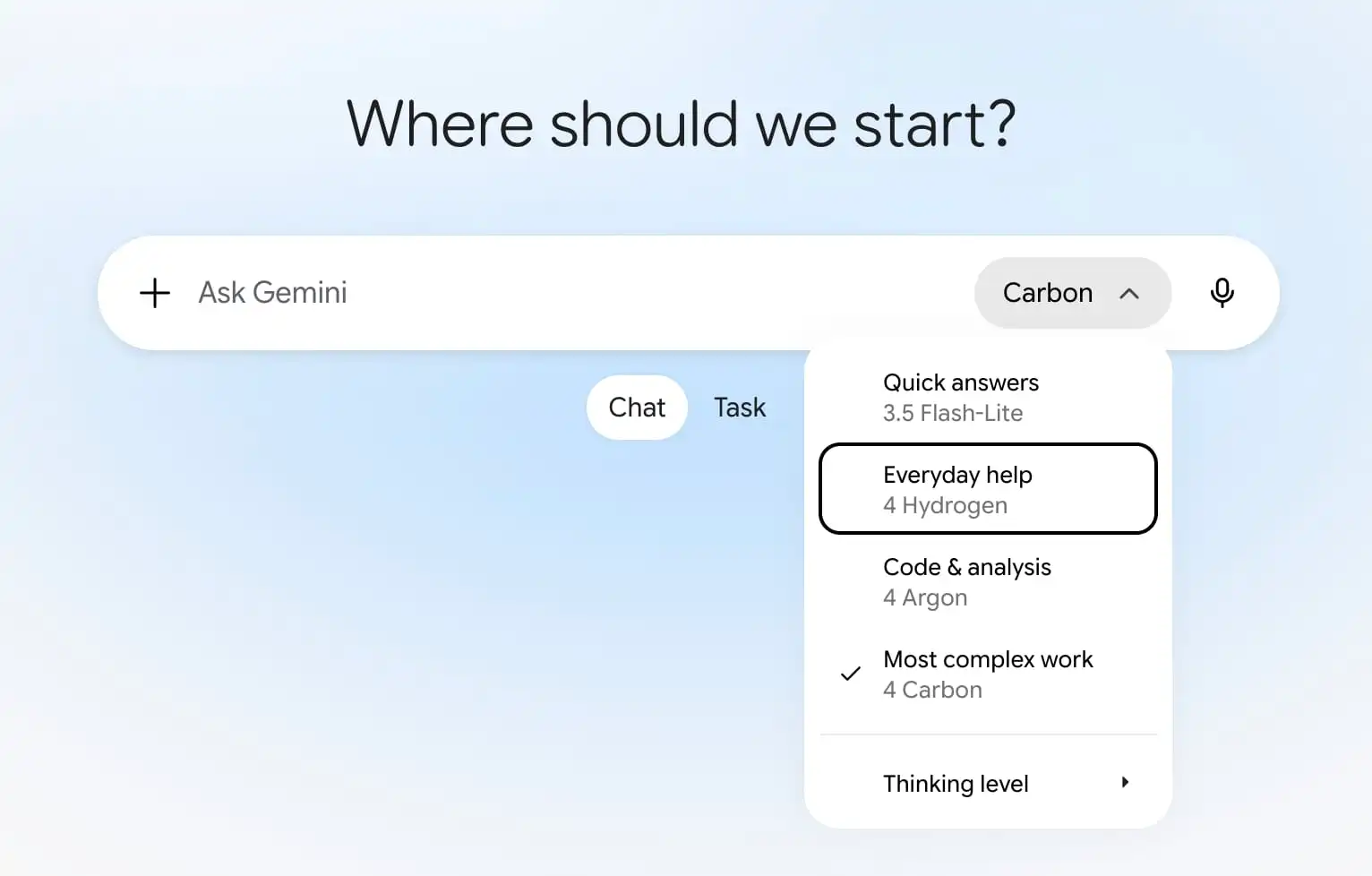
Previously, Google has launched Gemini 4 Carbon and Gemini 4 Argon, respectively for complex reasoning and difficult tasks. Hydrogen takes on a wider range of daily tasks, hoping to provide faster response times and lower usage costs while maintaining a high level of intelligence.
Google said that compared with Gemini 3.8 Flash launched in September 2026, Gemini 4 Hydrogen has achieved significant improvements in speed and intelligence. It is no longer just a lightweight model that emphasizes low cost and fast response, but has the ability to handle complex programming tasks and multi-step agent work.
In terms of context processing, Gemini 4 Hydrogen natively supports 1 million Token inputs and can generate up to 1 million Token outputs. This enables it to handle large code repositories, long technical documents, and complex multi-turn tasks. Especially in agent workflows, models can continuously retain a large amount of contextual information, reducing the need to repeatedly provide background information when performing long tasks.
Google also highlighted Hydrogen's performance in intelligent agent programming. It can participate in continuous work such as code writing, debugging, testing and modification, rather than just generating a piece of code based on user requirements. For development tasks that require multiple steps to complete, models can maintain context between different stages, making them more suitable for day-to-day software engineering tasks.
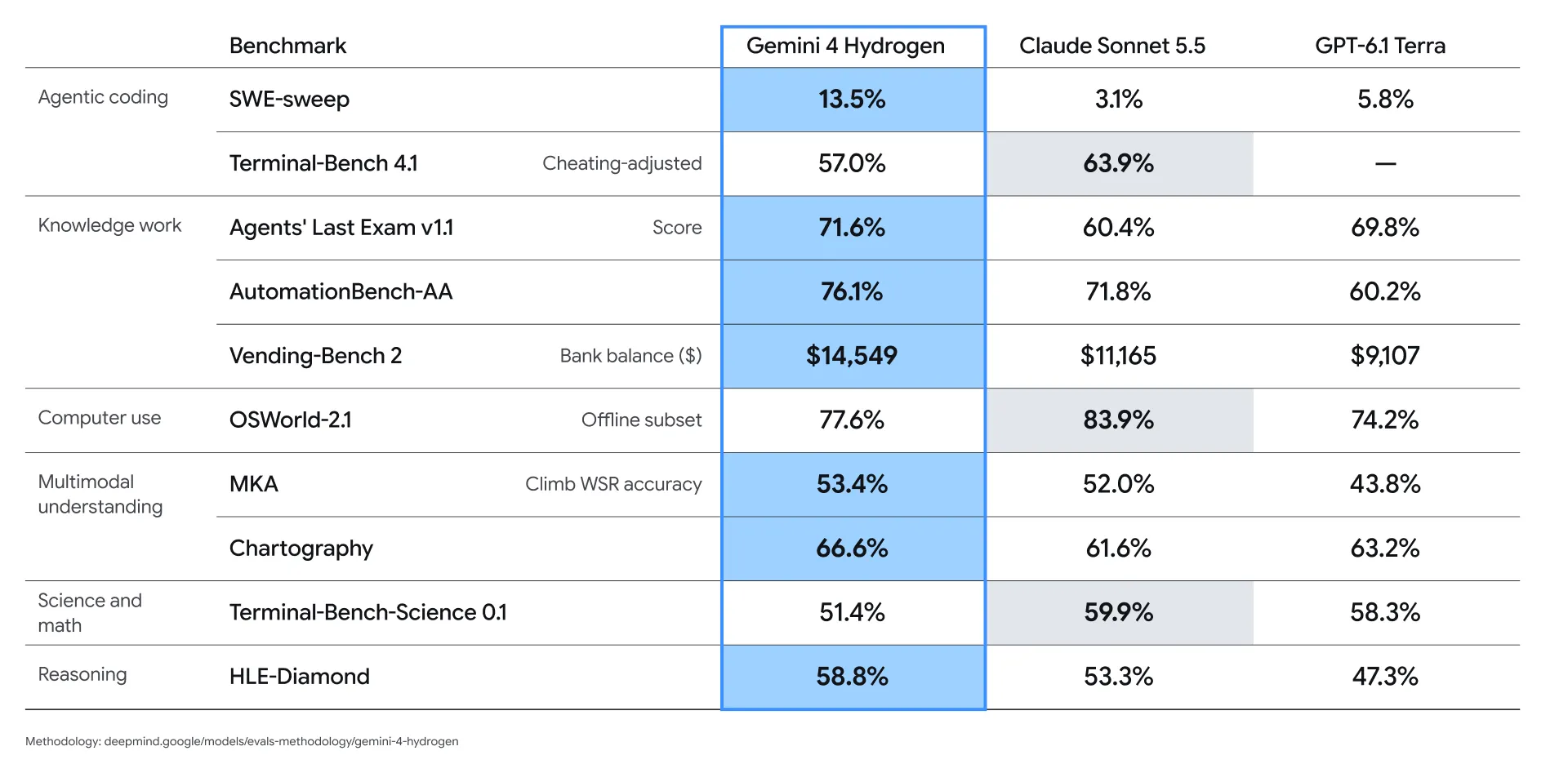
In terms of performance testing, data released by Google shows that Hydrogen scored 57% in the Terminal-Bench 4.1 test, while Gemini 3.8 Flash scored 18.2%. This test mainly evaluates the model's ability to complete actual software engineering tasks in a terminal environment, including command execution, code modification, and troubleshooting.
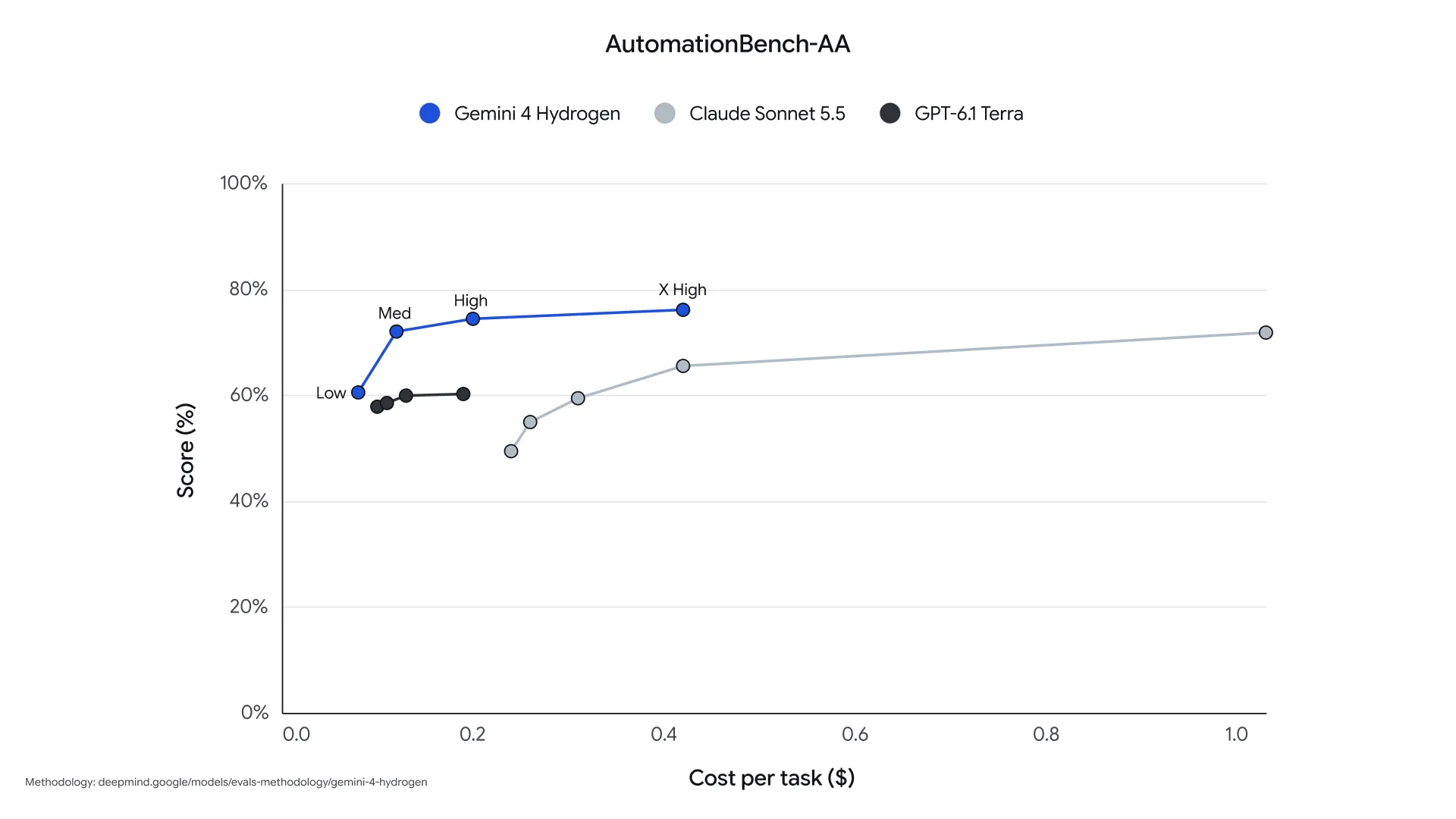
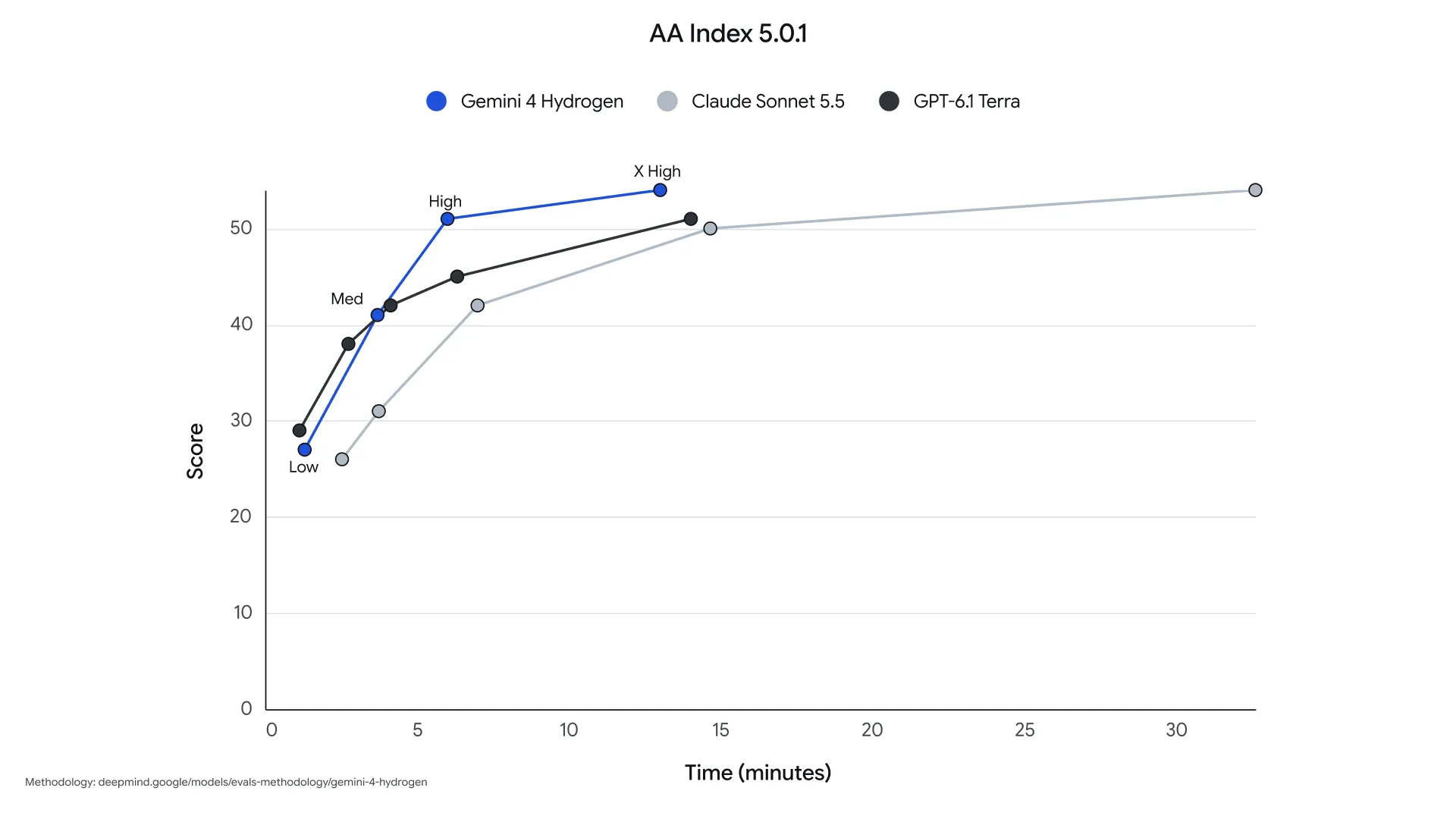
In the Artificial Analysis Intelligence Index, Hydrogen scored 51 points under the default High inference setting, slightly higher than Gemini 4 Argon's 50 points; under the highest XHigh inference setting, its score further reached 54 points. Google says Hydrogen achieves these results while generally completing tasks in less time.
However, Google is not positioning Hydrogen as the flagship model to replace Carbon and Argon. Carbon and Argon are still mainly aimed at complex reasoning, long-term autonomous execution, and more difficult professional tasks, while Hydrogen emphasizes fast execution and daily work efficiency. Google hopes that through collaboration between different models, users will not have to always use the more computationally expensive flagship model to handle simple tasks.
In terms of agent collaboration, Google's Orchestrator function can hand over some routine work to Hydrogen, while letting Carbon be responsible for more complex decision-making and reasoning. Google describes this model as reducing Token consumption while maintaining Carbon-level work quality as much as possible. By allocating tasks between models, enterprises can reduce operating costs when deploying AI agents on a large scale.
In terms of price, the API input price of Gemini 4 Hydrogen is US$1.50 per million Tokens, and the output price is US$7.50 per million Tokens. Google stated that the entire 1 million Token context window adopts unified pricing and will not adopt different price tiers due to the increase in context length.
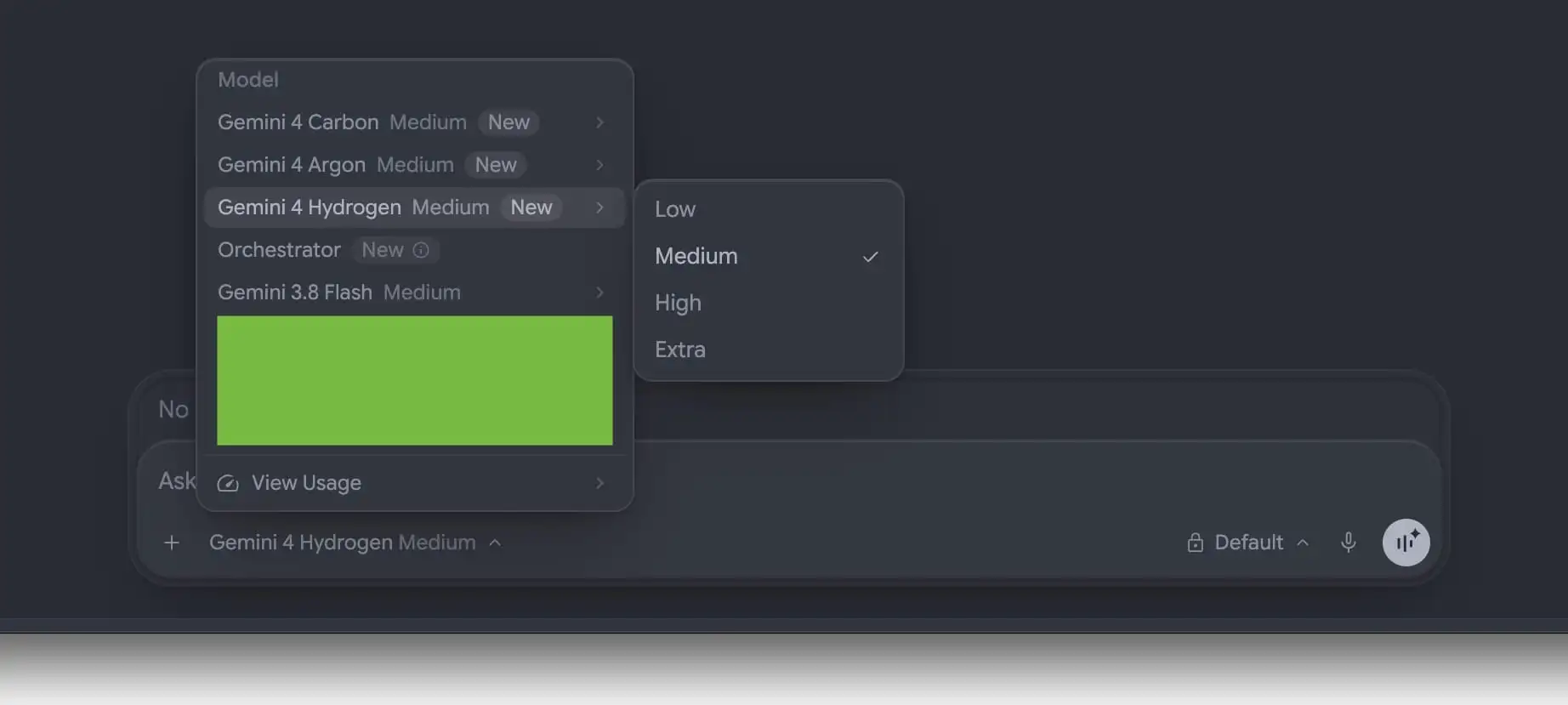
Hydrogen is adopting a fairly broad release strategy this time. It is open to all levels of Google AI Studio users, Gemini API developers, Gemini for Business enterprise users, and Gemini application users, and is also integrated into Google Search. Users with Google AI Pro and Ultra paid subscriptions can also call the model in Google Antigravity.
In the Gemini app, Hydrogen is positioned as a model suitable for everyday assistance. Users can use it for general question-and-answer, information processing, and programming assistance, while developers can connect it to their own applications and agent systems through APIs.
This release also means that Google is further changing the positioning of the Gemini product line. In the past, the Flash series mainly emphasized speed and cost advantages, while the Pro series took on more complex tasks. Today, Hydrogen even surpasses Argon in some intelligence index tests, indicating that Google hopes to make lower-cost models capable of handling quite complex tasks.
From the perspective of product layout, the Gemini 4 series is forming a clearer division of labor: Carbon and Argon are responsible for difficult reasoning, and Hydrogen is responsible for fast execution and daily agent tasks. Through multi-model collaboration, Google is trying to solve an increasingly real problem: as AI agents begin to perform dozens or even hundreds of steps continuously, relying solely on the strongest model to complete all the work is not only slower, but also incurs high computing costs.
The launch of Gemini 4 Hydrogen is Google’s attempt to find a new balance between model intelligence, execution speed and operating costs.
Comments