
Abstract:
Google announced the introduction of a new security protection mechanism for the Chrome browser. In the future, when users visit websites determined to be "suspicious" by the system, the browser will proactively issue warnings to help users identify potential online fraud, malware and phishing attack risks.
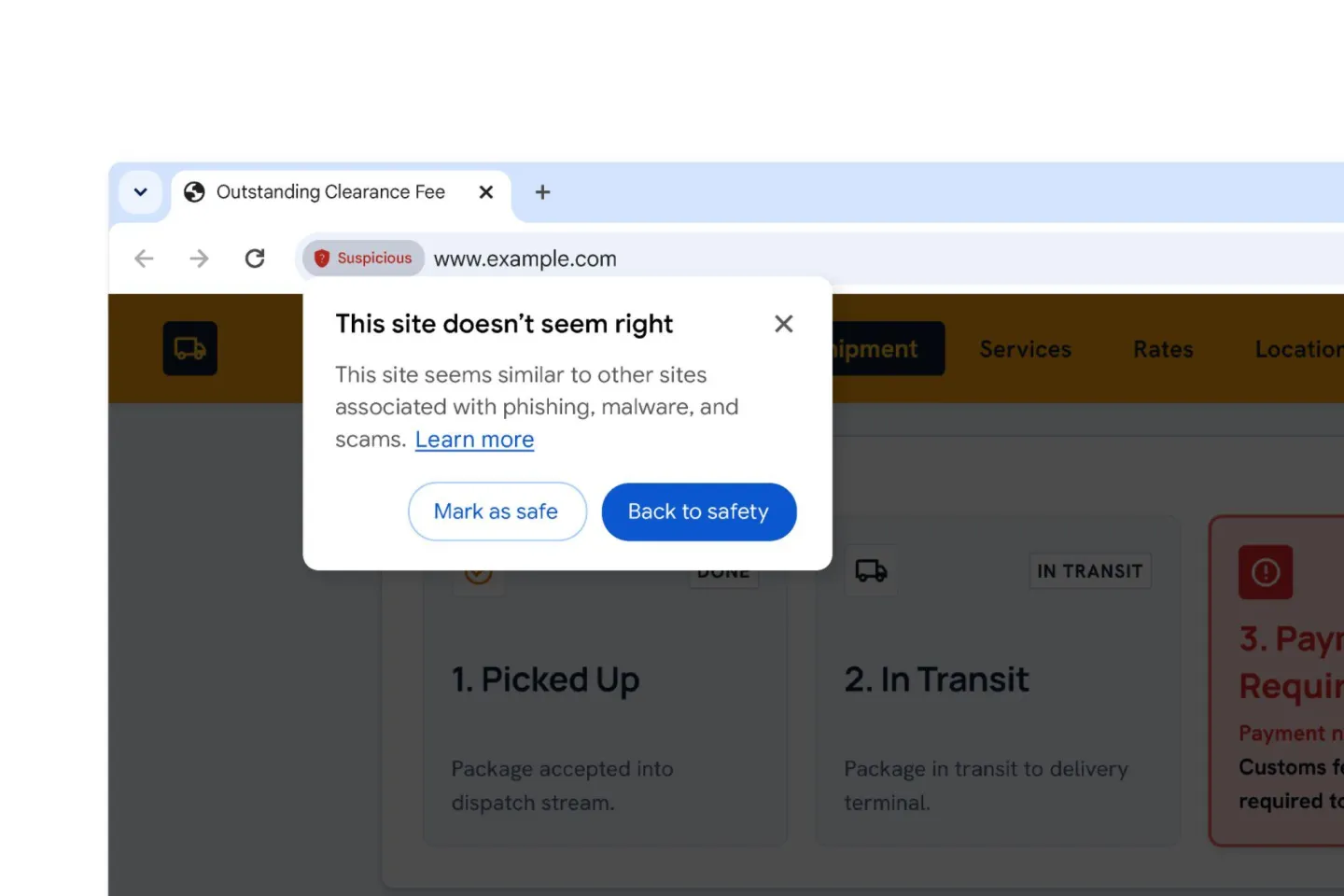
According to information released by Google, the new mechanism adds a new level of "suspicious websites" to the existing "dangerous websites" warning system. Unlike dangerous websites that have been confirmed to have malicious behavior, a website marked as suspicious only means that some of its characteristics are similar to scams, malware spreading or phishing websites, so there is a certain risk, but the system has not reached a level that can fully confirm its danger.
Google stated that this classification adopts a two-level risk assessment model. For suspicious websites, the browser will display a risk warning to the user, but still allow the user to continue accessing the website after confirming their knowledge. Since the system may misjudge, if the user is sure that the website is safe, they can still choose to continue opening the relevant page or even mark it as a trusted website.
In contrast, Chrome's existing dangerous website warnings are more stringent. When the security system has a high degree of confidence that the website is malicious, the browser will display a more prominent full-screen warning page and advise the user not to continue accessing to reduce the risk of encountering malicious programs, account theft, or fraudulent activity.
From the interface design point of view, the new suspicious website warning will appear in the form of a pop-up window, and a similar design will be used on both the desktop and mobile terminals. When a warning is triggered, the original web page content will not be completely hidden, but will remain visible but darkened, allowing users to view relevant information and decide whether to continue accessing.
For dangerous websites, Chrome will continue to use higher-level blocking methods. The entire web page will be covered by a red warning interface, and the original page content cannot be viewed directly. It clearly reminds users that the current link may contain serious security threats.
According to reports, this new feature uses a two-level risk strategy similar to Chrome’s previous download security protection mechanism. Google has continued to strengthen browser security capabilities in recent years and has implemented a similar graded warning system in the field of file downloads. At the same time, for users who have enabled the "Enhanced Safe Browsing" mode, Google is also continuously strengthening its fraud identification and detection capabilities based on the Gemini artificial intelligence model.
It is unclear whether the new suspicious website warning feature will be available to all Chrome users or if it will be limited to users who have enabled the Enhanced Safe Browsing feature. Google has not yet announced the detailed deployment scope and final push plan.
Industry insiders believe that as online fraud and phishing attack methods become increasingly sophisticated, it is difficult to cover all potential threats by relying solely on blacklist interception. By adding the intermediate level of "suspicious" between "safe" and "dangerous", Chrome can provide users with more security risk information while retaining users' right to choose, thereby improving overall browsing security.
Comments