
Abstract:
Google further expands its local artificial intelligence product layout. Following the launch of an AI voice recording tool based on a local model in April this year, the Google team recently released a new application called Google AI Edge Foresight, officially entering the highly competitive AI meeting recording market and targeting Granola, a meeting note-taking tool that has become rapidly popular in recent years.
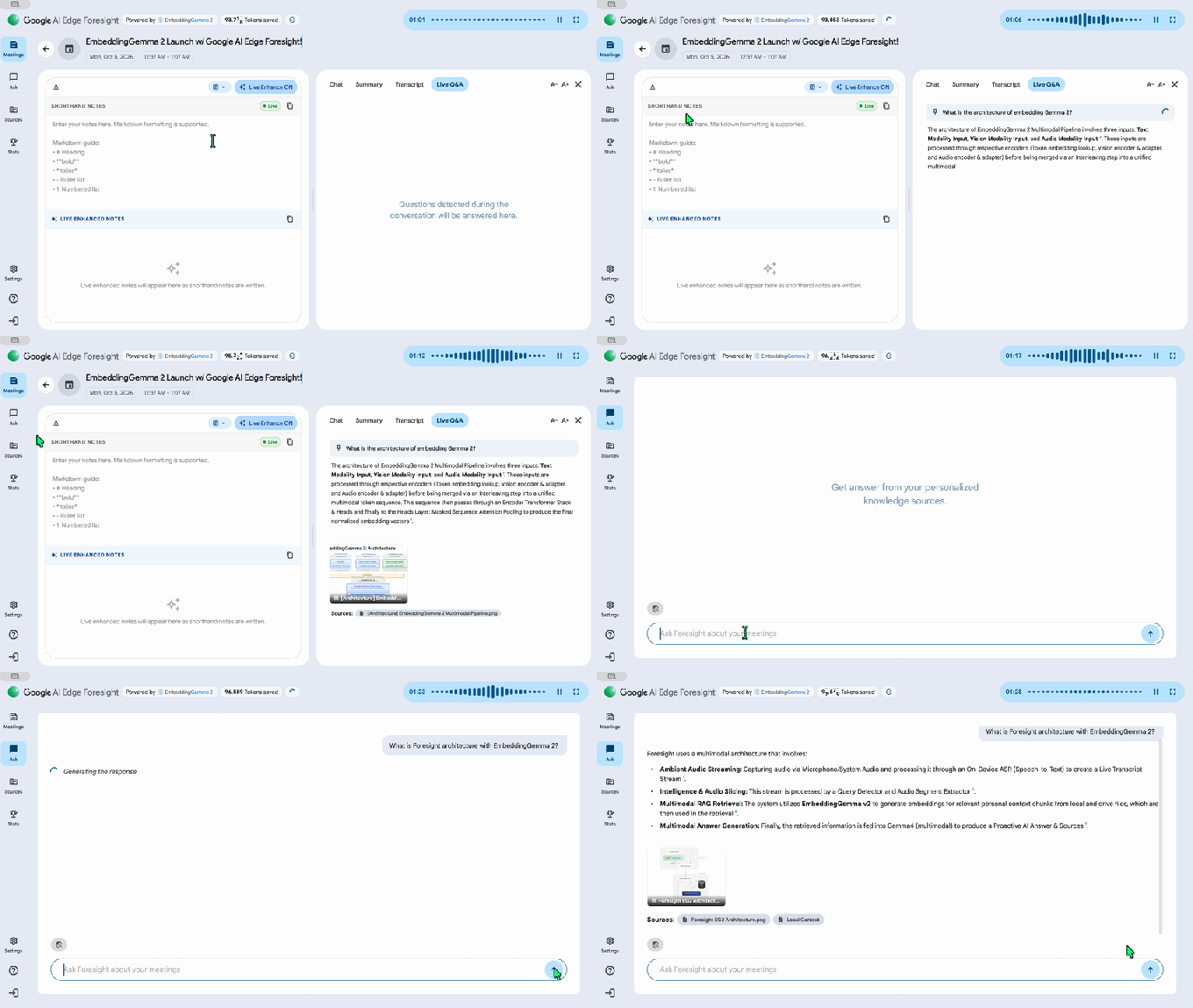
Google AI Edge Foresight is currently provided as a Mac application. The biggest feature is that it can run without relying on the cloud. The software can use the EmbeddingGemma 2 model deployed locally on the device to record and organize meeting content. The model has 740 million parameters and is capable of processing voice content from various applications and offline meetings completely offline.
From a product design perspective, Google AI Edge Foresight is quite similar to Granola. The application adopts a dual-column interface layout. Users can record their brief notes on one side, while AI automatically generates organized meeting minutes on the other side. Like Granola, users can either rely on automatic transcription as the meeting progresses or supplement manual recordings at the same time.
In addition to automatically organizing meeting records, the software also provides a complete meeting text transcription function and integrates an AI assistant based on the Gemma 4 model. Users can ask questions directly to the assistant, get answers from the meeting content, refine key points, or query specific information.
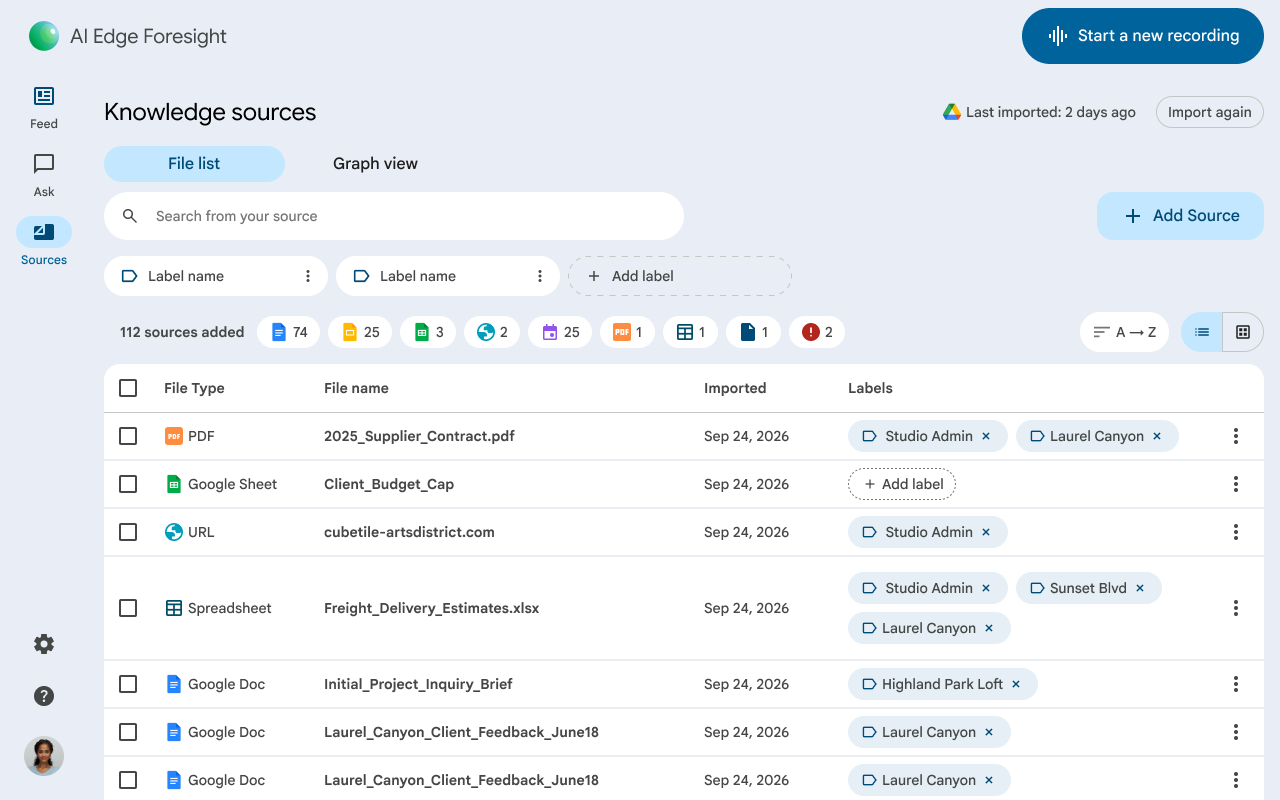
Google has also added a knowledge base function to the tool. Users can upload PDF files, Google Docs documents, Microsoft Office files, plain text, Markdown documents, web page bookmarks and other materials to build a personal knowledge base. When the meeting discussion involves related topics, the system can answer questions in real time based on the content of the meeting records and user documents.
In terms of privacy and localization processing, Google particularly emphasized that Google AI Edge Foresight is optimized for the Apple Silicon platform and can work normally even without an Internet connection. This means that users can still complete meeting record collection and query work while on a business trip, on a plane, or in a restricted network environment.
The industry believes that the launch of Google AI Edge Foresight not only challenges AI conference recording tools such as Granola, but also demonstrates the actual capabilities of the Gemma series of local models. Previous local voice recording experimental projects launched by Google failed to enter the mainstream market, and this new product is obviously closer to real office needs.
Although the current product positioning is more like a technology display platform, it is generally believed that Google is likely to integrate similar functions into the Gemini ecosystem in the future, and provide intelligent meeting recording services in video conferencing platforms such as Meet and more office scenarios by combining cloud models with local models.
The current competition in the AI conference assistant track is becoming increasingly fierce. In addition to Granola, companies such as Wispr and Calendly have also launched related products in recent years. Superhuman, a productivity software company, recently acquired Fathom, an AI meeting recording startup, hoping to strengthen its AI office capabilities. In this context, Google's official entry will undoubtedly further intensify market competition.
As the performance of local AI models continues to improve, more and more companies are beginning to try to complete work such as meeting records, content organization, and knowledge management directly on the user device while ensuring privacy and data security. The launch of Google AI Edge Foresight is also regarded as an important step towards the practicalization of local-first AI office software.
Comments