
Abstract:
Voters in the US state of California have officially rejected a controversial billionaire wealth tax proposal. On November 9, local time, the Associated Press confirmed that the wealth tax plan numbered Proposition 40 failed to pass. The plan, which originally hoped to impose a one-time 5% wealth tax on California's wealthiest residents to raise funds for the health care system, ultimately failed amid intense political and business lobbying.
Proposition 40 is promoted by SEIU-United Healthcare Workers West, the American medical industry union, and mainly targets wealthy people living in California with a personal net worth of more than $1 billion. According to the proposal design, the tax will be retroactive to eligible residents on January 1, 2026, and a one-time 5% tax will be levied on stocks, bonds, corporate equity and other assets, not just on personal income.
Backers estimate the plan could raise about $100 billion from more than 200 California billionaires. 90% of the revenue will be used for health care projects to make up for the gap left by the federal government's cuts in medical funding, and the remaining funds will be used for education and food assistance.
The background to the proposal is that the tax and spending legislation previously signed by US President Trump will have a major impact on federal medical funding. California predicts that a large number of residents may lose eligibility for health insurance in the future, and some hospitals and medical institutions will also face financial pressure. Supporters therefore believe that taxing residents with huge wealth can provide new sources of funding for public health services without increasing the burden on ordinary families.
However, the plan encountered strong opposition from California’s tech tycoons and business community from the beginning. Opponents believe that imposing a one-time 5% tax on the assets of billionaires may prompt a large number of wealthy people to move out of California, leading to a reduction in local personal income tax revenue and harming the development environment for technology companies and start-up companies.
The opposition camp also warned that although the proposal ostensibly only targets billionaires, its asset valuation and taxation mechanisms may have a wider impact and even open the door to expanding the scope of wealth taxes in the future. Related ads target teachers, firefighters, retirees and middle-class families, emphasizing that this policy may jeopardize the savings and retirement assets of ordinary residents.
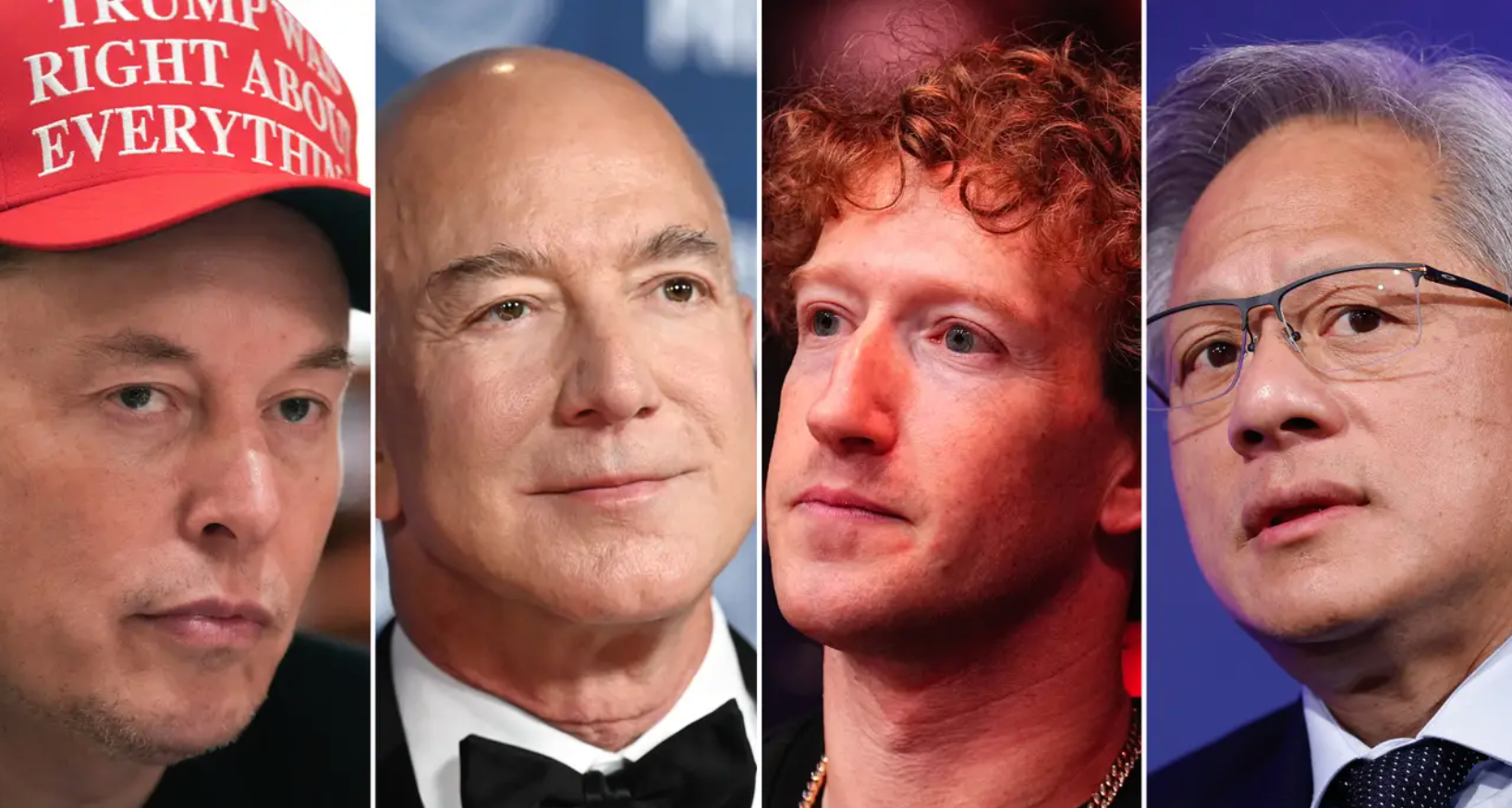
The controversy quickly turned into a big-money battle between Silicon Valley tycoons and health-care industry unions. Google co-founder Sergey Brin has become one of the most important donors to the opposition camp, investing more than $100 million in political organizations opposing the wealth tax. Including Google co-founder Larry Page, Nvidia CEO Jensen Huang, and other technology company executives and venture capitalists have also become the focus of this political controversy.
According to California campaign finance disclosure data, political expenditures surrounding Proposition 40 and related counter-proposals total more than $423 million, with more than 91% of the funds used to oppose the billionaire wealth tax. The opposition camp raised far more money than supporters, making it one of the most expensive battles over election proposals in California history.
It is worth noting that this controversy does not just revolve around Proposition 40. The opposition camp also promoted Propositions 41 and 42, trying to prevent Proposition 40 from taking effect by amending tax rules and limiting the conditions for the implementation of future wealth taxes. Supporters called both proposals specifically designed to be obstructionist measures, arguing that they were actually intended to protect billionaires from wealth taxes.
California Governor Gavin Newsom also publicly opposed Proposition 40. Although he is a fellow Democrat, he believes a one-time wealth tax could harm California's long-term fiscal stability and prompt high-net-worth residents and businesses to move away. The California Teachers Association, Planned Parenthood and other organizations that are traditionally close to the Democratic Party have also expressed opposition to the proposal.
This has created clear divisions within the Democratic Party. Some progressives believe that taxing billionaires is an important means to deal with the gap between the rich and the poor and ensure public services; others are worried that an overly aggressive wealth tax may weaken California's economic competitiveness and ultimately affect the employment and tax revenue of ordinary residents.
The final announced voting results showed that about 52.8% of voters opposed Proposition 40, and 47.2% supported it. Despite stronger support in areas such as Los Angeles and San Francisco, which are home to wealthy individuals and tech companies, the opposition vote still holds sway in most counties across the state.
After the proposal failed, supporters did not give up on continuing to promote similar policies. SEIU-United Healthcare Workers West said it plans to introduce the billionaire wealth tax again in 2028 if the California Legislature cannot find alternative funding sources. U.S. Senator Bernie Sanders and California Representative Ro Khanna are also pushing for billionaire tax legislation at the federal level, hoping to expand similar policies nationwide.
The results of this vote also revealed an important contradiction in the discussion of wealth taxes in the United States: Even in California, where the Democratic Party has a clear advantage and has traditionally supported the expansion of public welfare, voters may not be willing to accept a plan to directly tax the stock of assets. Supporters of wealth taxes emphasize public health funding and income distribution issues, while opponents focus on capital flows, business relocation and long-term fiscal risks.
For Silicon Valley, the failure of Proposition 40 means that a tax reform that may directly affect the asset structure of technology tycoons has temporarily come to an end; but for the debate in the United States around the concentration of wealth, the financing of public services and the political influence of billionaires, this is obviously not the end.
Comments