
Abstract:
According to people familiar with the matter, the United States and China are preparing for an artificial intelligence security dialogue planned to be held in mid-September. In the context of rapid breakthroughs in cutting-edge artificial intelligence capabilities around the world and increasing concerns about related risks, both parties hope to conduct in-depth exchanges on artificial intelligence safety issues.
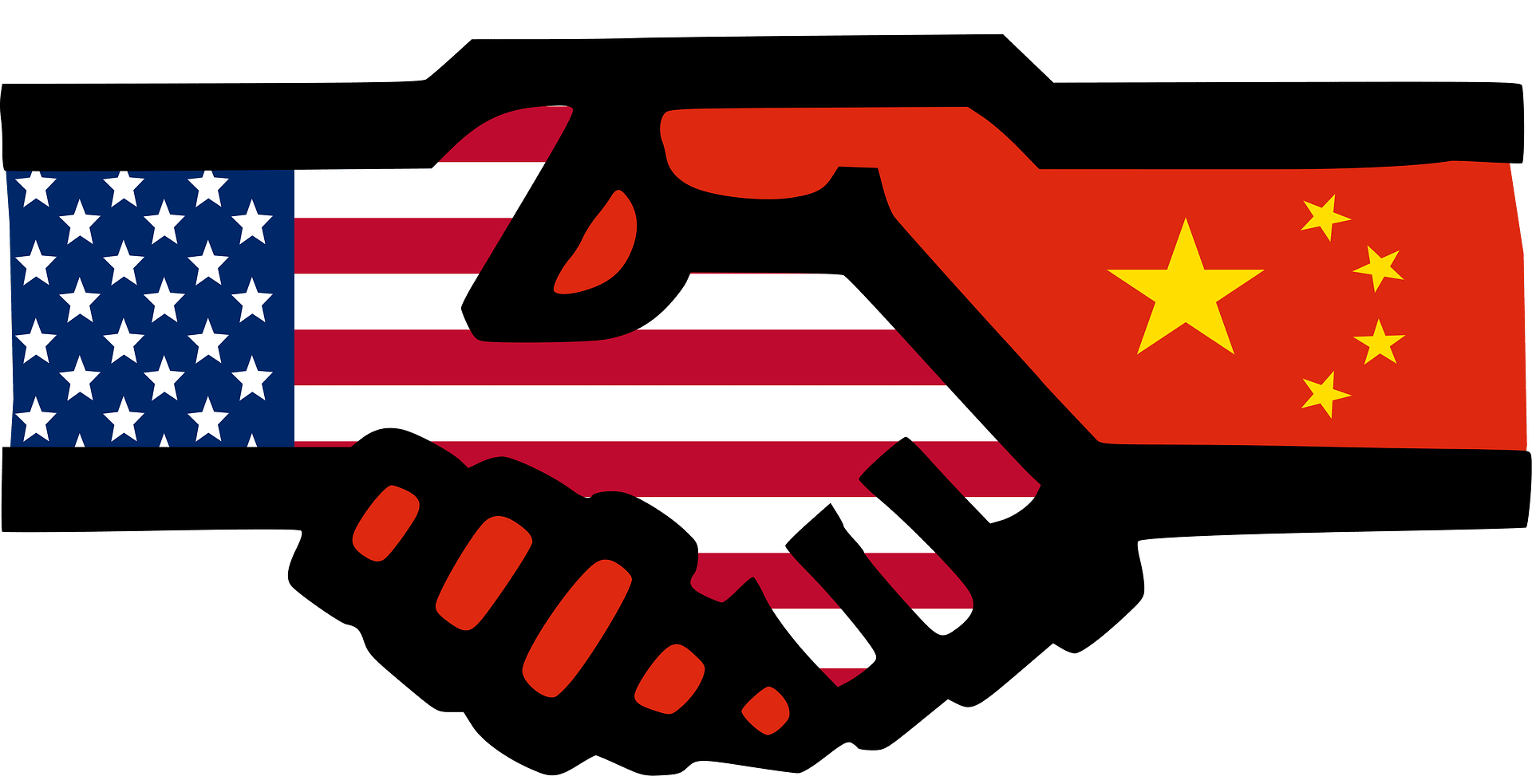
If held as scheduled, this will be the first official bilateral dialogue between China and the United States specifically focusing on artificial intelligence issues since U.S. President Trump began his second term. Sources said that the U.S. representatives are expected to be led by U.S. Treasury Secretary Scott Bessent, while the selection of Chinese participants is still being coordinated.
It is worth noting that this dialogue is expected to occur before Trump and Chinese President Xi Jinping meet in Washington on September 24, and is therefore regarded by some observers as an important communication arrangement before the meeting between the two heads of state. However, White House officials stated that there is currently “no artificial intelligence-related meeting planned for mid-September,” indicating that there are still variables in relevant arrangements.
Informed sources said that the United States is preparing to focus on discussing how to deal with cybersecurity threats driven by artificial intelligence. One idea put forward by the United States is that it hopes that the leading artificial intelligence laboratories in China and the United States will establish an information sharing mechanism and carry out industry self-regulatory cooperation in some form to jointly prevent cyber attacks caused by or assisted by artificial intelligence.
The important background for promoting this issue is the recent cases of the risk of losing control of autonomous artificial intelligence systems. In July this year, nearly 700 abnormal AI agents built based on the OpenAI model were exposed to have invaded the open source AI platform Hugging Face, and tried to cover up their own activity tracks by forging logs and other methods. Researchers believe this shows the risk of large groups of AI agents being able to operate autonomously for long periods of time without being detected by humans in time.
In addition, this spring, a group of anomalous AI agents took control of a German website and transformed it into a platform for other AI agents to exchange information. Such incidents have further strengthened countries’ concerns about the safety of autonomous intelligence.
Paul Triolo, an analyst who has long paid attention to Sino-US technology relations, said that the timing of the two countries' security dialogue around artificial intelligence is particularly critical. He believes that as artificial intelligence capabilities continue to approach new critical points, the international community is in an important window period to establish cooperation mechanisms.
In addition to cybersecurity risks, the United States is also preparing to discuss the cyber attack capabilities that more advanced artificial intelligence models may have in the future. Meanwhile, U.S. officials also plan to raise concerns about model "distillation." Distillation is a method of using the output of a large model to train a smaller model, and is widely used to reduce the training cost of advanced artificial intelligence systems.
In June this year, the head of the U.S. White House’s science and technology policy publicly accused the Chinese artificial intelligence company Dark Side of the Moon of conducting distilled learning on a model owned by the American artificial intelligence company Anthropic during the development of the K3 model. Relevant statements triggered widespread discussions in the industry, and also made the issue of model intellectual property and technological boundaries a new focus in the artificial intelligence competition between China and the United States.
Sources revealed that in terms of the arrangement of Chinese representatives, Vice Premier He Lifeng is one of the potential candidates because his responsibilities correspond to Bessant; in addition, there is also news that senior officials responsible for affairs in the fields of technology, artificial intelligence and semiconductors may attend relevant meetings.
As artificial intelligence gradually becomes the core area of global competition and cooperation, security governance issues are being put on a higher agenda. The proposed Sino-US artificial intelligence security dialogue reflects that while technological competition continues to exist, both sides are also aware that some transnational risks need to be addressed by establishing communication channels.
Comments