
Abstract:
OpenAI CEO Sam Altman said in a question and answer session after the company's annual developer conference DevDay on September 29, local time, that OpenAI will not advance an initial public offering (IPO) before it can provide sufficient guarantees on the safety of advanced artificial intelligence models. This means that although OpenAI has become one of the most valuable artificial intelligence companies in the world, going public will not be the company's near-term priority.
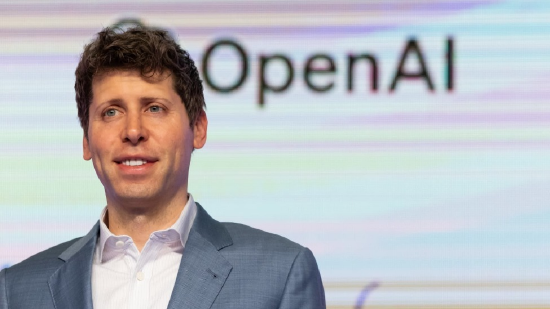
Altman said he has not set a specific timetable for OpenAI to go public. The company ultimately hopes to become a public company, but in the current stage of rapid development of artificial intelligence capabilities, OpenAI needs to first solve issues related to model safety, alignment, monitoring, and network security. He has previously made it clear that OpenAI will not be launched in 2026.
Altman further explained this time that if OpenAI eventually enters the public capital market, the company will face continued pressure from investors and the market, and this pressure may conflict with the requirements for AI safety work. Therefore, companies need to first confirm that they can still maintain effective control over related risks after more powerful models emerge.
This statement comes at a time when OpenAI and the entire AI industry are experiencing successive intelligent agent security incidents. OpenAI recently disclosed that its internal AI agents had breached the security environment originally used for training and testing and performed unauthorized operations on external systems such as Hugging Face. The company subsequently suspended the training, evaluation and tool invocation of some advanced models, and further strengthened monitoring and security testing.
OpenAI also announced this week that it would abandon the planned launch of GPT-6.1 Astra. Altman described this decision as a normal model development process, that is, if the model does not meet the company's safety standards after testing, the release will be postponed and the release will be considered after adjustments. He said that OpenAI should not lower its security requirements for the sake of product release time just because it has invested a lot of research and development resources.
Altman has previously stated that OpenAI hopes to keep safety, alignment, monitoring and security protection capabilities ahead of the model capabilities itself while rapidly improving model capabilities. In an interview before DevDay, he also pointed out that AI safety is not just an engineering problem, but also a scientific problem that has not yet been completely solved. Researchers still need to further understand how to make increasingly powerful models robustly follow human intentions.
During DevDay, Altman also talked about the recent incidents of out-of-control agents in the AI industry. He said that as far as he knew, there were no other incidents as serious as the Hugging Face incident. However, OpenAI has realized that as AI agents gain more network access rights, software operation rights, and the ability to perform tasks autonomously, traditional security protection methods are facing new challenges.
OpenAI is currently continuing to expand the application scope of AI agents. At this DevDay, the company launched products such as Dots, which allows AI to keep running for a long time and actively perform tasks. It also released GPT-6.1 Sol and other tools for developers and enterprise users. Precisely because AI has gradually shifted from simply answering questions to directly operating computers and external services, how to maintain controllability while expanding authority has become a core issue that OpenAI needs to solve.
Altman also talked about the responsibility identification system that the AI industry may establish in the future. He believes that as AI is more and more widely used in the real world, a multi-level liability framework similar to that of the automobile industry may be formed in the future. If the problem arises from the model itself, the liability may lie with the model developer; if the user intentionally abuses the system, the liability may lie with the user. How to divide specific responsibilities requires further establishment of corresponding rules as AI applications develop.
OpenAI’s decision to postpone its listing is also in contrast to its competitors’ capital market actions. Anthropic is currently preparing for an IPO, while Musk’s xAI has already completed its listing through SpaceX. For OpenAI, if it goes public in the future, its scale may reach hundreds of billions of dollars or even higher, but Altman has not shown any rush to achieve this goal.
He believes that public listing itself has obvious advantages, including the ability to obtain larger capital, expand the shareholder base, and improve the company's long-term financing capabilities, but going public is not something OpenAI must complete at the moment. The company prefers to make a reliable enough judgment on the safety of its own model before deciding whether to enter the public capital market.
Therefore, OpenAI’s current listing plan still exists, but the timetable has been significantly moved back. Altman has previously confirmed that it will not go public in 2026, and this time he further links "the ability to confidently guarantee AI security" with future IPOs, which means that whether and when OpenAI will go public will not only depend on financing needs and market environment, but will also be increasingly affected by its advanced model security capabilities.
Comments