
Abstract:
A recently published patent from Intel shows how to integrate micro-LEDs directly into chip packaging. The patent, filed in 2022, describes semiconductor chips embedded in a glass substrate with micro-LEDs and delivering power and signals through through-glass vias (TGVs). Micro LEDs can be connected directly to the chip or through nanowires; after the relevant lines pass through the glass substrate, they are then connected to the motherboard through the packaging substrate.
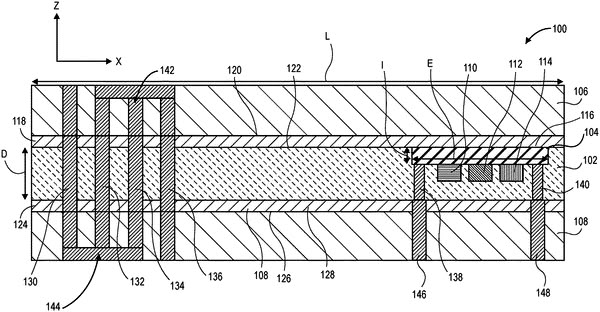
Uses listed in the patent include making text on the surface of the processor glow, displaying specific operations being performed by the device or processor, and providing personalized decoration for DIY electronic devices. MicroLEDs can also emit light in different colors such as red, green, and blue, so future designs may be more like RGB lighting effects and may also be used for status or diagnostic indication. The patent does not limit the use and retains two application directions: decorative and functional.
In the patent schematic diagram, the glass substrate is sandwiched between two packaging substrates, and the chip is partially embedded in the glass, with only the back exposed; other implementations can also fully embed the chip. Only one integrated circuit is shown in the figure, but the patent explains that the actual product can have one or more groups of micro-LEDs arranged in one or more chip packages. Through holes on the glass substrate can be formed by laser-induced etching and chemical etching, and then copper electroplating is used to build vertical interconnections. The patent also mentions structural changes such as horizontal or vertical placement of the chip and the addition of reflectors.
Intel has invested in glass substrate technology for many years and claims that the interconnect density can reach about 10 times that of organic substrates. Combining micro-LEDs with glass substrate packaging may add lighting or status prompt functions to the processor. However, the patent does not mean that the product is about to be launched; and a heat sink is usually installed above the ordinary CPU. How the LED can be seen and function in the actual device remains to be solved.

Comments