
Abstract:
The supporting hardware ecosystem of Intel's next-generation desktop computing platform is quietly accelerating. According to the latest records from global customs and supply chain import and export tracking lists, engineering test samples of Intel Z990 chipset motherboards for the next-generation flagship platform have officially appeared in shipment records. This key logistics trend confirms that major motherboard partners are intensively carrying out early electrical verification and signal testing, paving the way for the subsequent "Nova Lake-S" desktop processor series equipped with a new microarchitecture.
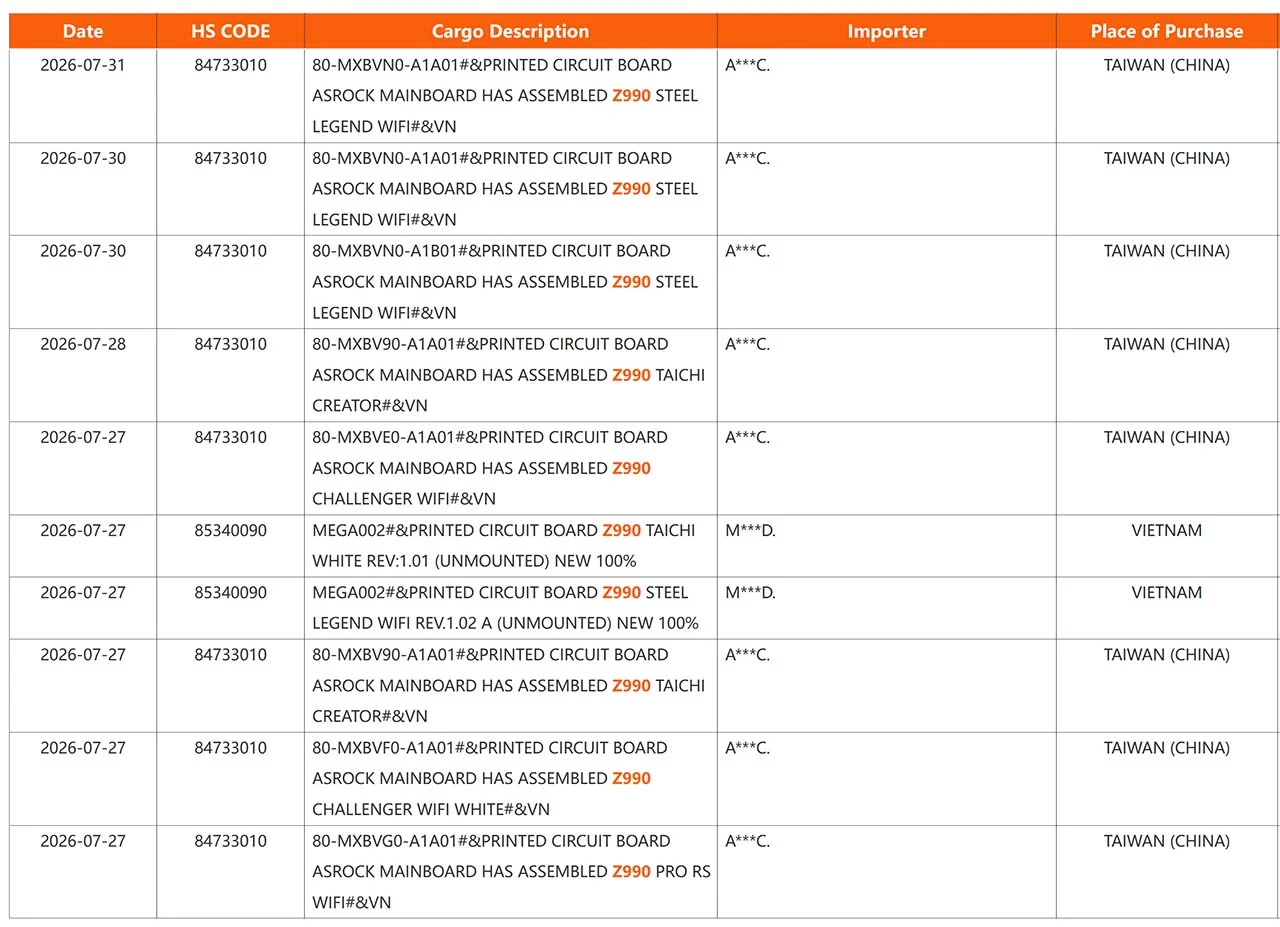
In the current Intel product line schedule, the Arrow Lake-S series matches the 800 series motherboards (including Z890 and other models), and the newly exposed "Z990" model obviously represents the next generation of the highest-spec flagship motherboard chipset. In accordance with the traditional naming and iteration rhythm of the chip giant, this chipset will serve as an exclusive partner for top enthusiast platforms, shouldering the core responsibility of providing extremely high bus bandwidth, extreme power supply specifications, and supporting the most cutting-edge peripheral expansion protocols.
As the core service target of the Z990 chipset, the processor architecture code-named "Nova Lake" has high hopes from the industry. According to previous technical revelations and official architecture roadmaps, Nova Lake will completely reconstruct the microarchitecture bottom layer of its high-performance large core (P-Core) and energy-efficient small core (E-Core), and introduce a significantly improved on-chip cache level and a next-generation neural processing unit (NPU) with a leap in performance, aiming to bring about an intergenerational step-by-step performance jump in single-core extreme response, multi-threaded high load throughput, and local end-side AI inference scenarios.
In addition, the appearance of test samples of the Z990 chipset has further aroused the market's attention to the backward compatibility of the CPU physical interface and the motherboard. Although the current engineering shipping documents do not directly disclose the complete pin layout and specific interface specifications used by the new motherboard, industry analysts speculate that around the new features of Nova Lake, the Z990 platform will most likely make in-depth upgrades in terms of native PCIe 6.0 extended channel support, higher-frequency DDR5 memory control topology, and native integration of the new generation Thunderbolt interface standard.
Customs test shipment records usually indicate that new hardware has left the purely theoretical simulation stage and officially entered the "physical verification cycle" of the board manufacturer's engineering laboratory. Although it will take some time for the official commercial launch to end consumers, the early circulation of the Z990 motherboard test board fully demonstrates that all parties in the industry chain are already in full swing to carry out comprehensive ecological preparations for Intel's next round of blockbuster desktop platform replacement.
Comments