
Abstract:
As Intel's next-generation Nova Lake-S desktop platform approaches its release, the first batch of motherboard products based on the 900 series chipset have begun to appear. Recently, an ATX motherboard for Nova Lake-S processors was publicly displayed. It is equipped with an LGA1954 socket and offers B960 and Q970 chipset versions. This is also the first time that the outside world has seen the actual motherboard design of the Nova Lake-S platform in a relatively complete manner.
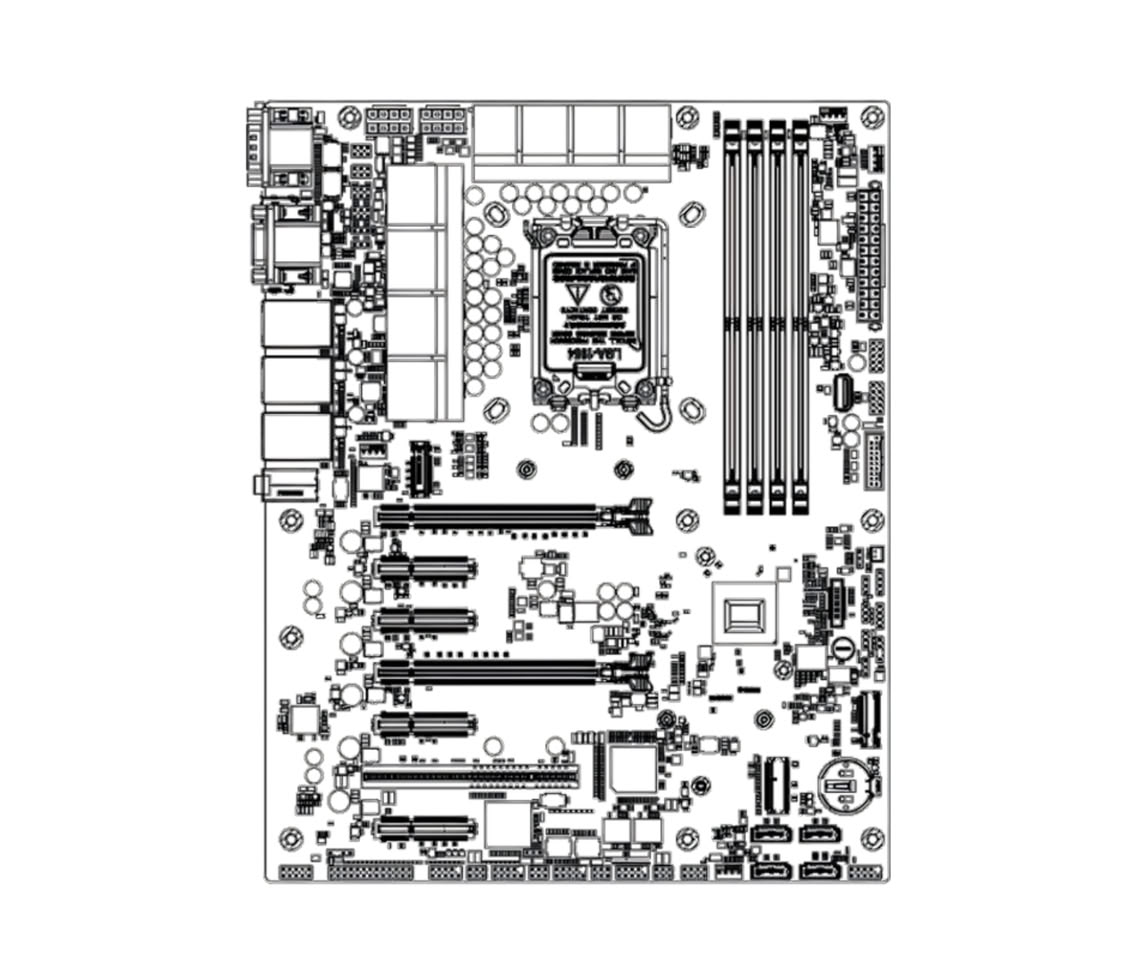
The motherboard model exposed this time is M26-NVLS-ATX09, launched by industrial and embedded hardware manufacturer Decenta. This product adopts a standard ATX form factor and is targeted at industrial control, communication equipment, embedded computing and enterprise-level application scenarios, rather than the traditional consumer game player market.
Judging from public information, this motherboard uses Intel’s upcoming LGA1954 socket and can support Nova Lake-S processors. Unlike previous rumors that some high-end platforms may use a double lever (2L-ILM) fixing mechanism, the actual exposure shows that the motherboard adopts a more traditional single lever design, which means that the dual lever solution may only appear on products with higher power consumption and higher-end positioning.
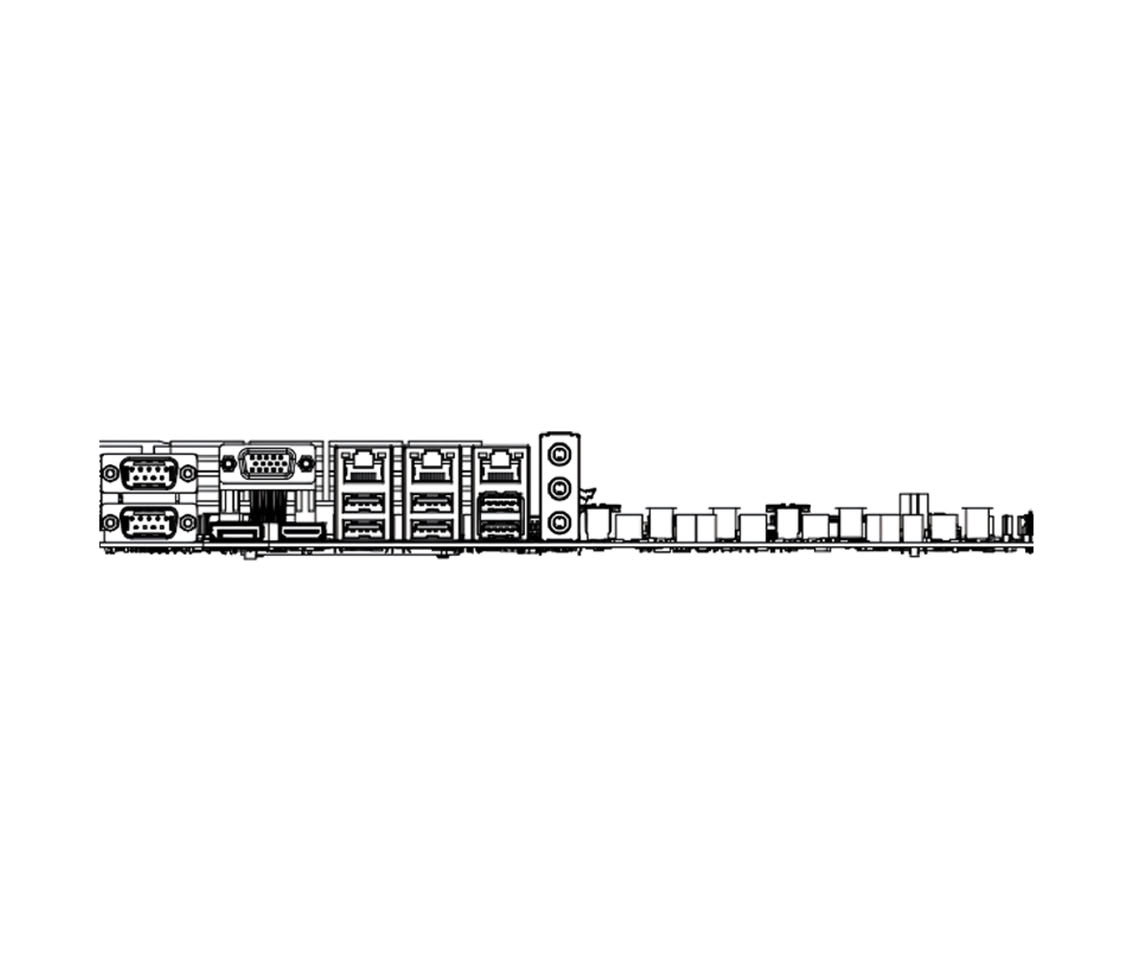
In terms of memory, the motherboard is equipped with 4 DDR5-6400 UDIMM slots, supports dual-channel configuration, and has a maximum capacity of 256GB. Compared with some previously exposed micro-ATX products, its memory expansion capabilities have been further improved.
The ability to expand has become one of the most interesting parts of the product. The motherboard has two PCIe 5.0 x16 specification slots, which can run as single x16 or dual x8 depending on the configuration. It is also equipped with multiple PCIe expansion slots, including PCIe 5.0 x4 interface and PCIe x2 interface. At the same time, the motherboard retains a traditional PCI slot to meet the compatibility needs of some industrial equipment and old expansion cards, which is quite rare in modern motherboards.
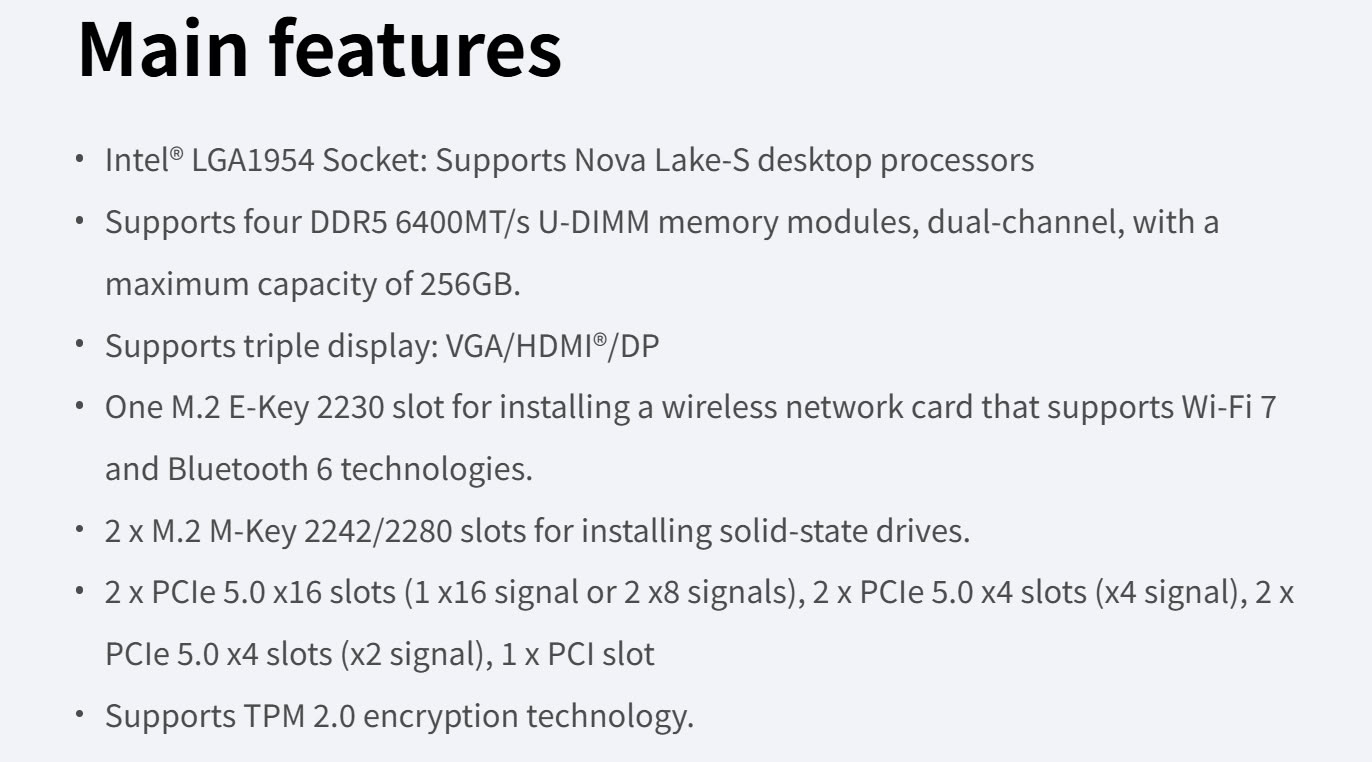
In terms of storage, the motherboard provides two M.2 slots, at least one of which supports PCIe 5.0 x4 high-speed SSD. The wireless connection part is implemented through the M.2 Key-E interface, and modules supporting Wi‑Fi 7 and Bluetooth functions can be installed.
The display output configuration is also rich, including HDMI, DisplayPort and VGA interfaces, which can support the simultaneous output of up to three monitors. In terms of network, it provides two 1GbE wired network ports and reserves additional network interface expansion capabilities. At the same time, the motherboard also integrates TPM 2.0 security module support to meet security needs in enterprise and industrial environments.
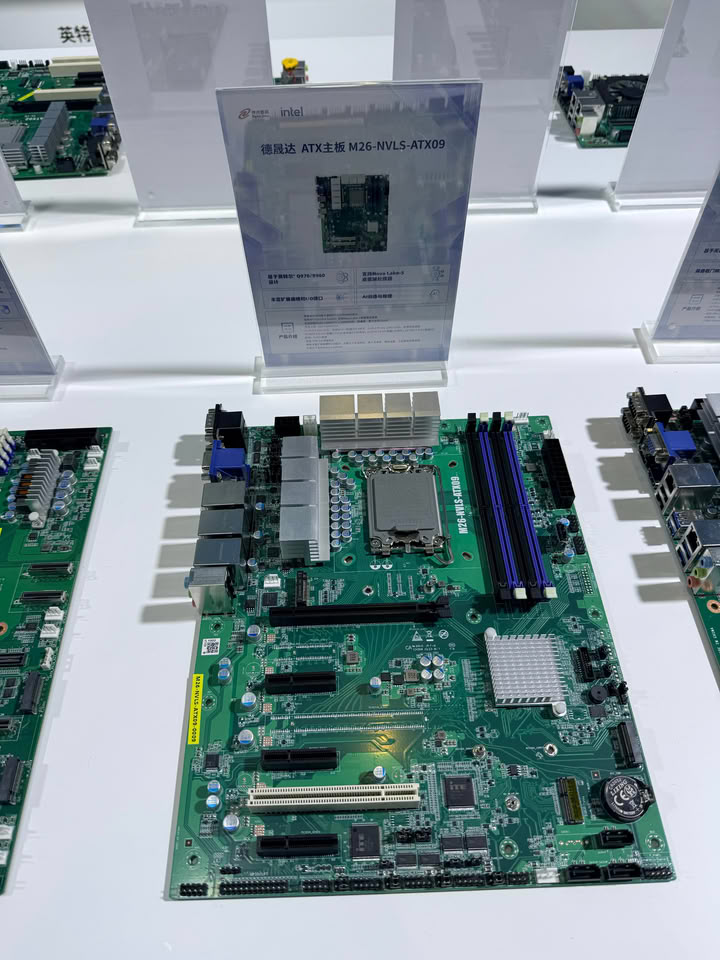
As for the specific differences between the B960 and Q970 chipsets, the public information has not yet fully explained. However, according to previously leaked information, the Q970 is positioned higher than the B960 and is expected to have richer I/O resources and stronger expansion capabilities. B960 is mainly targeted at cost-sensitive platforms, OEM complete machines and embedded device markets.
It is worth noting that the motherboard exposed this time is not a traditional consumer-grade overclocking product. It is generally expected in the industry that Z970 and Z990 motherboards aimed at enthusiasts and high-performance users will assume the high-end positioning of the Nova Lake-S platform in the future and provide richer overclocking and expansion functions.
At present, Intel has not officially released the Nova Lake-S processor and its supporting 900 series motherboard platform, so the relevant specifications are still subject to adjustment. However, with the first public appearance of the LGA1954 motherboard, the Nova Lake-S ecosystem has begun to gradually emerge, which also shows that Intel's hardware preparations for the next generation desktop platform are continuing to advance.
Comments