
Abstract:
Revolving around competition and governance issues in the field of artificial intelligence, the game between China and the United States continues to heat up. After the U.S. artificial intelligence company Anthropic recently called for slowing down the development of cutting-edge artificial intelligence and suggested further restricting China's access to advanced chips and semiconductor manufacturing equipment, China recently responded publicly, clearly opposing the relevant propositions and criticizing the relevant remarks for exaggerating risks and exacerbating confrontation.
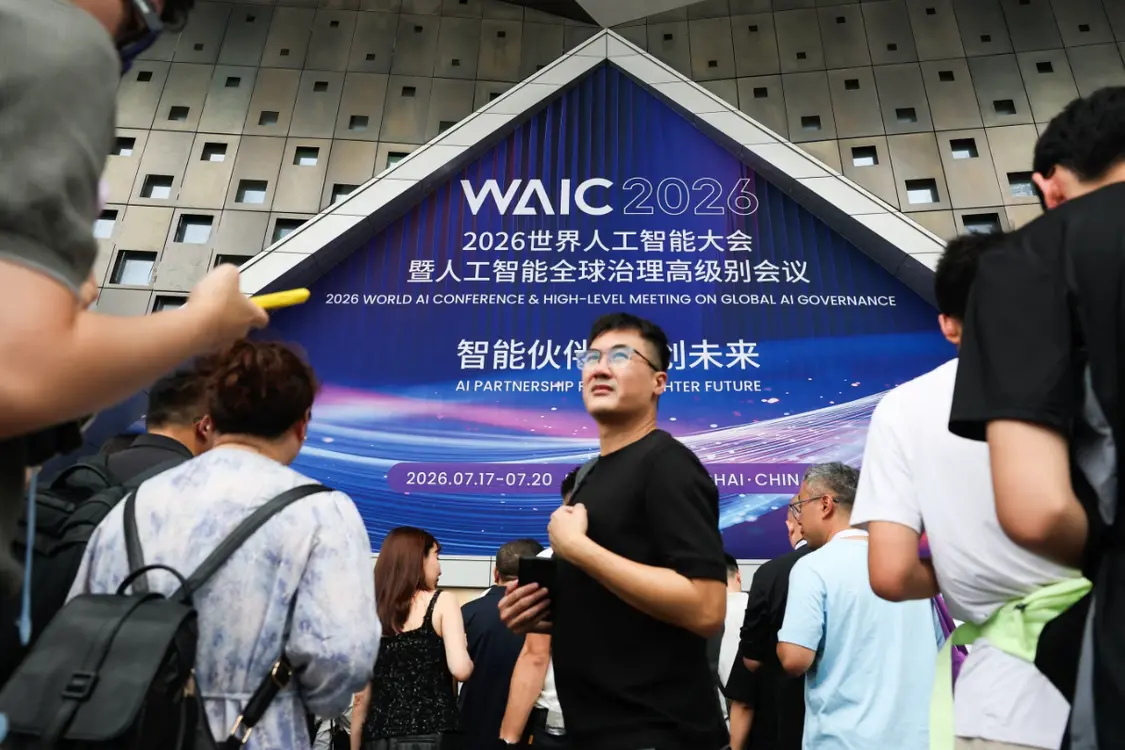
Recently, the competition between the United States and China in the field of artificial intelligence has become the focus of attention in the international technology community. Previously, the United States has continuously emphasized its strategic advantage in the artificial intelligence competition, and some American politicians have even called on allies to align with the United States in the direction of artificial intelligence development. In this context, Anthropic’s initiative to slow down the development of AI and the controversy surrounding the initiative have further intensified the outside discussion on the direction of global governance of artificial intelligence.
According to relevant reports, Anthropic CEO Dario Amodei publicly opposed China’s continued acquisition of high-performance artificial intelligence chips and advanced semiconductor manufacturing equipment. He believes that the United States should adopt more stringent restrictive measures to curb the growth of China's artificial intelligence capabilities and further expand the United States' lead in the field of artificial intelligence in the next three to five years.
Amodei also said that such policies may cause Sino-US relations to face more pressure, but he believes that relevant measures are necessary. He claimed that it is difficult for China to form reliable cooperation with other countries on the issue of controlling the pace of global artificial intelligence development, and warned that once China continues to promote technological development outside the framework of relevant international agreements, its artificial intelligence progress may bring dominance at the geopolitical level, thus posing a serious challenge to the United States.
In response to the above point of view, Chinese Foreign Ministry spokesperson Guo Jiakun responded and clearly opposed placing the development of artificial intelligence under the framework of confrontation and competition. He said that creating panic, provoking confrontation and vicious competition will not only not help solve the problem, but will interfere with the global artificial intelligence governance process and harm the common interests of all parties.
At the same time, China’s state-run media Global Times also criticized Amodei’s relevant remarks. The commentary article believes that this view is essentially looking for new reasons for "containing China", and the series of measures it proposes are all centered on restricting China. The article described it as a "Cold War script" in the field of artificial intelligence and believed that the relevant initiatives were obviously technological containment and strategic containment.
Currently, competition between China and the United States in artificial intelligence technology, chip industry, and international rule-making is intensifying. It remains to be seen whether the United States will further respond to China’s suspicion that the United States wants to monopolize the dominance of the development of the artificial intelligence industry.
It is generally expected that discussions surrounding issues such as artificial intelligence governance, technical cooperation and export control will continue to heat up in the coming period. Among them, U.S. President Donald Trump and Chinese President Xi Jinping are expected to meet on September 24, and artificial intelligence governance is expected to be one of the key topics of discussion between the two parties. By then, the differences in stances between the two countries on artificial intelligence development and global governance may be further demonstrated.
Related articles:
The head of Anthropic said the "China factor" is the biggest problem slowing down the AI competition
Anthropic CEO calls for slowing down cutting-edge AI development and plans to establish a three-layer security mechanism
Anthropic, OpenAI, and Google are secretly negotiating to establish an AI safety standards agency
Comments