
Abstract:
You saw the "deposit refund" prompt after using the shared locker, but was the money really returned to your account? An investigation by "Yangcheng Evening News" revealed the hidden operating routine of the shared locker industry: after the user uses the locker, a "Refund Successful" prompt will pop up on the mini program page, but the deposit will not be automatically returned to the user's WeChat and other accounts, but will be transferred to the balance in the mini program, requiring the user to manually initiate a withdrawal. In other words, if you do not withdraw money manually, the money will always stay with the service provider, but many users take it for granted that "successful refund" means that it is returned to their account.
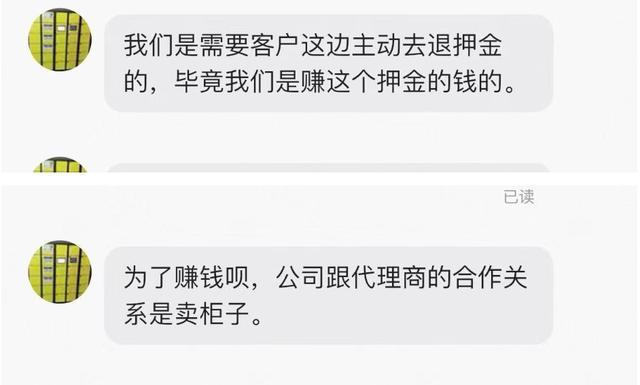
Faced with complaints, the service provider of shared lockers admitted: “All we earn is the deposit money”
Facing users’ doubts, some service providers said frankly, “All we earn is the deposit money.” There is a hidden trick in the design of this mechanism: many users who are in a hurry tend to forget this amount of money, and scattered deposits continue to accumulate and become cash flow for merchants. What's even worse is that some operators have registered multiple independent mini-programs in batches and have no interoperable funds. Once a certain mini-program has a large number of complaints, they will directly abandon it and replace it with a new one to avoid risks and deliberately "hack" the user's deposit.
Today's shared storage lockers are no longer the affordable and convenient storage they were in the early years. They are now a hot commodity that capital is chasing. Under the boom of special forces tourism, shared lockers set up in train stations, subways, scenic spots and other places charge by the hour. The unit price is several yuan per hour. After a few hours of storage, it reaches the cap of 30 yuan. Compared with the price of traditional manual storage, which is generally 10 yuan or 15 yuan a day, the premium is very obvious.
After service prices have increased significantly, some merchants, instead of maintaining their service responsibilities, continue to set up "hidden tricks" in the deposit process to mislead users into forgetting to obtain profits. What is earned from this business is not the service fee, but the cost of consumer negligence and rights protection. It is a compromise that many people in small disputes "forget". This is unethical money earned by merchants, and it tramples on the bottom line of business integrity.
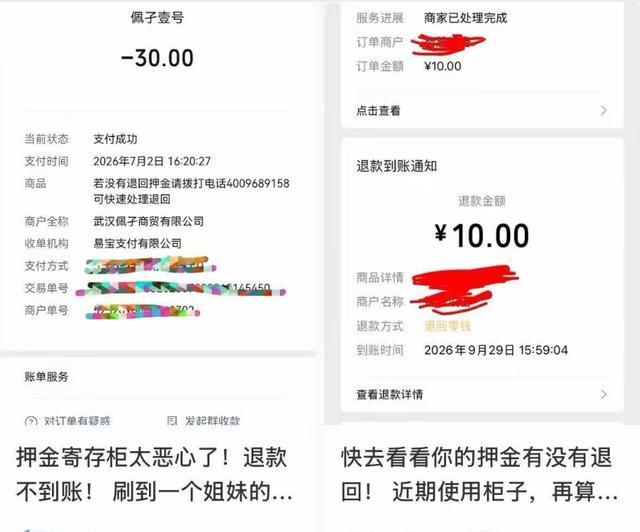
"Lightning protection post" on social platforms about non-refundable deposits for shared lockers
Legal deposits are only performance guarantee funds, and the ownership belongs to the consumer from beginning to end. The operator only assumes temporary custody obligations and has no right to unilaterally change the refund path or add a withdrawal threshold. The E-commerce Law clearly stipulates: When e-commerce operators collect deposits, they should clearly indicate the methods and procedures for the refund of the deposit, and must not set unreasonable conditions for the return of the deposit; if the refund conditions are met, it should be returned in a timely manner. The State Administration for Market Regulation has repeatedly emphasized in its regulatory guidance in the field of sharing economy: Forcing deposits to be transferred to platform balances and setting up cash withdrawal obstacles without the explicit consent of consumers are unfair format terms and can be legally deemed invalid. This kind of operation of deliberately transferring the deposit to the balance of the mini program has already touched the legal red line.
The lockers now placed in transportation hubs and scenic spots rely on the traffic dividends of public spaces and actually have a partial monopoly. They should bear the public welfare responsibility of providing convenience to the people, rather than setting "traps" in public scenes. Some service providers have openly set up deposit refund traps - on the surface they tell you that the "refund was successful", but in fact if you don't do it manually, the deposit will always be occupied by the merchant.
Convenience business cannot be turned into a "deceptive business". Now that such routines have been fully exposed by the media, we hope that the market regulatory authorities will take serious action to make the merchants who are clever and exploit tourists pay the price. Supervision needs to penetrate layer after layer of mini-program shells, keep an eye on mass registration and account-changing routines, and strictly investigate and deal with misleading refund prompts and invalid and unfair format terms.
When "refund successful" becomes a cover to mislead consumers, this is not a process flaw, but a deliberate consumer fraud. Convenient businesses in public spaces should not have hidden mechanisms.
Comments