
Abstract:
A latest study led by a research team from the University of Southern California shows that Alzheimer's disease and other related dementias will bring an economic burden of approximately US$818 billion to the United States in 2026. This number not only covers medical and long-term care expenses, but also provides the first more comprehensive accounting of long-underreported costs such as lost income, reduced quality of life and unpaid care for family members for patients and caregivers.
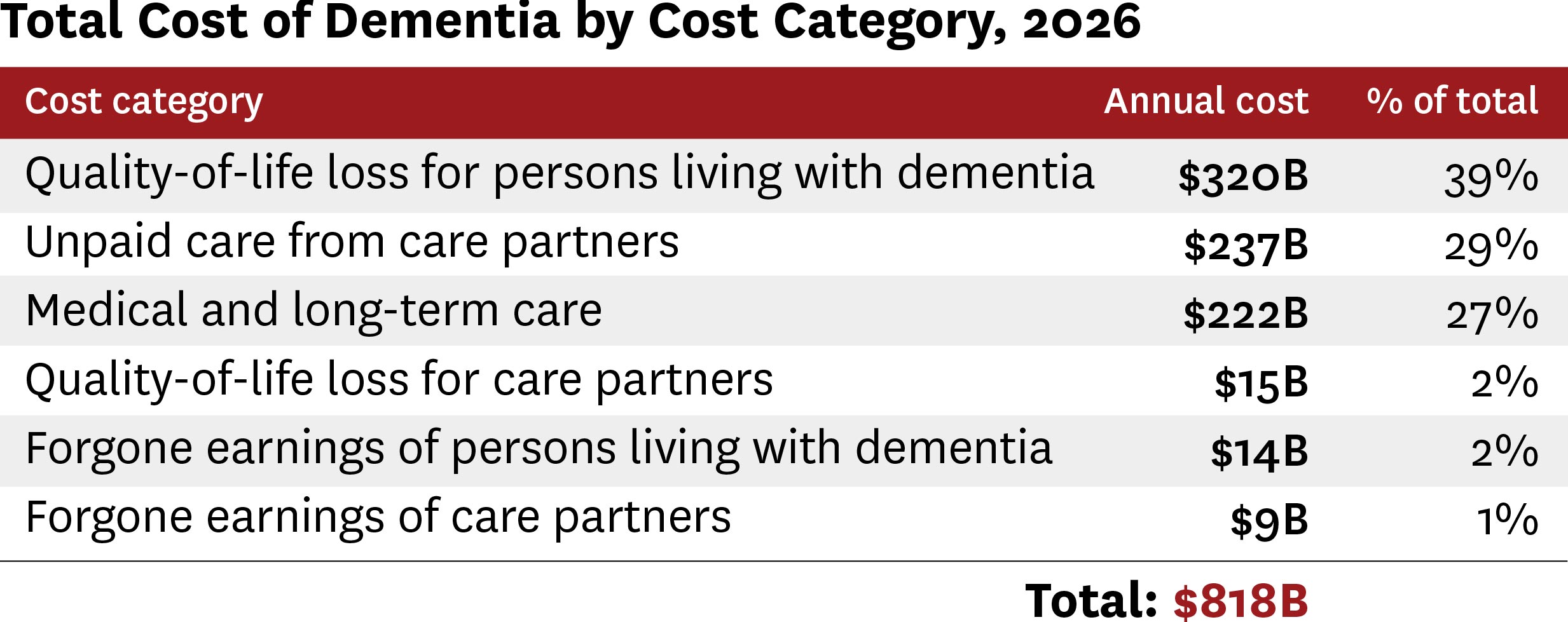
Studies indicate that approximately 5.7 million people in the United States will suffer from dementia this year, of which approximately 5.1 million are age 65 and older. As the population continues to age, the number of patients with dementia is expected to grow further in the future, and the associated social and economic pressures will also continue to rise.
Among all cost components, the loss caused by the decline in patients' quality of life is the most prominent, amounting to approximately US$320 billion. This part of the cost mainly reflects the impact of the patient's cognitive ability, physical function and ability to live independently. In addition, the psychological and physical stress that caregivers experience from long-term caregiving responsibilities costs caregivers an estimated $15 billion in quality-of-life losses.
The study also found that approximately 5.2 million people in the United States are providing unpaid care to a family member or friend with dementia. Most of these caregivers are of working age and provide approximately 6.8 billion hours of care throughout the year. Based on market value, this unpaid labor is worth up to US$237 billion, making it an important part of the overall economic burden of dementia.
Dementia also has a significant impact on household income. Studies estimate that patients and their caregivers lose approximately $23 billion in income each year due to reduced work hours, early leave, or withdrawal from the labor force. Among them, patients themselves lost about $14 billion in income, while caregivers lost about $9 billion.
In health care and long-term care, related spending totals approximately $222 billion. The U.S. federal Medicare and Medicaid programs bear about 70% of the cost, totaling about $154 billion. Meanwhile, patients and their families are still responsible for approximately $46 billion in out-of-pocket costs.
The research team stated that compared with previous statistical methods that only focused on medical expenditures, the new model more comprehensively reflects the true impact of dementia on patients, families and society. The latest report incorporates factors such as lost income for patients and changes in caregivers’ quality of life, and improves data transparency by disclosing methodologies so that policymakers, healthcare providers and researchers can more accurately assess the overall social costs of dementia.
The research leader pointed out that as the number of patients with dementia continues to increase in the next few decades, the rational allocation of related resources will become increasingly important. A more complete and transparent annual cost assessment will help the government and society make more scientific decisions in areas such as nursing system construction, caregiver support programs, new treatment research and development, and disease prevention.
Researchers emphasize that the current financial and emotional pressures borne by American families are far greater than the costs borne by the health care system itself. The report believes that how to improve long-term care funding sources, expand support for family caregivers, and promote more effective prevention and treatment programs will become important issues in addressing the challenges of dementia in the future.
Comments