
Abstract:
Apple's first foldable screen phone iPhone Duo was officially launched recently. As the device began to be delivered to users, the YouTube channel Kingmi Mobile released a related disassembly video, showing the internal structure of the phone, the screen protection layer, and the layout of the battery and cables. The disassembly results show that the frosted covering layer used by Apple on the inner screen can weaken the creases to a certain extent, but the repair of the folding screen, battery and hinge is still quite complicated.
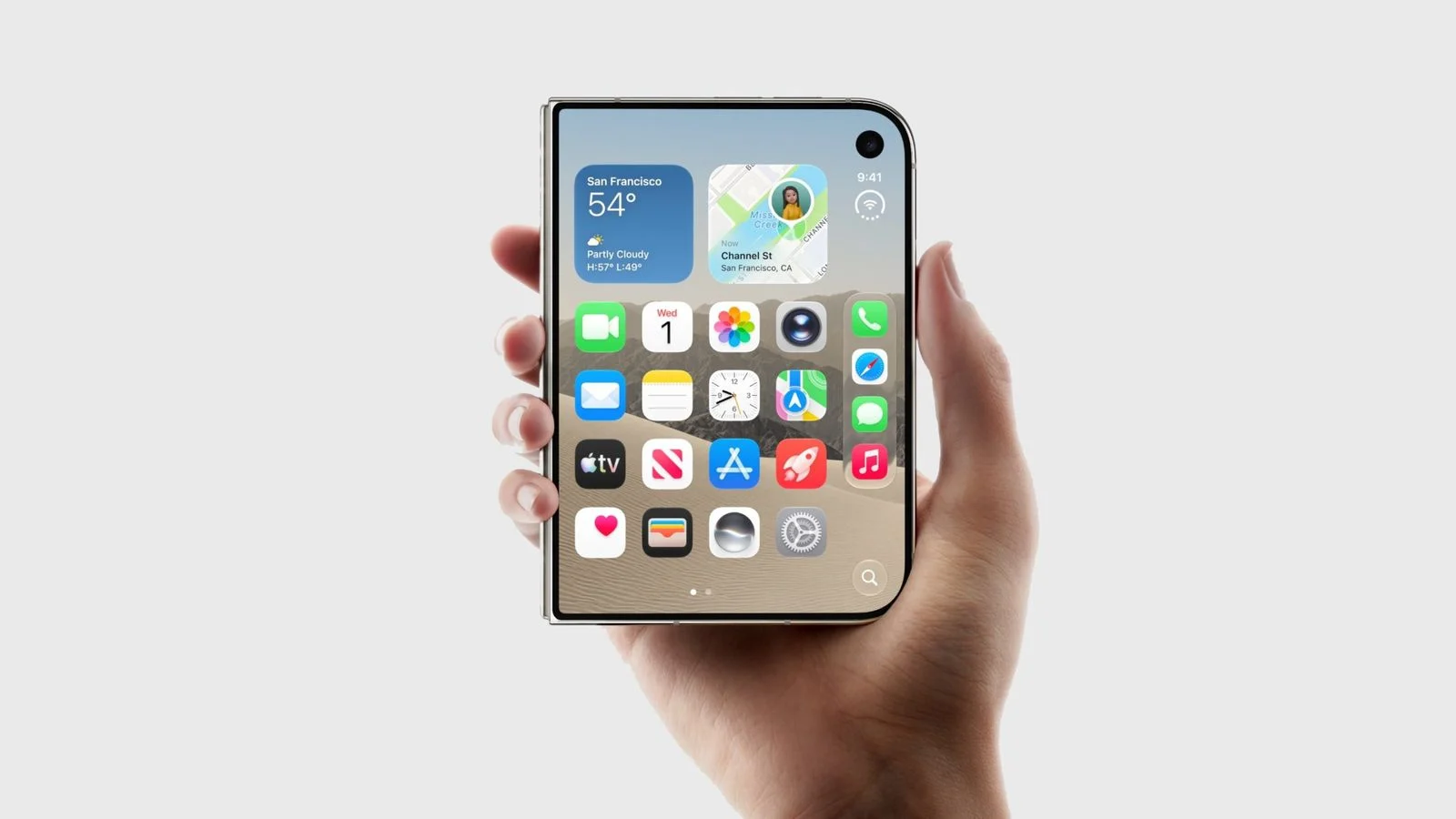
During the disassembly process, the most attention-grabbing aspect is the removal of the surface covering of the inner screen. The iPhone Duo’s foldable screen is covered with a matte protective layer with a nano-texture. When this layer of material is removed, the flexible OLED screen underneath shows a more obvious luster, and the visual effect is similar to the internal screens of other folding screen mobile phones.
At the same time, the crease in the center of the screen has become more obvious. This suggests that Apple's use of matte overlays is not only to reduce ambient light reflection, but also to help reduce the visual presence of the crease in daily use. Kate Bergeron, Apple's head of hardware engineering, previously explained that this layer of covering material is specially designed to be replaced after long-term use.
However, users should not remove this layer of protective material on their own. While the teardown video shows it can be uncovered, that doesn't mean Apple is encouraging users to do it themselves. Once the covering layer is damaged or worn, users should handle it through Apple's official repair channels to avoid damage to the flexible display components below.
The teardown also reveals the battery layout of the iPhone Duo. Similar to other folding screen mobile phones, this phone is equipped with a battery on the left and right sides of the fuselage to adapt to the space allocation inside the folding structure. But replacing the battery is not a simple task: maintenance personnel need to remove the back cover and outer screen before further accessing the battery components. This is a much more complicated process than the battery replacement process for a traditional straight-bar iPhone, and means the repair may take longer and be more risky.
Internal wiring is also worthy of attention. The dismantling personnel pointed out that the mobile phone uses multiple folded and bent thin flexible cables to connect components such as the selfie camera and the motherboard. Since these cables themselves are relatively thin, extra care needs to be taken during removal, otherwise they may cause accidental damage. For compact folding screen equipment, how to arrange connection lines in a limited space while ensuring reliability after repeated opening and closing is a problem that must be faced during the design and maintenance process.
That being said, not all parts of the iPhone Duo are difficult to repair individually. The disassembly video shows that components such as the two selfie cameras, the rear dual-camera system, and the motherboard can be removed and replaced separately. This level of modularity facilitates repairs to specific faults to a certain extent without having to directly replace the entire phone in all cases.
The really complicated part is still the hinge and folding inner screen. Both are closely integrated with the structure of the entire machine, requiring more operations to disassemble and reinstall, thus significantly increasing maintenance costs. For folding screen mobile phones, the inner screen is not only one of the most important components used, but also one of the most structurally complex and expensive parts to repair.
The previously announced maintenance prices in the Indian market have attracted attention. The cost of replacing the inner screen of the iPhone Duo is INR 149,900, repairing the outer screen is INR 42,900, battery service is INR 24,900, and rear camera replacement is INR 26,900. In case of other serious damage, the repair cost may reach up to Rs 224,900. The AppleCare service provided by Apple in India can reduce some eligible repair expenses, but the corresponding AppleCare fee itself for this machine also reaches 51,900 rupees.
These prices reflect that the repair cost of foldable screen phones may be much higher than that of ordinary candy bar phones. Especially when the inner screen or hinge is damaged, repair not only involves expensive parts, but also requires a more complicated disassembly and assembly process. However, the specific cost still depends on the type of damage, location and applicable repair plan, and prices in the Indian market cannot be directly applied to other countries and regions.
The release of the teardown video comes as the durability of the iPhone Duo also begins to attract attention. Some users reported on social platforms that cracks or abnormally bright lines appeared on the device's inner screen near the hinge. Some said the phone malfunctioned after opening and closing it only a few times. However, these reports are currently insufficient to determine the prevalence of the problem or whether there is a systemic design or manufacturing defect. Apple still needs to confirm the cause of the failure and its scope of impact through follow-up investigations.
Judging from the disassembly results, the iPhone Duo demonstrates Apple’s engineering solutions in folding screen structure, display layer design and internal space utilization, but also exposes the practical challenges faced by such devices in terms of maintenance convenience. The replaceable covering layer provides an option for screen maintenance after long-term use, and it is also positive that some components can be replaced independently; however, the inner screen and hinge are still the main source of difficulty and cost in repair.
For consumers who are ready to buy a foldable iPhone, in addition to focusing on screen size, performance and folding experience, they should also consider warranty policy, accidental damage protection and long-term maintenance costs. The technical complexity of folding screen mobile phones is not only reflected in the manufacturing process, but also directly affects the cost of product use. As iPhone Duo begins to enter the hands of more users, its actual durability, failure rate and long-term repair performance will require longer market testing.
Comments