
Abstract:
General Atomics Aeronautical Systems of the United States recently announced plans for a new generation of medium-altitude and long-endurance unmanned aerial vehicle Wildfire. This UAV is designed for the current high-threat battlefield environment. The core idea is not to simply pursue single-machine performance, but to reduce manufacturing costs, increase production speed, and adopt a higher degree of autonomous technology so that UAVs can be put into combat in larger quantities and withstand higher battle damage rates when necessary.
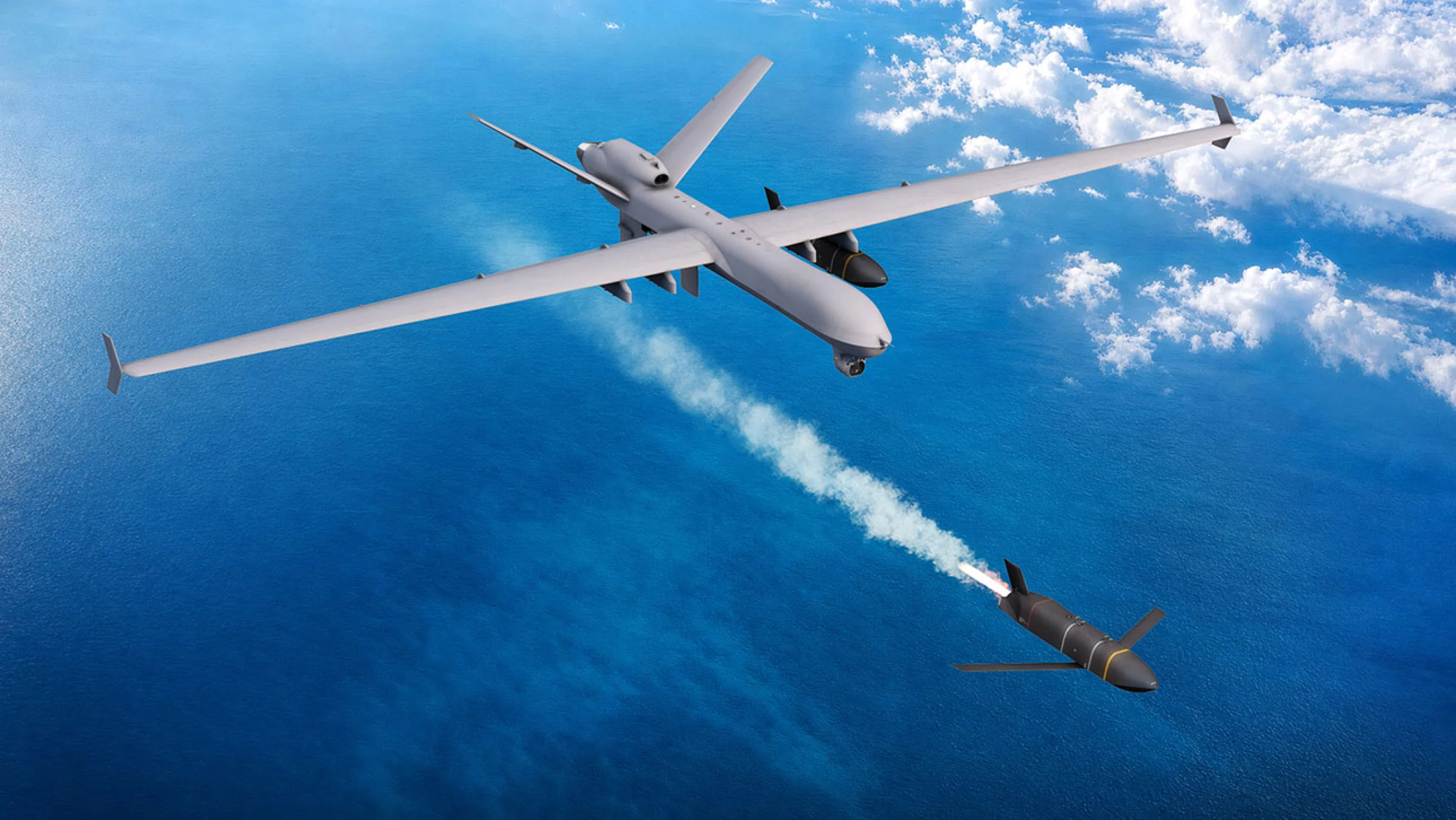
Wildfire belongs to the category of medium-altitude long-endurance drones, also known as MALE drones. General Atomics' previous most representative product of its kind was the MQ-9 "Reaper" drone. The MQ-9 entered service with the U.S. Air Force in 2007 and was considered to represent a major advancement in drone technology. The aircraft eliminates the need for pilots and other crew members, enabling it to be operated by remote ground controllers and perform long-duration reconnaissance, surveillance and strike missions.
However, with the continuous development of air defense systems and electronic warfare technology, the combat environment faced by the MQ-9 has changed significantly. The report pointed out that in Iran-related operations, the MQ-9 used by the US military was said to have been affected by the reliability of modern air defense systems and satellite communication links. However, these specific loss figures have not been independently confirmed.
Relevant reports believe that the US military may have lost as many as 45 MQ-9s in the direction of Iran, accounting for about a quarter of the total number of UAVs of this type in active service in the United States, involving equipment worth more than 1.3 billion US dollars. Regardless of the specific number of losses, the MQ-9's survivability in a high-threat environment and the cost of a single aircraft have become important reasons for the U.S. military to reconsider the next generation of medium-altitude and long-endurance UAVs.
Rather than continue to manufacture traditional large UAVs that are expensive and slow to replenish after losses, the U.S. Defense Innovation Department and the U.S. Air Force therefore launched the "Massive Modular Aircraft" (MMA) project, hoping to find a new type of UAV that can be developed faster, produced faster, easier to upgrade, and suitable for mass deployment.
Wildfire is one of the solutions proposed by General Atomics to meet this demand. The company hopes that by adopting a design more suitable for large-scale production, the drone can be manufactured in large quantities and perform missions in high-risk areas without having to worry too much about the loss of a single platform like using expensive manned aircraft or high-value drones.
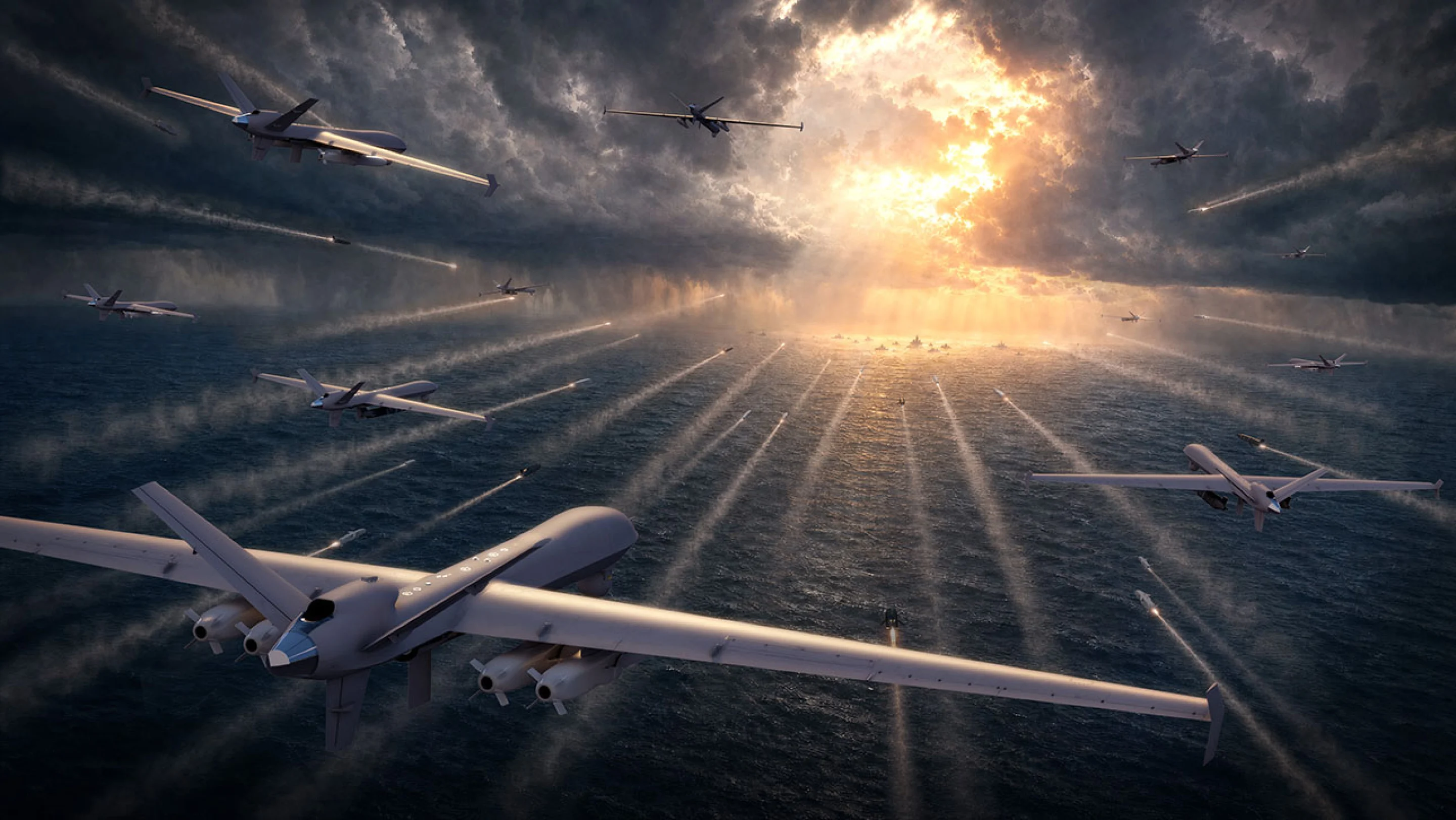
From a design perspective, Wildfire is based on General Atomics’ previous generations of UAV technology, but pays more attention to cost, production scale and mission flexibility. The company hopes that while it has greater mission capabilities than the MQ-9, it can also be mass-produced at a lower cost, thereby restoring the "number advantage" required in the modern battlefield.
Wildfire is expected to use a turboprop engine and have a maximum transit range of 8,000 nautical miles, which is approximately 9,206 miles or 14,800 kilometers. Such a huge range means that it can perform long-distance deployment missions without frequent front-line resupply, and can cover a considerable combat area.
For communications and control, Wildfire will use a satellite network composed of a large number of low-orbit satellites. General Atomics plans to provide drones with more flexible global communications capabilities through a system of so-called "proliferating low-Earth orbit satellites." This system can also handle dozens of networked drones at the same time, allowing multiple Wildfires to form a networked drone fleet.
Autonomy is also an important part of Wildfire. The drone will use more advanced autonomous systems to support collaborative work between humans and machines. Compared with the traditional drones where the ground operator continuously controls the flight status, this method allows the operator to focus more on the mission itself, while leaving part of the flight and mission management work to the airborne system.
In terms of weapon carrying capacity, Wildfire's design is also obviously biased towards heavy loads. The fuselage is equipped with multiple weapon hardpoints and can carry large ammunition including heavy long-range anti-ship cruise missiles. According to the plan announced by General Atomics, it can carry two long-range anti-ship cruise missiles, or four joint strike missiles.
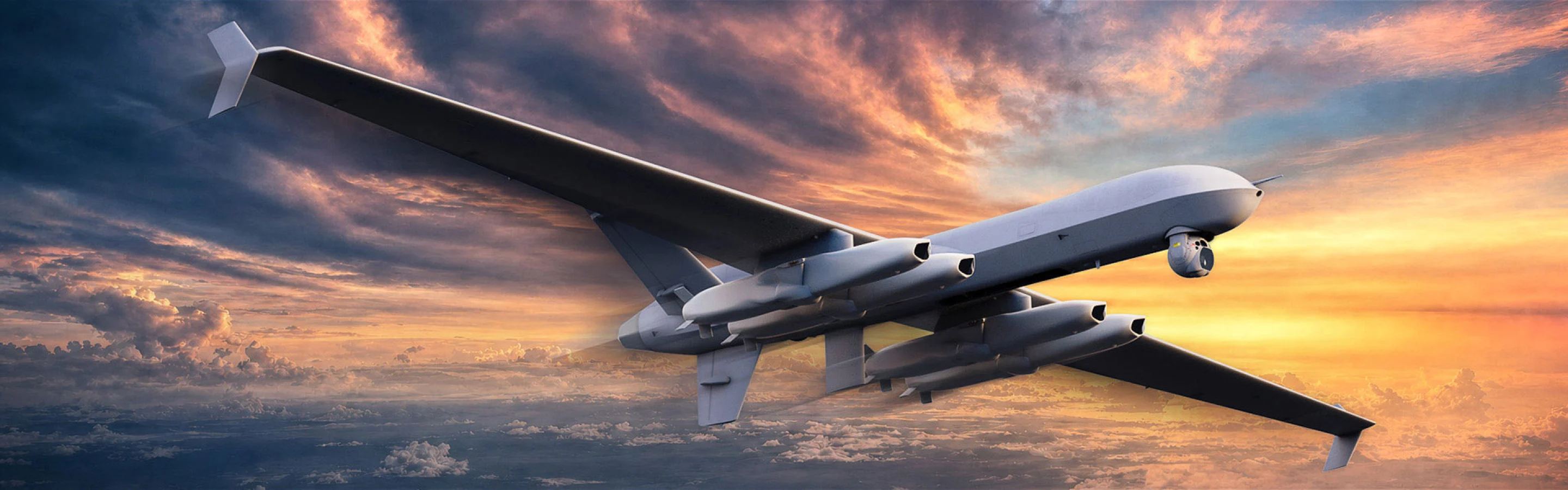
In addition to weapons, Wildfire can also be equipped with modular sensors, strike munitions and cargo pods depending on the mission. This means that the same basic platform can be adapted between different uses such as reconnaissance, surveillance, strike and transport depending on mission needs.
David R. Alexander, president of General Atomics Aeronautical Systems, said Wildfire was designed to meet the needs of high-demand missions and cost-sensitive customers. The company defines it as a drone with "high combat damage tolerance" and hopes to achieve greater flexibility and scalability while maintaining the high-performance characteristics of General Atomics drones.
The ideas represented by Wildfire also reflect the changes in the development direction of U.S. military drones in recent years. In the past, large UAVs often emphasized long endurance, high-performance sensors and precision strike capabilities, so the value of a single platform continued to increase. But as electronic warfare, air defense systems and cheap drones enter the battlefield in large numbers, the model of relying solely on a small number of high-value platforms to perform high-risk missions is facing increasing pressure.
In this context, the U.S. military and military industrial enterprises are exploring two routes at the same time: on the one hand, they continue to develop high-end drones with high stealth, high speed and complex combat capabilities; on the other hand, they develop low-cost drones that can be produced quickly, in large quantities and allow a high attrition rate. Wildfire obviously falls into the latter category.
If it eventually enters the production stage, the significance of Wildfire may not only be to replace the MQ-9 "Reaper", but may also become an important node in the future large-scale drone network. With long-range satellite communications, autonomous control, modular mission systems and strong weapons carrying capabilities, this UAV can work together with other UAVs, manned aircraft, and ground and maritime combat systems over a wide area.
However, Wildfire is still a new generation UAV solution proposed by General Atomics. Detailed parameters such as specific engine model, maximum take-off weight, flight speed, actual manufacturing cost and official service time have not yet been announced. Whether it can truly achieve low-cost mass production still needs to be verified through subsequent engineering development and testing.
Comments