
Abstract:
When my friend was surfing on onlyfans two days ago, the NSFW (Not Safe For Work) content that filled the screen was actually mixed with a few prairie dogs...
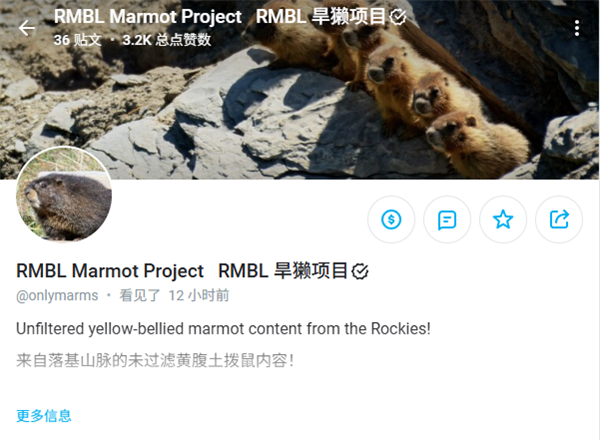
Shichao's brain almost shut down at that time. Could it be said that human beings have evolved to this day? Can you feel pretty when you look at a groundhog?
Out of curiosity, we also opened the account and studied it carefully, and found that this account called OnlyMarms really made money on OF.
The content of the account is actually unremarkable. It is basically the daily life of the groundhog, from the groundhog stretching to the daily play between the groundhog brother and sister...
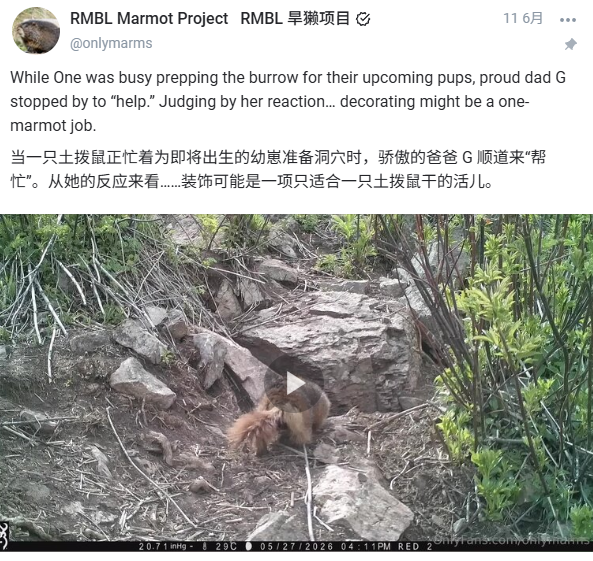
Sometimes, Uncle Porcupine next door will appear in the account without code, and he can also post a video.
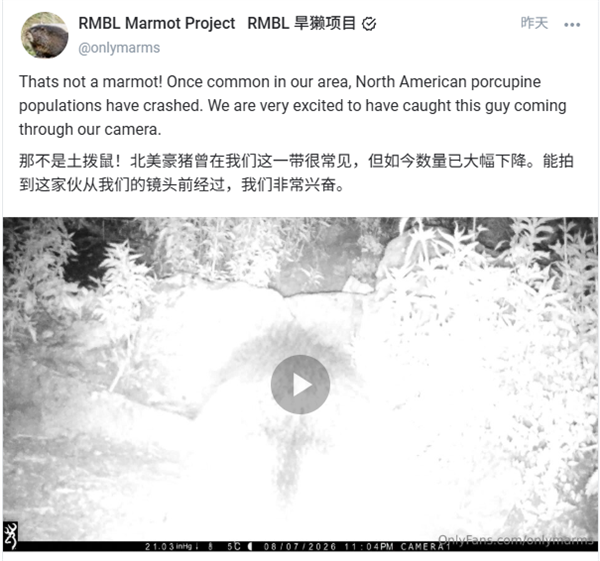
But after our evaluation, this account is not as unsuitable for viewing as the Animal World next door.
The operator of this account is not a prairie dog enthusiast, and certainly not the prairie dog himself, but an ecologist at UCLA (University of California, Los Angeles), led by Dan Blumstein, a professor of ecology and evolutionary biology.
This is a real drama. I am at UCLA, I just got off the stage, and I am going to upload videos to OnlyFans to make money.
It sounds a bit like an Internet joke, but the story behind it is not that funny.
Since 1962, researchers at the Rocky Mountain Biological Laboratory in Colorado have tracked these prairie dogs and studied their evolution in a changing ecological environment.
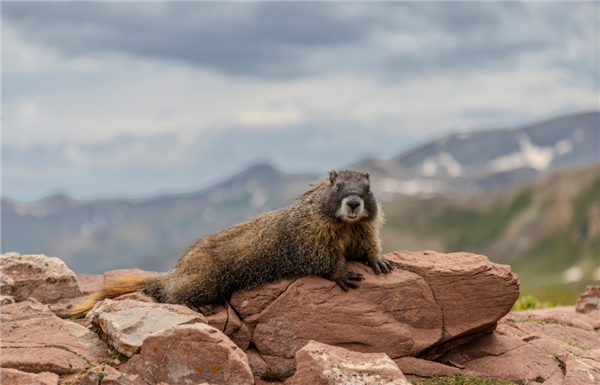
This 65-year study is the second longest continuous study of individually identifiable wild mammals in the world, second only to the chimpanzee research experiment initiated by the famous Dr. Jane Goodall in 1960.
Compared to some large-scale experiments, this kind of long-term project is relatively less expensive. After all, their most expensive thing is not the equipment, but the time.
If the instrument breaks down, you can buy it, but the data that was not observed in a certain year can never be recovered.
But even for such a low-cost research project, we are beginning to face a situation where there is no rice in our pockets.
As you can see, naturally no one is willing to sponsor this kind of prairie dog performance art research project. Therefore, the research funding of Lao Danzi’s laboratory basically comes from the National Science Foundation (NSF). In the past, it was basically just filling in the requirements and applying for approval. Once approved, the next cycle of research activities can be carried out.
In the past few decades, there have been basically no special accidents. But this time, the National Science Foundation rejected the laboratory's application several times in a row, with only one reason: you have done enough research.

At first glance, the data of more than 60 years is indeed a lot, but Lao Danzi feels that if you want to study evolutionary issues, the longer the better, there is no way to say that there is enough.
In fact, not only were the projects unable to receive funding, but their school's funds were also insufficient.
As a result, the school had no choice but to tighten its belt and cut off some research funding, one of which was the graduate funding for Lao Danzi’s department, resulting in a one-third reduction in the number of graduate students they could recruit.
Lao Danzi said that their laboratory conducts field research for up to five months every year. Without these graduate students living and dining in the wild, it would be impossible to survive with just a few old professors and the remaining graduate students.
So they calculated that if they wanted to maintain the project, they would have to generate $75,000-$100,000 in revenue from field research alone next season.

The team thought about it but couldn’t come up with any good ideas. Finally, Danzi had an idea and could only send the groundhog materials they had saved over the years to OnlyFans, and rely on netizens’ rewards to buy bait and consumables to subsidize part of the field expenses.
In order to verify the identity of the creator, the platform requires him to upload his driver's license and selfie video. As a result, the system looked at it: the driver's license showed a university professor wearing glasses, but the account was full of prairie dogs, and the application was rejected directly.
Danzi said helplessly that the reason for rejection was: "I don't look like a prairie dog."
If you don’t wear glasses, it looks a bit like it

Thanks to the explanation, OnlyMarms successfully opened.
As of reports on August 1, the account has received more than $6,000 in rewards, which is at least enough to buy bait for trapping prairie dogs.
After this matter came to the attention of the outside world, some well-intentioned people also stepped in and threw coins for the groundhog.
For example, a fanatic brother in the currency circle directly sent them a coin called "ONLY Marms" to create crazy hype. Although the research team did not participate in the coin issuance, they later took over the creator fees generated by the transaction. Some crypto circle media said that it once brought more than 14,000 US dollars in revenue to the project.

The Laodanzi team also found a craft brewery, created a dream collaboration, and launched a "Marmot's Tears" beer.
In fact, not only old-timers, we also found that a large number of "unpopular" academic projects that lack the support of government funds and lack direct commercial transformation prospects are facing disaster.
In order to survive, scientists are forced to stage one after another "Lifestyle Awards" on the Internet.
Among them are people like Lao Danzi who were forced to become Internet celebrities. A laboratory researching breast cancer at the University of Arizona put the project on GoFundMe, the American version of Waterdrop Funding, and has raised about $8,800.
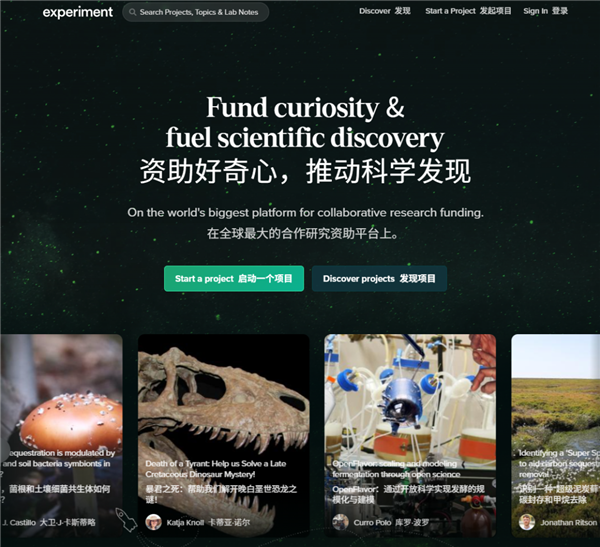
On the other hand, there are also crowdfunding platforms like Experiment that are specially prepared for scientific research.
According to data, less than half of the scientific research projects on Experiment can achieve their crowdfunding goals. Although the average crowdfunding size is only more than three thousand US dollars, this money is enough to buy a batch of reagents, run a field sampling, and verify an early idea.
We have also discovered that a large number of similar situations have occurred in recent years, which are actually related to the U.S. government’s aggressive cuts in scientific research funding.
After Trump’s concubine Xi returned to the palace, DOGE was once organized to rectify the scientific research community. Through project termination, staff reduction and funding review, the scientific research system underwent major surgery.
According to official project statistics, "Nature" shows that more than 7,800 scientific research grants will be canceled or frozen in 2025.
In the same year, the number of new grants from NSF and NIH (National Institutes of Health) was about a quarter less than the average of the previous decade, and the U.S. federal science agency also lost about a fifth, or 25,000 researchers.
The data released by NIH itself is more intuitive: throughout 2025, the number of research project applications increased by 12.9%, but new and renewed projects decreased by 20.5%; the application success rate dropped from 18.5% to 13%.
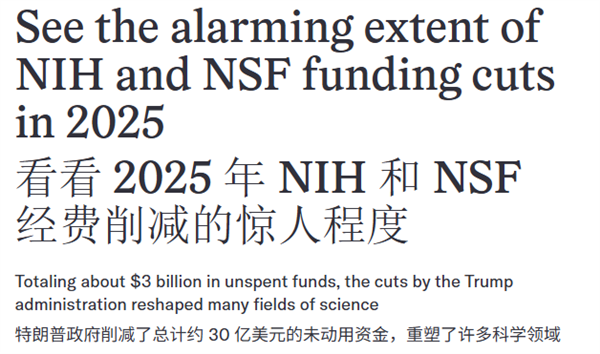
That is, more people apply for funding, but fewer people get money.
So, in some American laboratories that cannot afford to wait, how can we make money by forcing professors and PhDs to learn a new course?
Of course, it is not a new thing recently for scientists to perform research in order to make money.
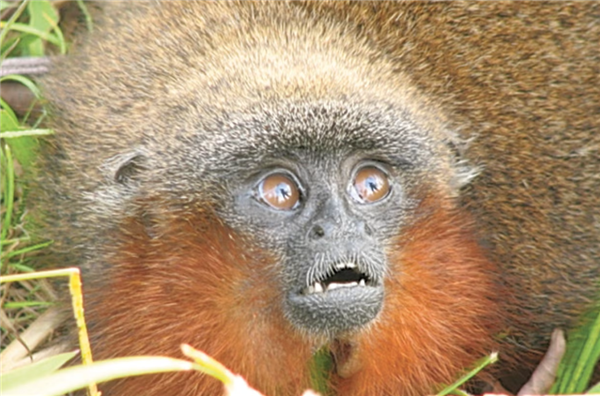
For example, in 2005, a new species of monkey was discovered in Madidi National Park in Bolivia, and scientists chose to directly auction the naming rights.
In the end, an online casino paid $650,000 to have his name permanently engraved into the scientific name of the species. The funds from the auction were directly deposited into a trust fund, and the interest was used to fund patrols in the protected area where the monkeys were found.
The United Kingdom and the United States have also jointly established an organization "Stand Up to Cancer". They have turned cancer research fundraising into a TV special program and invited celebrities to participate. It has gained a lot of attention. The British project alone has raised more than 113 million pounds.

It seems that it is not a bad thing if scientists are willing to go out of the laboratory and tell the public about their research, and the public can directly support the issues they care about.
But we are still worried that when public funds are insufficient, for some unpopular scientific research projects, traffic rice may not be so delicious.
Scientific research projects like the prairie dogs, cancer, other dinosaurs, and space we mentioned have their own advantages. They can gain more traffic by relying on cute babies, giant monsters, and human anxiety and ambition.
But what about those boring studies?
After all, being unpopular does not mean it is worthless, but unpopular research may be more likely to run out of food first.
If a society is only willing to pay for science that "can be said to be a hit", what will be left behind in the end may not be the most important scientific research.
OnlyFans can help scientists’ pleas for help be seen by more people.
But a content platform cannot replace a society paying for the unknown and future.
Comments