
Abstract:
Researchers at Oregon State University in the United States have found that when defending their nests, red-winged blackbirds can adopt completely different strategies against snakes with similar appearances and different threat levels: they will actively attack non-venomous gopher snakes, but rarely directly attack venomous rattlesnakes. This finding suggests that birds may have the ability to recognize high-risk predators and adapt defensive behaviors even if they lack experience with venomous snakes.
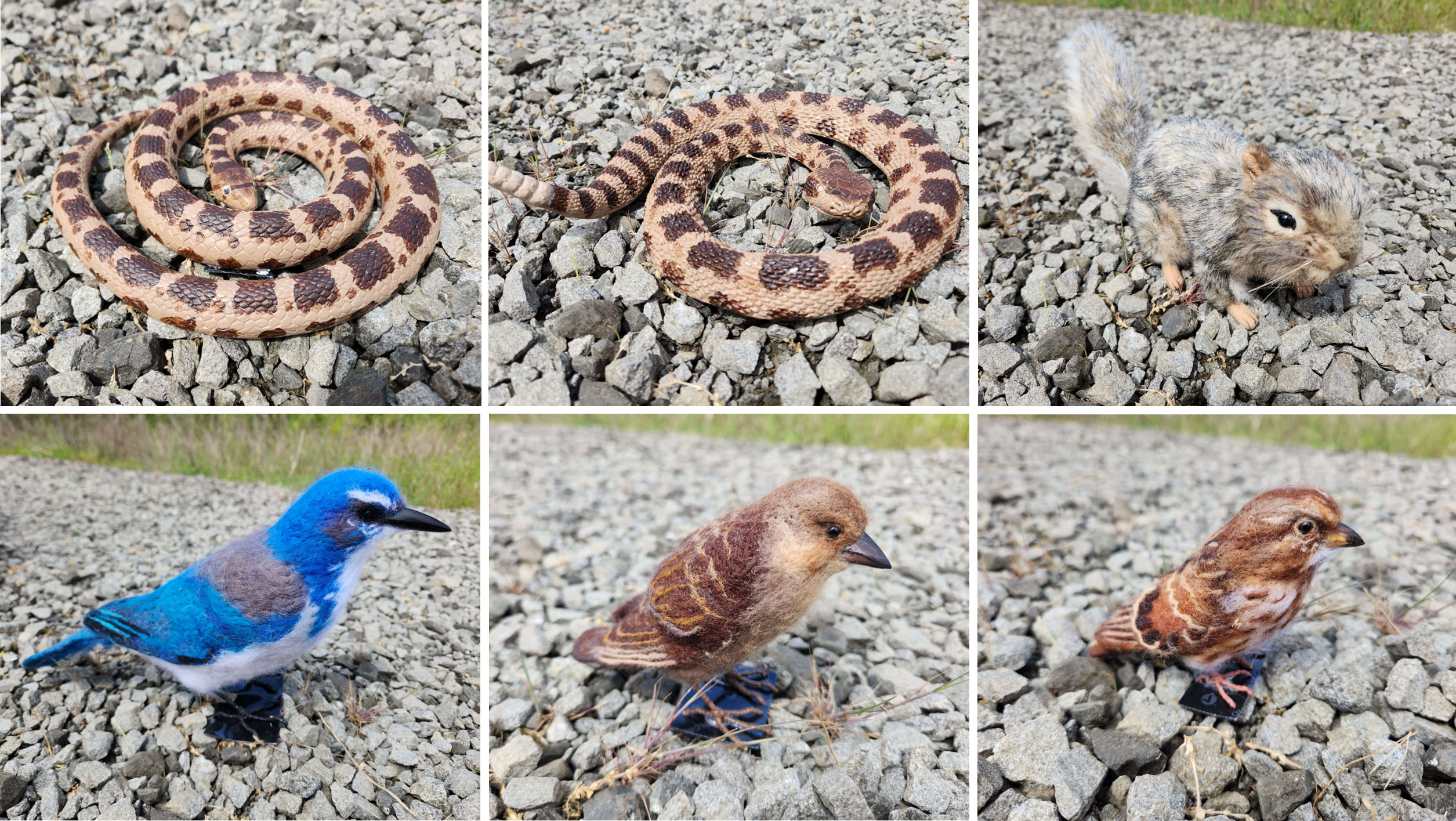
The research, published in Behavioral Ecology, was led by Shelby Lawson of the Integrative Biology Laboratory in the College of Science at Oregon State University and others. The research team set up realistic static animal models near red-winged blackbird nests in western Oregon to observe how the parent birds reacted to different potential threats. Test subjects included scrub jays, ground squirrels, non-venomous gopher snakes, parasitic breeding cowbirds, control song-banded buntings, and rattlesnakes.
Red-winged blackbirds are known for their tough nest-guarding behavior and will usually take the initiative to drive away threats that approach their nests. In tests conducted on dozens of nests, about half contained eggs and the other half contained chicks. The results showed that the birds had only one direct peck or impact when facing the rattlesnake model; in contrast, the gopher snake model suffered more than 80 direct attacks.
It is worth noting that although rattlesnakes are native to Oregon, they were largely eliminated west of the Cascade Mountains in the 19th century. Therefore, red-winged blackbirds living in the area today likely rarely, if ever, actually encounter a rattlesnake. Researchers are still unsure whether blackbirds accurately recognize the danger of venomous snakes or whether the appearance and tail clickers of rattlesnakes make them instinctively wary.
The research also provides new observation cases for the "parental investment theory". The theory seeks to explain when animals invest more energy and take higher risks in protecting their offspring, and when animals prioritize ensuring their own survival. Lawson said a red-winged blackbird's defensive behavior changes with the varying risks predators pose to the nest and the parent bird itself.
For example, if a jay or squirrel that steals bird eggs approaches the nest, the red-winged blackbird may pounce directly on it and attack it; but if faced with an eagle that can prey on an adult blackbird, they will often keep their distance and sound the alarm by singing. Usually, passerine birds are more cautious when facing predators that can threaten their own lives, but are more likely to directly attack animals such as crows and squirrels that mainly endanger eggs or chicks.
In this experiment, both the gopher snake and rattlesnake models represented medium-sized adult snakes. They are unlikely to actively chase healthy adult red-winged blackbirds, but they may injure the birds in the process of protecting their nests at close range; rattlesnakes carry venom, making them obviously more dangerous targets.
However, the venom does not make blackbirds completely avoid rattlesnakes. Studies have shown that they respond violently to both snakes by swooping and approaching, and their overall alertness levels are roughly similar; the real key difference is that blackbirds rarely come into physical contact with rattlesnakes.
Neither snake model was directly attacked during the incubation stage. However, during the brooding stage, the red-winged blackbirds belonging to the nest will often directly attack the gopher snakes, and other nearby blackbirds often join in the action; they still show considerable restraint against rattlesnakes.
The researchers believe that this is the first study to simultaneously examine the differences in the responses of birds to non-venomous and venomous snakes during the breeding period within the framework of parental investment theory. Snakes are an important source of threat to bird nests, but how birds recognize snakes and how they make defensive decisions based on this is still not fully understood. This study takes an important step toward understanding the risk-judgment mechanisms of birds.
Comments