
Abstract:
The cooperation between Amazon and Nvidia is further deepening. The two companies announced on August 26 that they would expand their partnership. Amazon will deploy 2 million more Nvidia GPUs in its data centers in the next two years to cope with the rising computing power demand in the artificial intelligence market.
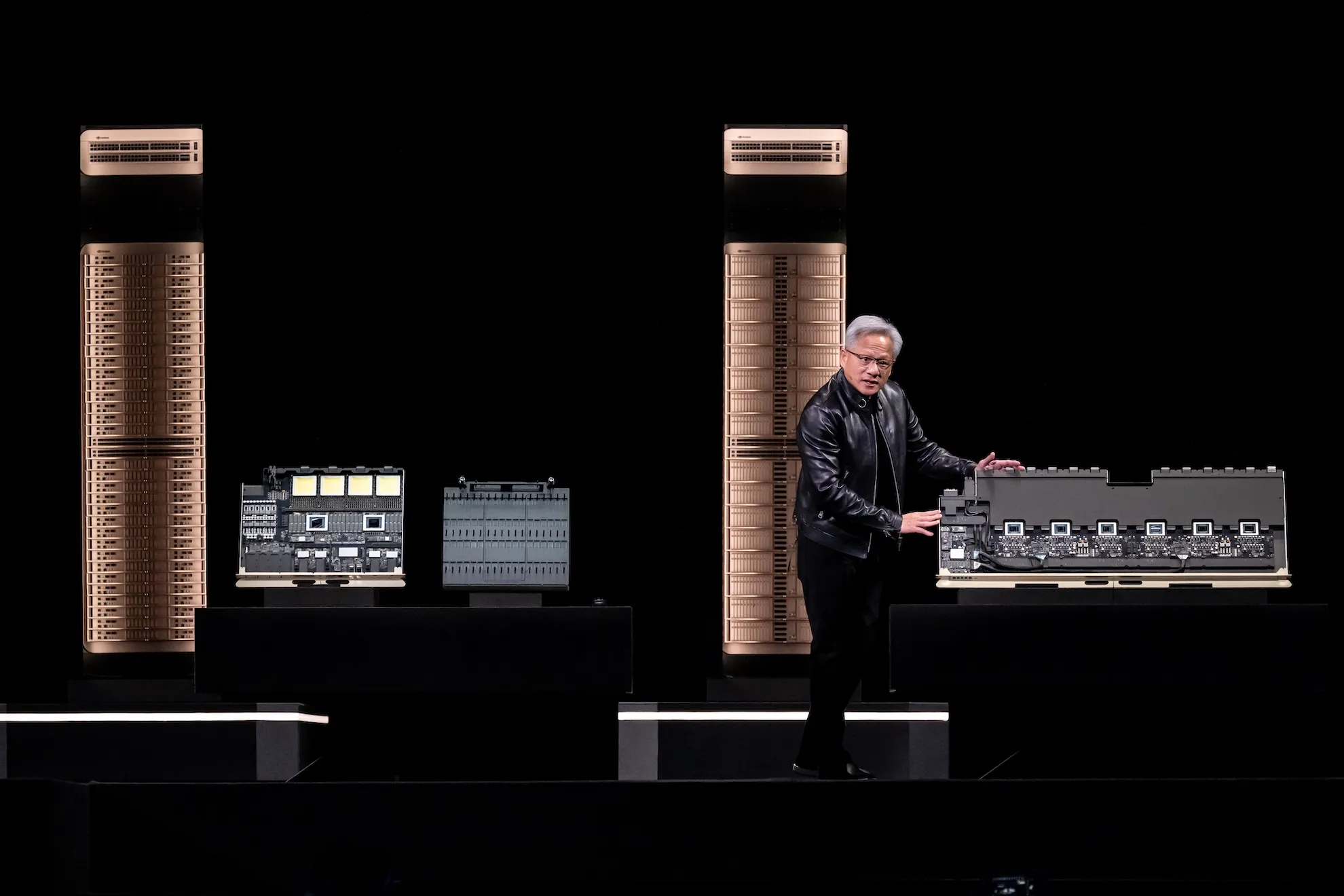
The newly purchased products include NVIDIA Blackwell Ultra, Rubin and Rubin Ultra GPUs, which are mainly used to meet the high-performance computing needs of large model training and inference. Relevant chips will be deployed to Amazon Cloud Technology (AWS) data centers in 2027 and 2028.
The news was announced during Nvidia's quarterly earnings call. Just five months ago, Amazon committed to deploying more than 1 million Nvidia GPUs in AWS infrastructure starting this year. Nvidia said that market demand has since grown faster than previously expected.
The two parties did not disclose the specific transaction amount. However, considering the unit price and procurement scale of high-end AI GPUs, the potential value of this new order is expected to reach tens of billions of dollars.
It is worth noting that the expansion of this cooperation is not just Amazon’s additional purchase of GPUs. Nvidia said that its entire set of technical capabilities, including high-speed network hardware, open models, CPUs, data processing software and robotics platforms, will also be more extensively integrated into AWS's service system. NVIDIA's network technology can interconnect thousands of GPUs into a unified computing system and is an important part of building large-scale AI infrastructure.
The two companies said that "surging demand" from start-ups, large enterprises, AI laboratories and even government agencies has driven the two sides to deepen their cooperation. As generative AI moves from the experimental stage to production deployment, cloud service providers are accelerating the expansion of data center computing resources.
This cooperation upgrade occurs in the context of Amazon accelerating the layout of self-developed AI chips. Amazon hopes to reduce its dependence on Nvidia by developing its own processors and compete with the latter in some areas. Peter DeSantis, head of AWS's artificial intelligence business, has previously said that AWS is discussing selling Trainium chips to external companies; this product is targeted at deep learning workloads and is seen as an alternative to Nvidia's H100 and Blackwell series chips.
At the same time, Amazon’s Graviton CPU based on Arm architecture is also considered to be challenging the positions of Intel and AMD in the traditional server processor market. Amazon previously stated that its custom chip business has developed rapidly, with annual revenue run rate exceeding US$25 billion, supported by a cumulative US$225 billion commitment from AI labs such as Anthropic and OpenAI.
However, judging from this large-scale additional order, NVIDIA still maintains a clear dominance in the AI chip market. In addition to the 2 million GPUs, Nvidia also plans to provide an undisclosed number of Vera CPUs to Amazon, some of which will be integrated with Rubin GPUs and some of which will be delivered as stand-alone processors. Nvidia Chief Financial Officer Colette Kress said that related deployments will begin in the third quarter.
Nvidia CEO Jensen Huang has previously said that Vera CPU is expected to open up a new market of approximately US$200 billion for the company. Kress said in the latest earnings call that Vera is expected to be adopted by major hyperscale cloud vendors, new cloud service providers, AI laboratories and system manufacturers, and has now begun shipping to major partners including Oracle and SpaceXAI.
The cooperation between the two parties will also extend to Amazon's warehouse automation and enterprise-level cloud services. Amazon plans to use Nvidia's full "physical AI" technology stack to support its robot fleet, including Omniverse for simulation and digital twins, world model platform Cosmos, robot development platform Isaac, and Jetson computing hardware for robots and edge AI. Nvidia also launched a new version of Jetson Orin Nano this week, aiming to lower the barrier to entry-level edge AI and robotics development.
In terms of enterprise services, AWS will provide NVIDIA Nemotron series open models through Amazon Bedrock and SageMaker. The former is AWS's hosted basic model platform, and the latter is its cloud machine learning service.
Nvidia’s financial report released on the same day showed that the company’s second-quarter revenue reached US$96.2 billion, exceeding market expectations. Among them, data center business revenue was US$89 billion, a year-on-year increase of 117%, accounting for the majority of the company's revenue in the quarter. Nvidia expects third-quarter revenue to reach $108 billion, with part of the growth coming from a new generation of Rubin GPUs; the company said Rubin has started mass production this quarter.
In order to meet the demand for AI infrastructure in the next few years, Nvidia has also committed to investing US$279 billion to lock in the supply and manufacturing capacity required for data center projects, a significant increase from the US$119 billion in the previous quarter. Of this amount, $92 billion is expected to be spent during the remainder of this fiscal year, and another $87 billion will be invested in fiscal 2028.
Huang Renxun said at the conference call that AI has begun to undertake actual work with production value and bring profitable "token" output. He believes that more computing power can create more valuable AI services and further translate into profits for service providers. This is why all parties in the industry continue to increase investment in infrastructure.
However, the market will still pay close attention to a core issue: after AI companies invest hundreds of billions of dollars in computing power and data centers, whether new computing resources can be stably converted into new profits as expected.
Comments