
Abstract:
On August 26, local time in Seattle and Santa Clara, California, Amazon Cloud Technology (AWS) and NVIDIA simultaneously released a strategic cooperation expansion statement: AWS plans to deploy an additional 2 million NVIDIA graphics processors on its global infrastructure from 2027 to 2028, with chip models including Blackwell Ultra, Rubin and Rubin Ultra. The parties did not announce the contract amount. On the same day, Nvidia said in an earnings call that Amazon will use its complete physical artificial intelligence technology stack for warehouse robots.
About five months ago, AWS announced at the 2026 NVIDIA GTC conference that it would add more than 1 million NVIDIA GPUs starting in 2026. The two companies said this time that demand for that level has been exceeded. According to the official caliber, the new commitment is to add an additional 2 million units to the original plan, bringing the total deployment scale to more than 3 million units. The contract amount, unit price and annual delivery pace have not yet been disclosed.
AWS will install another 2 million GPUs from 2027 to 2028
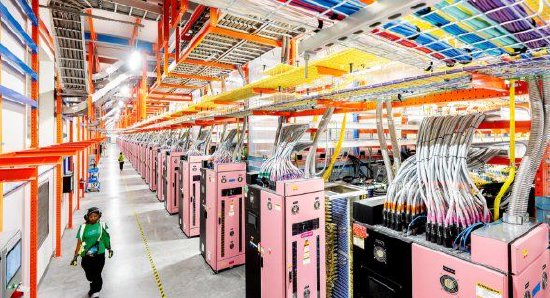
The joint press release stated that the additional 2 million GPUs will be deployed on AWS's global infrastructure, covering the so-called "artificial intelligence factory" and customer-facing cloud instances. Uses are listed into several categories: intelligent AI, scientific computing, enterprise automation, and physical AI. Nvidia Chief Financial Officer Kress added at the earnings conference that an undisclosed number of Vera central processors will also be provided to AWS, with some integrated with Rubin and some delivered separately.
Both parties simultaneously wrote NVIDIA's NVLink Fusion high-speed interconnect and custom high-bandwidth memory (NVHBM) into the next-generation Trainium rack. Amazon's official website states that the next generation of Trainium has been announced at re:Invent in 2025 to support NVLink Fusion; this time, NVIDIA's customized memory is connected to the same rack architecture, so that Trainium and NVIDIA GPUs can be expanded in the same cabinet. Wccftech quoted NVIDIA's materials from that day as saying that NVHBM has about 30% higher bandwidth and about 15% higher energy efficiency than HBM4E. These indicators come from the supplier's caliber, and the two parties did not provide actual measured control samples.
AWS will also expand Blackwell capacity and provide RTX PRO 4500 Blackwell Server Edition GPUs on Amazon EC2 G7 instances. According to the press release, compared to the previous generation G6, G7 has a maximum artificial intelligence inference performance of about 4.6 times and a graphics performance of about 2.1 times. AWS is the first large cloud vendor to provide this accelerator card instance.
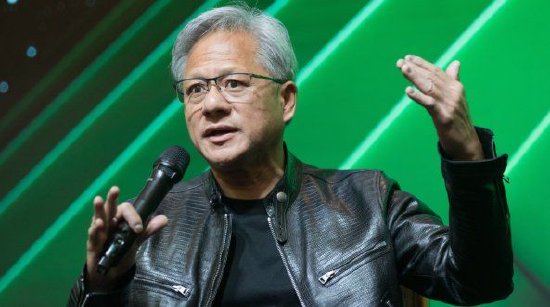
NVIDIA founder and CEO Jensen Huang said in the statement: "NVIDIA and AWS have built one of the growth engines in the artificial intelligence era, and demand is ahead of every forecast. Over the past 16 years, we have worked together to bring NVIDIA computing to the cloud. Now the cooperation has expanded to the full stack - GPU, CPU, network, open source models and software." AWS CEO Garman said that customers need to be able to choose tools and confirm that all layers can be connected, so AWS has made in-depth optimizations with NVIDIA in terms of network, security and deployment.
The two companies did not explain how many of each model accounted for the 2 million units, which data centers will be installed first, and how power and cooling will be matched. TechCrunch estimates based on the price range of a single card that the entire deal may reach tens of billions of dollars, but the original article also states: Financial terms have not been announced by both parties.
Warehouse robots are connected to NVIDIA’s full stack of physical artificial intelligence
Kress said on the call that Amazon will use Nvidia’s complete physical artificial intelligence technology stack to power warehouse robots. The press release breaks down the technology stack into several parts: Jetson edge computing platform, Omniverse simulation and digital twin library, and Isaac open source robot development platform. Amazon's official website also states that the Amazon Robotics Department will use the above tools for simulation, synthetic data, route optimization, functional safety and "real-to-simulation" verification, and the calculations will be run on GPU-accelerated Amazon EC2 instances. TechCrunch also lists world model platform Cosmos.
The statement did not give the number of connected robots, the list of online warehouses or the transformation schedule. The cooperation on the warehousing side and the 2 million GPUs on the cloud side are parallel terms and are not written into the same purchase order.
The software layer is written together. Nvidia's Nemotron open source model continues to be available on Amazon Bedrock and SageMaker. The cuDF library is used on Amazon EMR for GPU-accelerated data processing. The press release states that the processing speed is up to about 3.7 times and the cost performance is about 30% higher than that of a pure CPU configuration. Amazon OpenSearch uses the GPU for vector indexing, and the indexing speed is said to be up to about 9 times and the cost is about a quarter. The above multiples are all from the manufacturer's test caliber. The security layer connects the NVIDIA platform to the AWS Nitro system and the Elastic Fabric Adapter (EFA).
100,000 GPUs for the US government are listed separately
The two parties plan to build an "artificial intelligence factory" for the U.S. government, delivering 100,000 GPUs on AWS secure infrastructure to run federal and national security workloads with a confidentiality level of Impact Level 6 (IL6) and above. The 100,000 pieces are the number listed separately in the statement. It is not stated whether it is included in the aforementioned 2 million pieces, nor is the delivery year and construction location announced.
Amazon also emphasized that self-developed chips are still for sale. According to media reports, Amazon’s self-developed chip business has an annual revenue of approximately US$25 billion, and has a commitment of approximately US$225 billion from its artificial intelligence laboratory; Trainium is positioned as an option that can be used in conjunction with Nvidia accelerator cards. This expansion puts Nvidia GPU, Vera CPU and Trainium into the same rack narrative, and customers can mix them, and the specific ratio is chosen by the customer. The two parties did not announce the launch time of the mixed fabric cabinet.
Nvidia announced on the same day that its revenue for the second quarter of fiscal year 2027 was US$96.2 billion, with data center revenue of US$89 billion, a year-on-year increase of 117%; its third-quarter revenue guidance was US$108 billion, plus or minus 2%. Huang Renxun said in an interview related to the financial report that artificial intelligence has entered the stage of "producing useful work and making tokens profitable", and more computing power means more tokens. The expansion statement was released on the same day as the financial report, but the cooperation text itself did not convert the 2 million GPUs into a contribution to Nvidia's revenue.
Comments