
Abstract:
A research team at Ireland's Maynooth University recently developed an electrochemical fingerprint display technology that is expected to extract latent fingerprints from the surface of brass cartridge cases that were considered "almost impossible to recover" in the past. Experiments show that even if the metal surface has withstood high temperatures of up to 700°C, researchers can still use this method to restore identifiable fingerprint patterns.
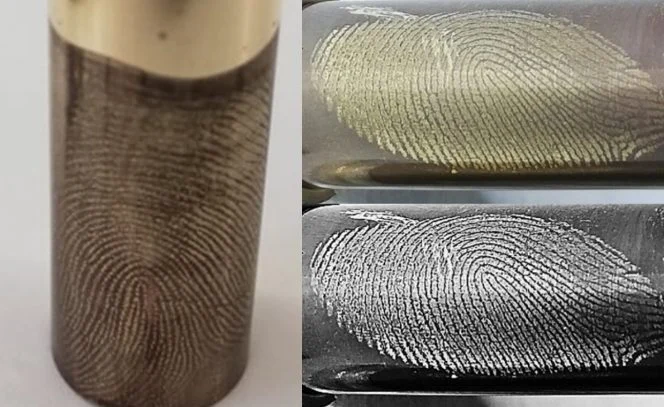
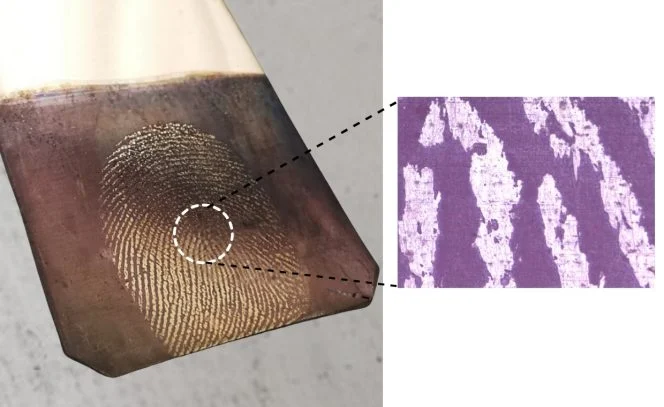
The research was completed by Dr Eithne Dempsey from the Department of Chemistry at Maynooth University and her recently graduated PhD student Dr Colm McKeever. Fingerprints are composed of friction ridges on the surface of the finger skin, which contain minute features such as line termination and bifurcation, and can be used for individual identification.
Obtaining fingerprints from fired cartridge casings has long been a challenge in forensic science. The high temperature, friction, and gases generated when a firearm is fired often destroy or even remove biological residues left when fingers come into contact with the cartridge case; and brass itself is not an easy surface for fingerprints. Therefore, the research team tried to use electrochemical processes to reappear the residual fingerprint patterns without using highly corrosive reagents and cumbersome sample pretreatment.
Dempsey said that extracting fingerprints from fired bullet casings has long been regarded as the "holy grail" in criminal investigation. Conventional wisdom held that the high temperatures generated by firing would destroy any biological residue, but this new technology can reveal fingerprint ridges that would otherwise be invisible to the naked eye.
This method uses the cartridge case itself as the working electrode, the metal surface where the electrochemical reaction occurs. The researchers placed the bullet casings in an electrochemical cell containing specific chemicals and applied a low voltage, causing the material to deposit into the gaps between the fingerprint ridges. The resulting contrast reveals otherwise hidden fingerprint outlines.
In the experiment, the team used polymer materials with conductivity and redox activity, and tested a variety of monomers that can be polymerized into polymer materials, including 3,4-ethylenedioxythiophene (EDOT), phenazine and phenothiazine compounds. The results show that after combining EDOT with thionine, the most significant display effect was achieved on brass sheets.
In an optimization process, the researchers treated it with a constant potential of 0.1 volt for 120 seconds. The deposited material not only clearly showed the fingerprint pattern, but also revealed third-level details, such as sweat pores within the ridges. Such subtle features can provide more basis for fingerprint comparison.
Tests have also shown that the technology is equally effective on samples subjected to extreme conditions. Whether they are artificial fingerprints or fingerprints formed by natural contact, the brass surface can still be visualized after being subjected to a high temperature of 700°C; successful results have also been obtained for samples left at room temperature for up to 16 months.
McKeever explained that the ablation residue left on the surface of the bullet case during the high temperature and firing process can be used as a "template", and researchers can use this to deposit specific materials in the gaps between the fingerprint lines, and finally realize the pattern.
For the actual cartridge case, the research team also designed a special electrochemical cell so that the cartridge case can directly serve as a working electrode. The researchers also used a scanning method of controlled changing potential to obtain higher-quality fingerprint images, in which third-level features can also be observed.
Currently, forensic examination of a cartridge casing can often link it to the gun that fired it, but it is difficult to further identify the person who handled or loaded the ammunition. The researchers believe that if the subsequent verification of this method goes smoothly, it may help investigators in the future connect the bullet casings with the person who actually loaded the ammunition, thus providing more targeted evidence.
This process uses a potentiostat to control the electrode potential and measure the current. Due to the potential for miniaturization and portability of such equipment, researchers believe that related technologies are expected to be developed into compact on-site forensic detection systems in the future.
However, this technology is still in the research stage and needs further testing and verification before it can be used in routine forensics. The team said that the relevant principles may be extended to the fingerprint extraction of knives, coins and other firearm-related metal evidence in the future.
Comments